Department of Nutritional Sciences, Texas Tech University, Lubbock, TX, USA.
Obesity Research Institute, Texas Tech University, Lubbock, TX, USA.
Cell Death Dis. 2020 Feb 3;11(2):87. doi: 10.1038/s41419-020-2275-9.
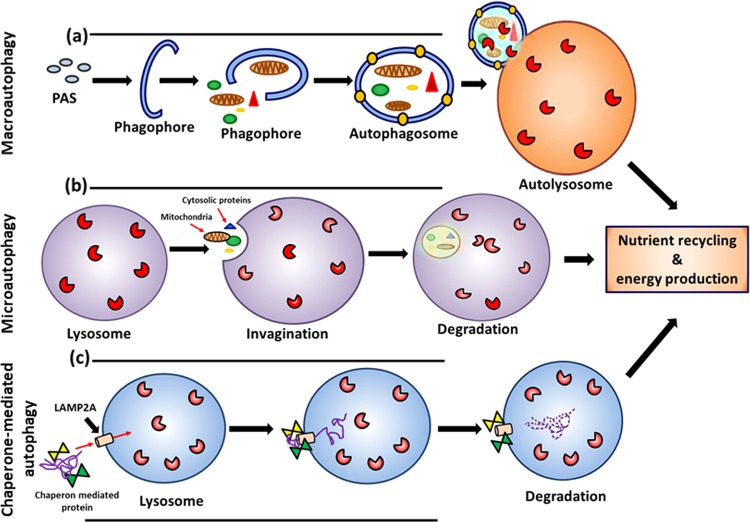
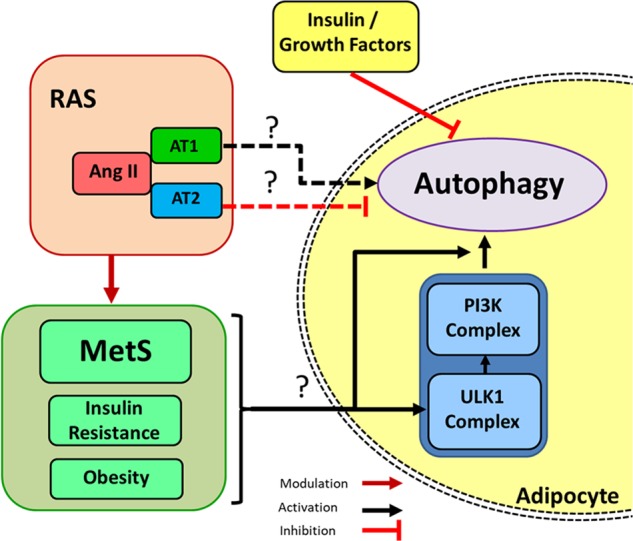
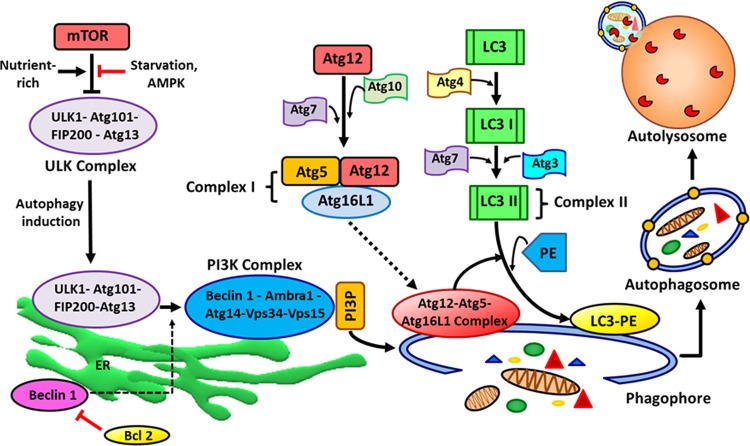
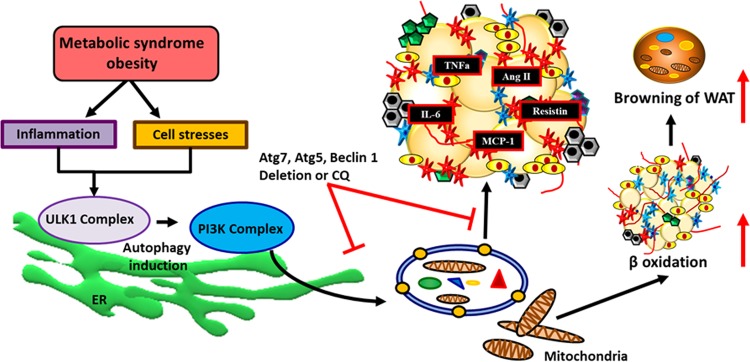
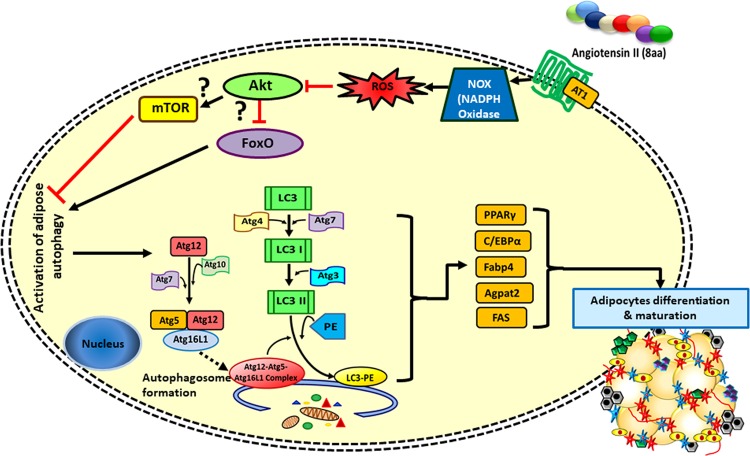
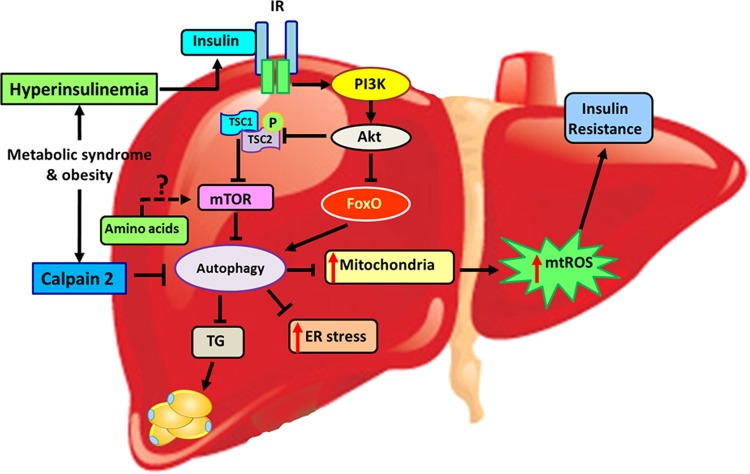
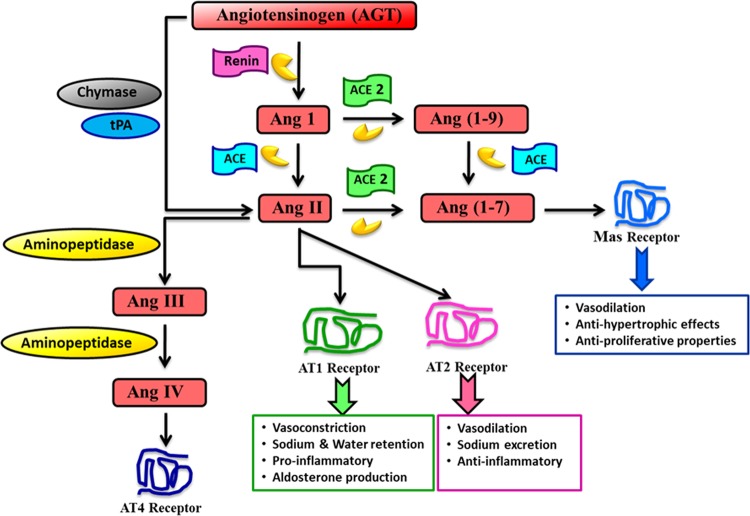
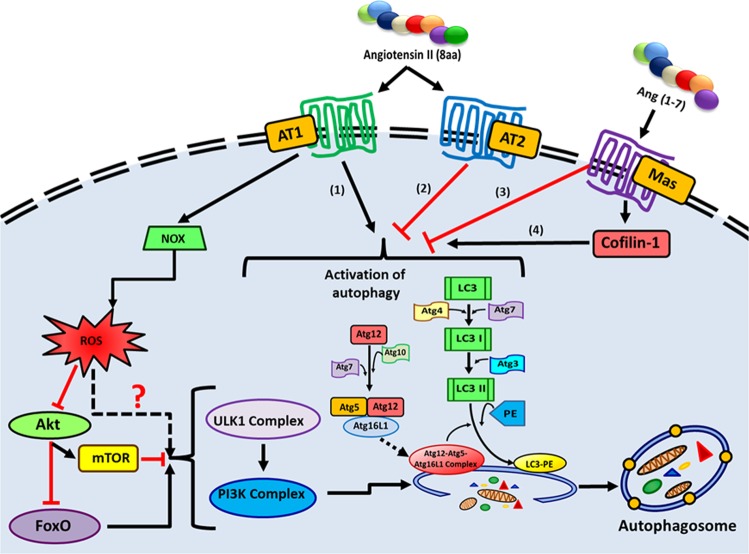
Metabolic syndrome (MetS) is a complex, emerging epidemic which disrupts the metabolic homeostasis of several organs, including liver, heart, pancreas, and adipose tissue. While studies have been conducted in these research areas, the pathogenesis and mechanisms of MetS remain debatable. Lines of evidence show that physiological systems, such as the renin-angiotensin system (RAS) and autophagy play vital regulatory roles in MetS. RAS is a pivotal system known for controlling blood pressure and fluid balance, whereas autophagy is involved in the degradation and recycling of cellular components, including proteins. Although RAS is activated in MetS, the interrelationship between RAS and autophagy varies in glucose homeostatic organs and their cross talk is poorly understood. Interestingly, autophagy is attenuated in the liver during MetS, whereas autophagic activity is induced in adipose tissue during MetS, indicating tissue-specific discordant roles. We discuss in vivo and in vitro studies conducted in metabolic tissues and dissect their tissue-specific effects. Moreover, our review will focus on the molecular mechanisms by which autophagy orchestrates MetS and the ways future treatments could target RAS in order to achieve metabolic homeostasis.
代谢综合征(MetS)是一种复杂的新兴流行疾病,会破坏包括肝脏、心脏、胰腺和脂肪组织在内的多个器官的代谢稳态。虽然已经在这些研究领域进行了研究,但 MetS 的发病机制和机制仍存在争议。有证据表明,生理系统,如肾素-血管紧张素系统(RAS)和自噬,在 MetS 中发挥着重要的调节作用。RAS 是一个关键系统,已知其可控制血压和液体平衡,而自噬则参与细胞成分(包括蛋白质)的降解和回收。尽管 RAS 在 MetS 中被激活,但 RAS 和自噬之间的相互关系在葡萄糖稳态器官中有所不同,它们之间的相互作用尚不清楚。有趣的是,MetS 期间肝脏中的自噬减弱,而 MetS 期间脂肪组织中的自噬活性增加,表明存在组织特异性的不一致作用。我们讨论了在代谢组织中进行的体内和体外研究,并剖析了它们的组织特异性影响。此外,我们的综述将重点介绍自噬协调 MetS 的分子机制,以及未来的治疗方法如何靶向 RAS 以实现代谢稳态。