Darrow Jonathan J, Kesselheim Aaron S
Program On Regulation, Therapeutics, And Law (PORTAL), Division of Pharmacoepidemiology and Pharmacoeconomics, Department of Medicine, Brigham and Women's Hospital and Harvard Medical School, Boston, Massachusetts, USA.
Open Forum Infect Dis. 2020 Jan 28;7(1):ofaa001. doi: 10.1093/ofid/ofaa001. eCollection 2020 Jan.
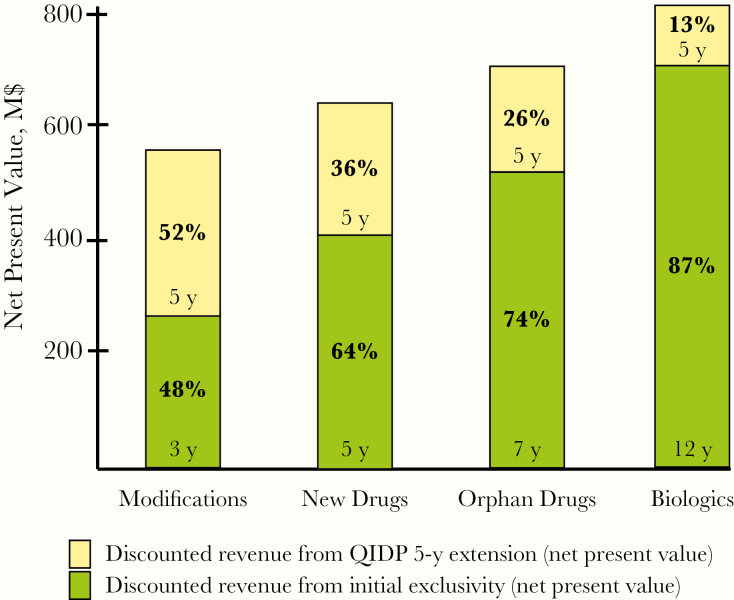
Antimicrobial resistance is of increasing global concern. To incentivize the creation of new treatments, the US Congress enacted the Generating Antibiotic Incentives Now Act (GAIN Act) of 2012, which provides benefits to manufacturers of Qualified Infectious Disease Products (QIDPs) including 5 years of additional nonpatent exclusivity. The results of this program have so far been disappointing, largely because QIDP eligibility criteria were not sufficiently targeted to unmet need. The time value of money also means that QIDP exclusivity disproportionately rewards modifications to existing drugs rather than the creation of new drugs. To improve the outlook, GAIN Act criteria should be limited to a more narrowly tailored list of qualifying pathogens to ensure that QIDPs offer clinical value not available from existing treatments. Additional options for improvement include greater reliance on animal data when determining QIDP eligibility and conditioning GAIN Act benefits on the availability of companion diagnostics.
抗生素耐药性日益引起全球关注。为激励研发新的治疗方法,美国国会颁布了2012年《促进抗生素激励现在法案》(GAIN法案),该法案为合格传染病产品(QIDP)的制造商提供优惠,包括5年的额外非专利独占期。该计划迄今的结果令人失望,主要原因是QIDP的资格标准未能充分针对未满足的需求。货币的时间价值还意味着,QIDP独占期给予现有药物改良的回报过高,而不是对新药研发的回报。为改善前景,GAIN法案的标准应限于更狭义定制的合格病原体清单,以确保QIDP提供现有治疗方法所没有的临床价值。其他改进选项包括在确定QIDP资格时更多地依赖动物数据,以及将GAIN法案的优惠与配套诊断方法的可用性挂钩。