Field Station for Epidemiology Bakum, University for Veterinary Medicine Hannover, Zeven, Germany.
Institute of Food Safety and Food Hygiene, Working Group Meat Hygiene, Freie Universität Berlin, Berlin, Germany.
PLoS One. 2020 Feb 4;15(2):e0228497. doi: 10.1371/journal.pone.0228497. eCollection 2020.
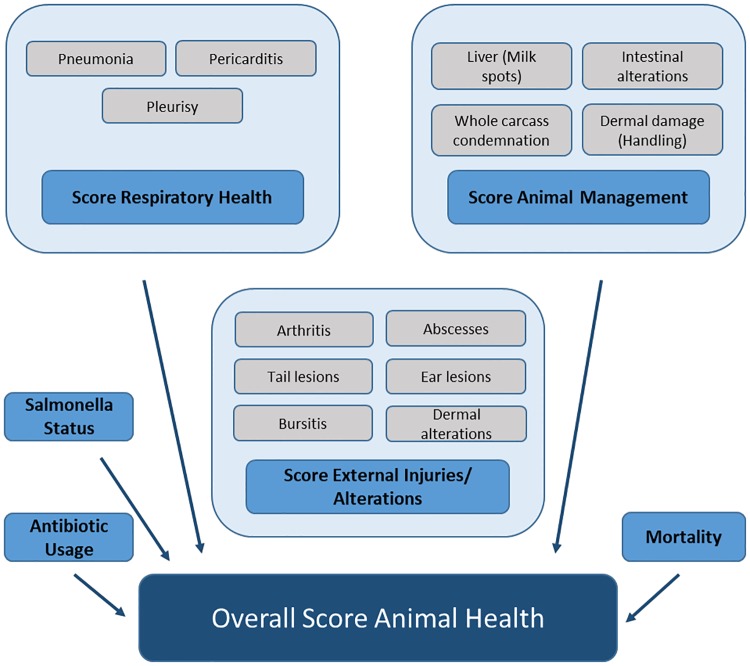
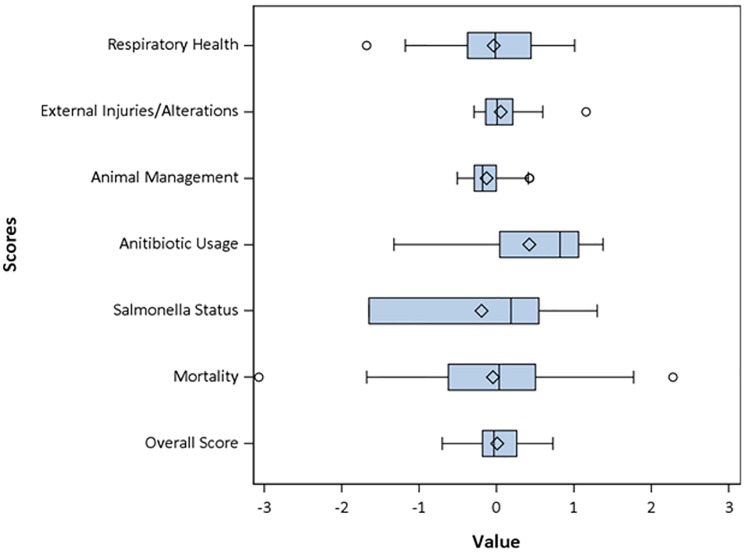
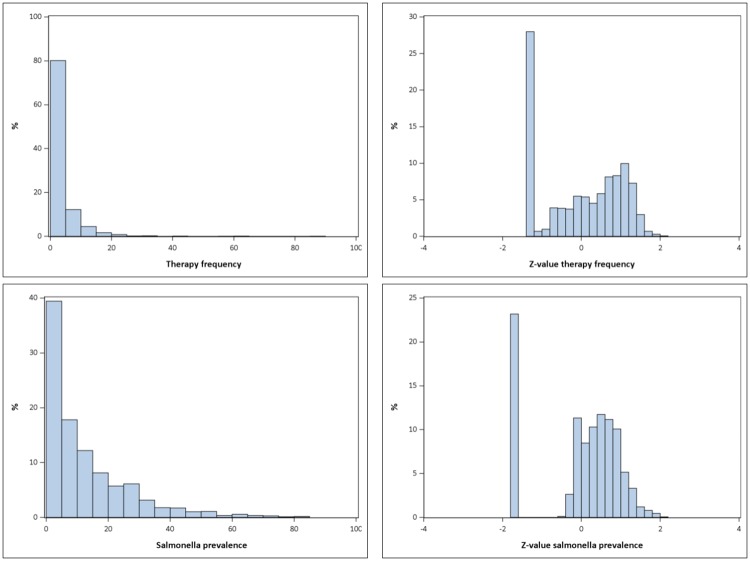
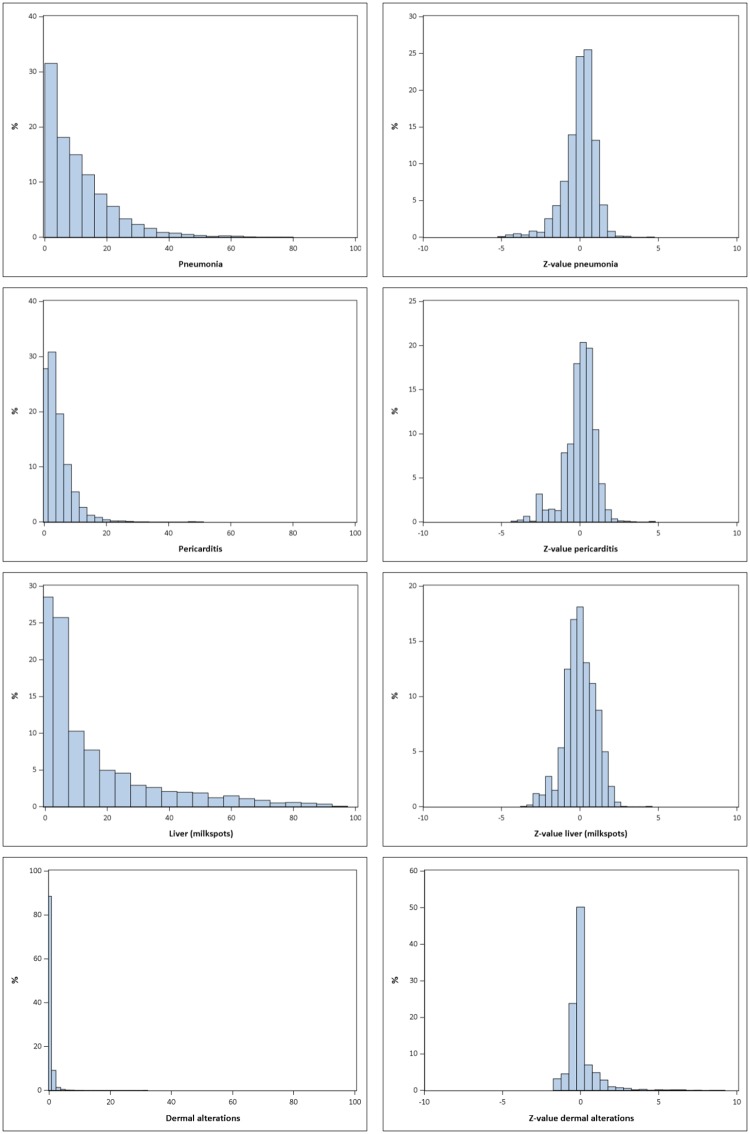
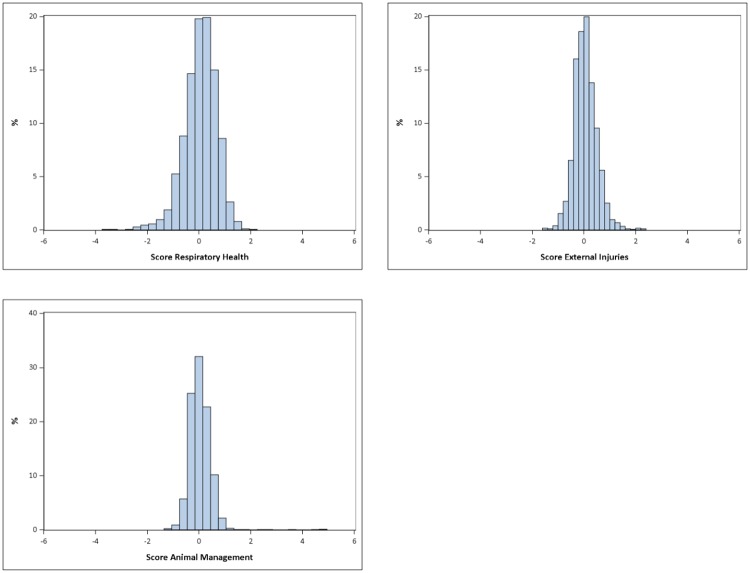
There are growing demands to ensure animal health and, from a broader perspective, animal welfare, especially for farmed animals. In addition to the newly developed welfare assessment protocols, which provide a harmonised method to measure animal health during farm visits, the question has been raised whether data from existing data collections can be used for an assessment without a prior farm visit. Here, we explore the possibilities of developing animal health scores for fattening pig herds using a) official meat inspection results, b) data on antibiotic usage and c) data from the QS (QS Qualität und Sicherheit GmbH) Salmonella monitoring programme in Germany. The objective is to aggregate and combine these register-like data into animal health scores that allow the comparison and benchmark of participating pig farms according to their health status. As the data combined in the scores have different units of measure and are collected in different abattoirs with possibly varying recording practices, we chose a relative scoring approach using z-transformations of different entrance variables. The final results are aggregated scores in which indicators are combined and weighted based on expert opinion according to their biological significance for animal health. Six scores have been developed to describe different focus areas, such as "Respiratory Health", "External Injuries/ Alterations", "Animal Management", "Antibiotic Usage", "Salmonella Status" and "Mortality". These "focus" area scores are finally combined into an "Overall Score". To test the scoring method, existing routine data from 1,747 pig farm units in Germany are used; these farm units are members of the QS Qualität und Sicherheit GmbH (QS) quality system. In addition, the scores are directly validated for 38 farm units. For these farm units, the farmers and their veterinarians provided their perceptions concerning the actual health status and existing health problems. This process allowed a comparison of the scoring results with actual health information using kappa coefficients as a measure of similarity. The score testing of the focus area scores using real information resulted in normalised data. The results of the validation showed satisfactory agreement between the calculated scores for the project farm units and the actual health information provided by the related farmers and veterinarians. In conclusion, the developed scoring method could become a viable benchmark and risk assessment instrument for animal health on a larger scale under the conditions of the German system.
人们越来越要求确保动物健康,从更广泛的角度来看,还要求确保动物福利,尤其是养殖动物的福利。除了新制定的福利评估方案为农场检查期间衡量动物健康提供了一种协调方法外,人们还提出了一个问题,即在没有事先进行农场检查的情况下,能否使用现有数据收集来进行评估。在这里,我们探索了使用以下方法为育肥猪群开发动物健康评分的可能性:a)官方肉类检验结果,b)抗生素使用数据,c)德国 QS(QS Qualität und Sicherheit GmbH)沙门氏菌监测计划的数据。目标是将这些类似于登记的数据汇总并组合成动物健康评分,以便根据健康状况对参与的养猪场进行比较和基准测试。由于评分中组合的数据具有不同的度量单位,并且是在不同的屠宰场收集的,这些屠宰场的记录做法可能有所不同,因此我们选择了一种相对评分方法,使用不同入口变量的 z 转换。最终结果是汇总评分,其中根据专家意见,根据对动物健康的生物学意义,对指标进行组合和加权。已经开发了六个评分来描述不同的重点领域,例如“呼吸健康”、“外部伤害/变化”、“动物管理”、“抗生素使用”、“沙门氏菌状况”和“死亡率”。这些“重点”领域评分最终组合成一个“总体评分”。为了测试评分方法,使用了德国 1747 个养猪场单位的现有常规数据;这些农场单位是 QS Qualität und Sicherheit GmbH(QS)质量体系的成员。此外,还直接对 38 个农场单位进行了评分验证。对于这些农场单位,农民及其兽医提供了他们对实际健康状况和现有健康问题的看法。这一过程允许使用kappa 系数作为相似性的度量标准,将评分结果与实际健康信息进行比较。使用真实信息对重点领域评分进行测试的结果得出了归一化数据。验证结果表明,对于项目农场单位的计算评分与相关农民和兽医提供的实际健康信息之间存在令人满意的一致性。总之,在德国体系的条件下,开发的评分方法可能成为一种可行的动物健康基准和风险评估工具。