Liu An-Song, Yu Hai-Yang, Yang Yan-Lin, Xue Fu-Yao, Chen Xia, Zhang Yun, Zhou Zi-Yu, Zhang Bin, Li Lan, Sun Chuan-Zheng, Huang Peng, Huang Ju-Fang
Department of Anatomy and Neurobiology, School of Basic Medical Sciences, Central South University, Changsha, People's Republic of China.
Department of Oncology, Affiliated Nanhua Hospital, University of South China, Hengyang, People's Republic of China.
Onco Targets Ther. 2019 Dec 31;12:11667-11677. doi: 10.2147/OTT.S231125. eCollection 2019.
Osteosarcoma (OS) is one of the most difficult cancers to treat due to its resistance to chemotherapy. The essential role played by Mcl-1 in promoting chemoresistance has been observed in a variety of cancers, including OS, while the underlying mechanism remains unclear.
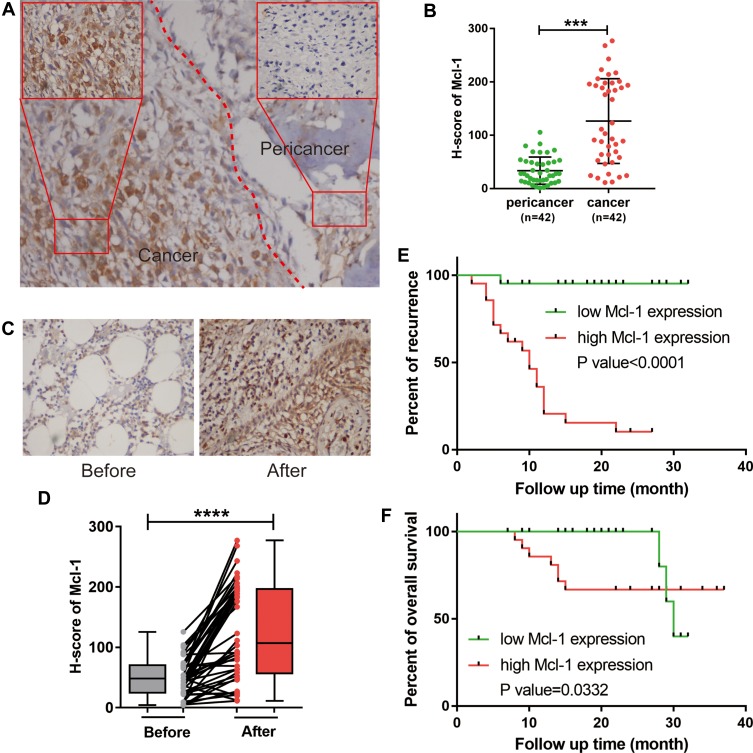
We investigated the expression of Mcl-1 in 42 paired OS specimens obtained before and after adjuvant chemotherapy, and its correlation with clinicopathological characteristics. Loss and gain of function studies were performed to analyze the effects of Mcl-1 modulations on the chemosensitivity, and the mechanism involved in the deregulation of Mcl-1 in OS cells.
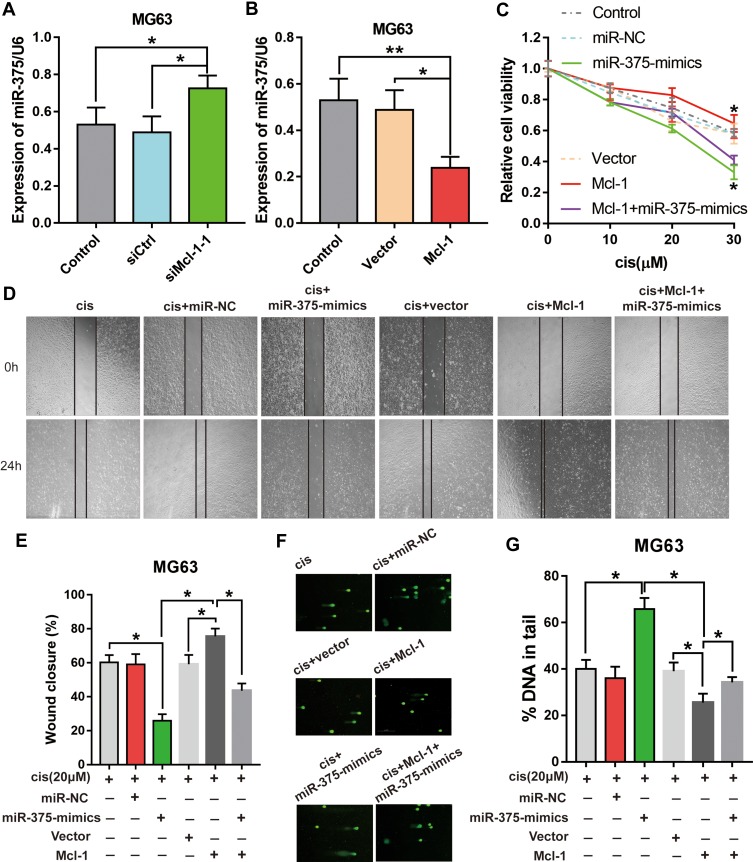
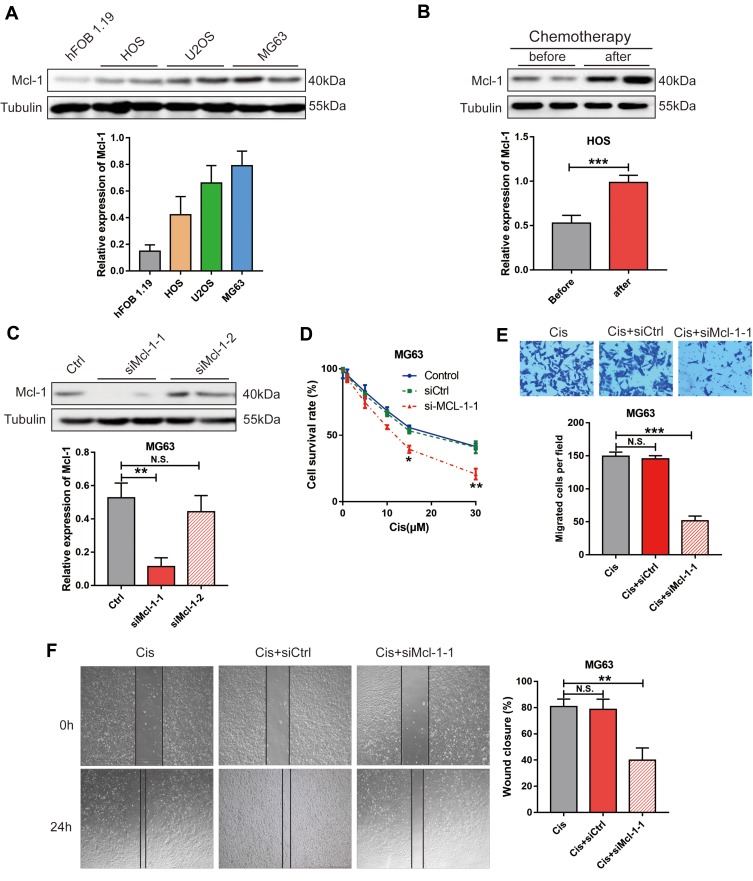
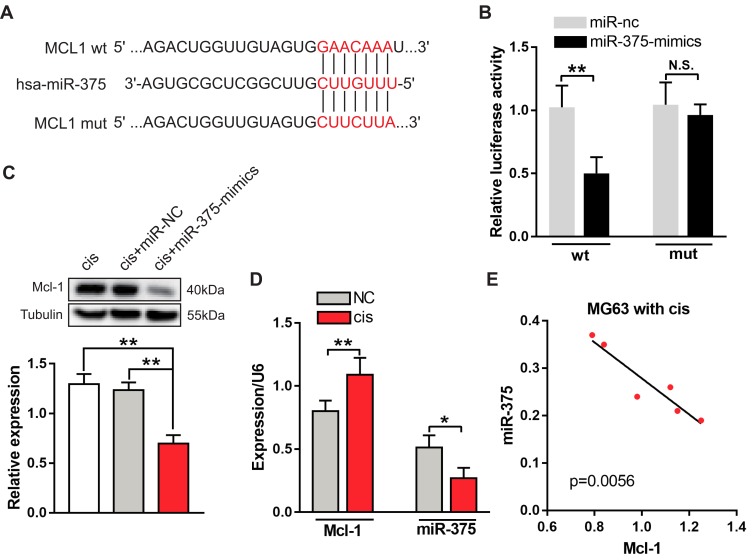
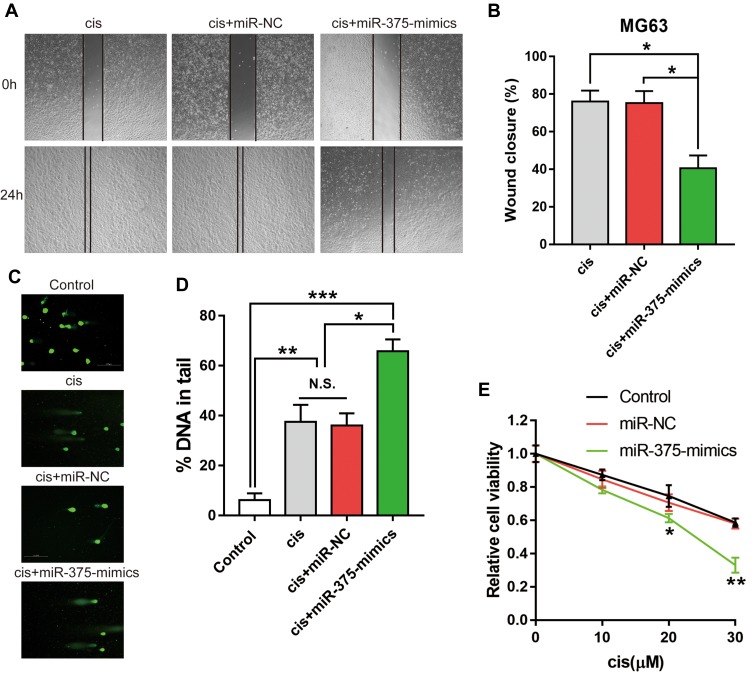
In OS specimens, the expression of Mcl-1 was significantly upregulated after chemotherapy, and high Mcl-1 expression was associated with poorer overall survival and an increased recurrence rate. Furthermore, we demonstrated that chemotherapy-driven increased Mcl-1 decreased chemosensitivity by promoting tumour proliferation and inhibiting DNA damage. Moreover, Mcl-1 was found to be a direct target of miR-375 in OS cells. The knockdown of Mcl-1 phenocopied miR-375 downregulation, and the overexpression of miR-375 rescued the effects of cisplatin-induced DNA damage mediated by Mcl-1.
Our data indicated that chemotherapy-driven increase in the expression of Mcl-1 plays a critical role in chemoresistance, and the intervention of the miR-375/Mcl-1 axis may offer a novel strategy to enhance chemosensitivity in OS treatment.
骨肉瘤(OS)是最难治疗的癌症之一,因为它对化疗具有抗性。在包括骨肉瘤在内的多种癌症中,已观察到Mcl-1在促进化疗抗性方面发挥的重要作用,但其潜在机制仍不清楚。
我们研究了42对骨肉瘤标本在辅助化疗前后Mcl-1的表达情况,及其与临床病理特征的相关性。进行了功能丧失和功能获得研究,以分析Mcl-1调节对化疗敏感性的影响,以及骨肉瘤细胞中Mcl-1失调所涉及的机制。
在骨肉瘤标本中,化疗后Mcl-1的表达显著上调,高Mcl-1表达与较差的总生存率和较高的复发率相关。此外,我们证明化疗驱动的Mcl-1增加通过促进肿瘤增殖和抑制DNA损伤而降低化疗敏感性。此外,发现Mcl-1是骨肉瘤细胞中miR-375的直接靶标。Mcl-1的敲低模拟了miR-375的下调,而miR-375的过表达挽救了由Mcl-1介导的顺铂诱导的DNA损伤的作用。
我们的数据表明,化疗驱动的Mcl-1表达增加在化疗抗性中起关键作用,miR-375/Mcl-1轴的干预可能为提高骨肉瘤治疗中的化疗敏感性提供一种新策略。