Field Matt, Puddephatt Jo-Anne, Goodwin Laura, Owens Lynn, Reaves Danielle, Holmes John
1Department of Psychology, University of Sheffield, Cathedral Court, 1 Vicar Lane, Sheffield, S1 2LT UK.
2Department of Psychological Sciences, University of Liverpool, Liverpool, UK.
Pilot Feasibility Stud. 2020 Jan 31;6:9. doi: 10.1186/s40814-020-0554-y. eCollection 2020.
Participation in temporary alcohol abstinence campaigns such as 'Dry January' may prompt enduring reductions in alcohol consumption. A randomized controlled trial (RCT) is required to establish any long-term benefits or negative consequences of temporary abstinence. In the present study, we randomized heavy drinkers to complete or intermittent alcohol abstinence for 4 weeks, in order to evaluate the feasibility of conducting a large-scale RCT.
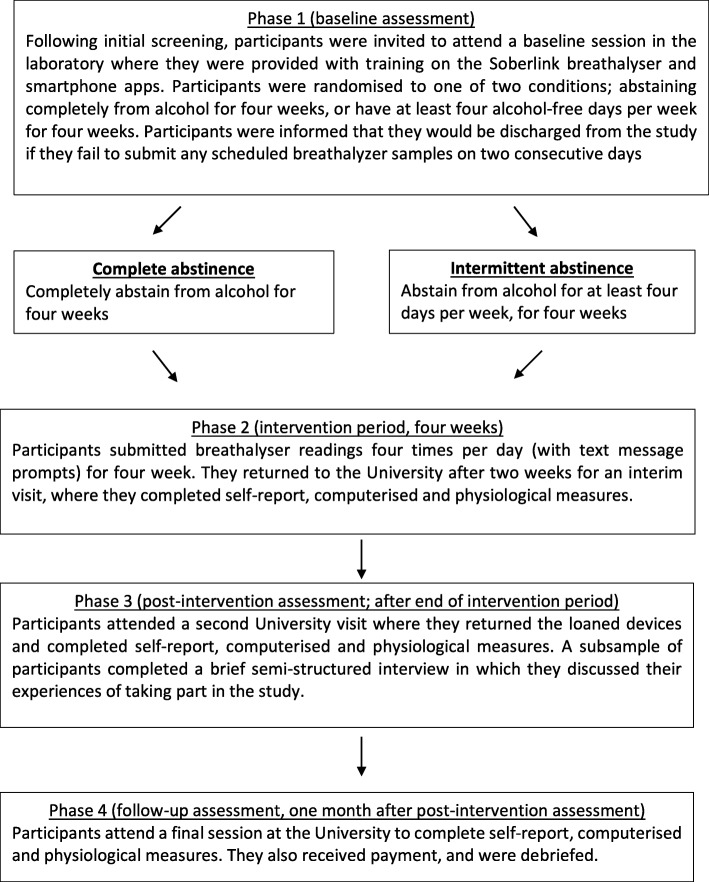
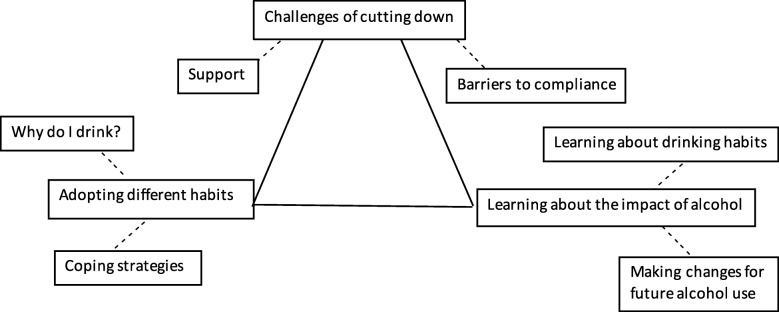
This was a mixed methods feasibility study in which we explored recruitment and retention to a randomized trial, compliance with alcohol abstinence instructions and barriers to compliance, and acceptability of study procedures (primary feasibility outcomes). A community sample of women aged between 40 and 60 who drank in excess of 28 alcohol units per week were randomized to abstain from alcohol for 4 weeks either completely or intermittently (at least four abstinent days per week). To monitor compliance, both groups provided regular breath samples on a cellular breathalyser. A subsample completed a semi-structured interview that probed barriers to compliance with abstinence instructions and acceptability of study procedures.
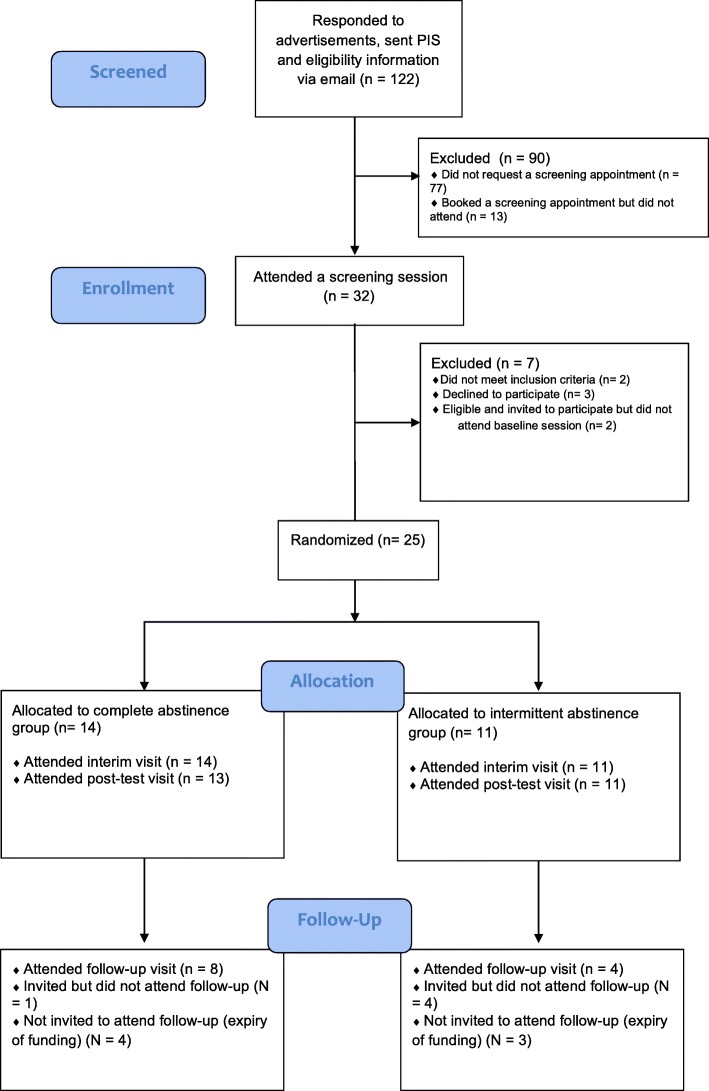
Within 5 months, we recruited, screened and randomized 25 participants (20% of participants who responded to advertisements: 14 in the complete abstinence group, 11 in the intermittent abstinence group), 24 of whom were retained throughout the 28-day intervention period. Participants in both groups tended to comply with the instructions: the median number of breathalyser-verified abstinent days was 24 (IQR = 15.5-25.0; 86% of target) in the complete abstinence group versus 12 (IQR = 10-15; 75% of target) in the intermittent abstinence group. Semi-structured interviews identified some barriers to compliance and methodological issues that should be considered in future research. No adverse events were reported.
It is feasible to recruit heavy drinking women from community settings and randomize them to either complete or intermittent abstinence from alcohol for 4 weeks. The majority of participants were retained in the study and compliance with the abstinence instructions was good, albeit imperfect. A comprehensive RCT to compare temporary alcohol abstinence with other alcohol reduction strategies on long-term alcohol consumption is feasible. Findings from such a trial would inform implementation of alcohol campaigns and interventions.
参与诸如“一月戒酒”之类的短期戒酒活动可能会促使饮酒量持续减少。需要通过一项随机对照试验(RCT)来确定短期戒酒的任何长期益处或负面后果。在本研究中,我们将重度饮酒者随机分为完全戒酒或间歇性戒酒4周,以评估开展大规模随机对照试验的可行性。
这是一项混合方法可行性研究,我们探讨了随机试验的招募和留存情况、对戒酒指示的依从性及依从的障碍,以及研究程序的可接受性(主要可行性结果)。从社区中选取年龄在40至60岁之间、每周饮酒超过28个酒精单位的女性样本,将她们随机分为完全戒酒4周或间歇性戒酒4周(每周至少4个戒酒日)。为监测依从性,两组均使用便携式呼气酒精检测仪定期提供呼气样本。一个子样本完成了半结构化访谈,探讨了依从戒酒指示的障碍和研究程序的可接受性。
在5个月内,我们招募、筛选并随机分配了25名参与者(占回应广告参与者的20%:完全戒酒组14人,间歇性戒酒组11人),其中24人在整个28天的干预期内均被留存。两组参与者都倾向于遵守指示:完全戒酒组经呼气酒精检测仪验证的戒酒天数中位数为24天(四分位距=15.5 - 25.0;达到目标的86%),而间歇性戒酒组为12天(四分位距=10 - 15;达到目标的75%)。半结构化访谈确定了一些依从性障碍和方法学问题,这些问题应在未来研究中予以考虑。未报告不良事件。
从社区环境中招募重度饮酒女性并将她们随机分为完全戒酒或间歇性戒酒4周是可行的。大多数参与者留在了研究中,对戒酒指示的依从性良好,尽管并不完美。开展一项全面的随机对照试验,比较短期戒酒与其他减少饮酒策略对长期饮酒量的影响是可行的。这样一项试验的结果将为酒精宣传活动和干预措施的实施提供信息。