Salve Jaysing, Pate Sucheta, Debnath Khokan, Langade Deepak
Internal Medicine, Risk Care Hospital/Prakruti Care Hospital/Jupiter Hospital, Thane, IND.
Clinical Research, Clinsearch Healthcare Solutions, Thane, IND.
Cureus. 2019 Dec 25;11(12):e6466. doi: 10.7759/cureus.6466.
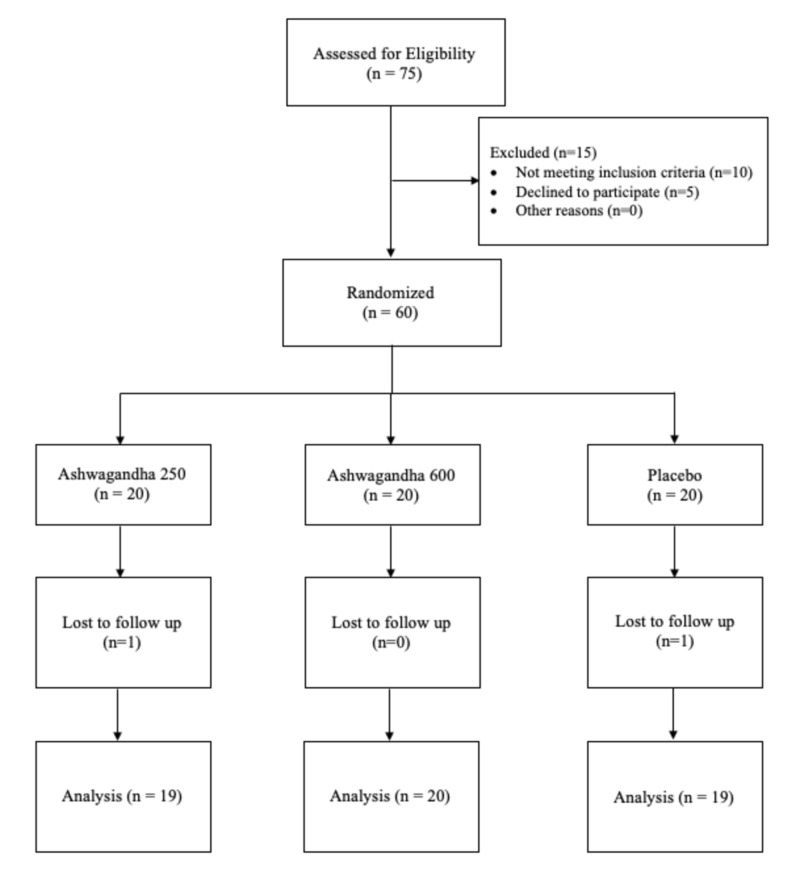
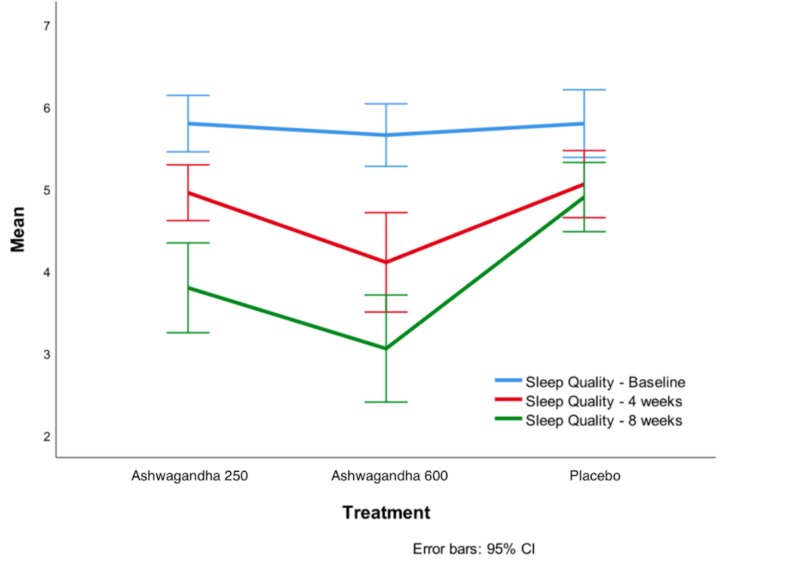
Background Stress, anxiety and impeded sleep are a frequent feature of life in modern societies. Across socio-economic strata, stress, anxiety and ineffective sleep detract from healthful living and serve as precursors of various ailments. The use of herbs to offset these antecedents and outcomes has greatly increased in recent years. Ashwagandha, an adaptogenic Ayurvedic herb, has been often used to combat and reduce stress and thereby enhance general wellbeing. While there have been other studies documenting the use of Ashwagandha for stress resistance, this is the first study to use a high-concentration root extract while also varying the dosage substantially. Therefore, this is the first study to offer insight into dose-response of a high concentration root extract. Material and methods In this eight-week, prospective, randomized, double-blind, placebo-controlled study, the stress-relieving effect of Ashwagandha root extract was investigated in stressed healthy adults. Sixty male and female participants with a baseline perceived stress scale (PSS) score >20 were randomized to receive capsules of Ashwagandha extract 125 mg, Ashwagandha extract 300 mg or identical placebo twice daily for eight weeks in a 1:1:1 ratio. Stress was assessed using PSS at baseline, four weeks and eight weeks. Anxiety was assessed using the Hamilton-Anxiety (HAM-A) scale and serum cortisol was measured at baseline and at eight weeks. Sleep quality was assessed using a seven-point sleep scale. A repeat measures ANOVA (general linear model) was used for assessment of treatment effect at different time periods. Post-hoc Dunnett's test was used for comparison of two treatments with placebo. Results Two participants (one each in 250 mg/day Ashwagandha and placebo) were lost to follow-up and 58 participants completed the study. A significant reduction in PSS scores was observed with Ashwagandha 250 mg/day (P < 0.05) and 600 mg/day (P < 0.001). Serum cortisol levels reduced with both Ashwagandha 250 mg/day (P < 0.05) and Ashwagandha 600 mg/day (P < 0.0001). Compared to the placebo group participants, the participants receiving Ashwagandha had significant improvement in sleep quality. Conclusion Ashwagandha root aqueous extract was beneficial in reducing stress and anxiety.
背景 压力、焦虑和睡眠障碍是现代社会生活中的常见特征。在各个社会经济阶层中,压力、焦虑和睡眠不佳都会损害健康生活,并成为各种疾病的先兆。近年来,使用草药来缓解这些先兆和后果的情况大幅增加。印度人参是一种具有适应原性的阿育吠陀草药,常被用于对抗和减轻压力,从而增进总体健康。虽然已有其他研究记录了印度人参在抗压力方面的用途,但这是第一项使用高浓度根提取物并大幅改变剂量的研究。因此,这是第一项深入研究高浓度根提取物剂量反应的研究。
材料与方法 在这项为期八周的前瞻性、随机、双盲、安慰剂对照研究中,研究了印度人参根提取物对处于压力下的健康成年人的减压效果。60名基线感知压力量表(PSS)得分>20的男性和女性参与者被随机分为三组,按1:1:1的比例,每天两次接受125毫克印度人参提取物胶囊、300毫克印度人参提取物胶囊或相同的安慰剂,持续八周。在基线、四周和八周时使用PSS评估压力。使用汉密尔顿焦虑量表(HAM-A)评估焦虑,并在基线和八周时测量血清皮质醇。使用七点睡眠量表评估睡眠质量。使用重复测量方差分析(一般线性模型)评估不同时间段的治疗效果。事后使用邓尼特检验比较两种治疗与安慰剂。
结果 两名参与者(每天服用250毫克印度人参组和安慰剂组各一名)失访,58名参与者完成了研究。每天服用250毫克(P < 0.05)和600毫克(P < 0.001)印度人参后,PSS得分显著降低。每天服用250毫克(P < 0.05)和600毫克(P < 0.0001)印度人参后,血清皮质醇水平均降低。与安慰剂组参与者相比,服用印度人参的参与者睡眠质量有显著改善。
结论 印度人参根水提取物有助于减轻压力和焦虑。