Kelgane Sunil B, Salve Jaysing, Sampara Prasanthi, Debnath Khokan
Emergency Medical Services, Maharashtra Emergency Medical Services, Pune, IND.
Internal Medicine, Risk Care Hospital, Thane, IND.
Cureus. 2020 Feb 23;12(2):e7083. doi: 10.7759/cureus.7083.
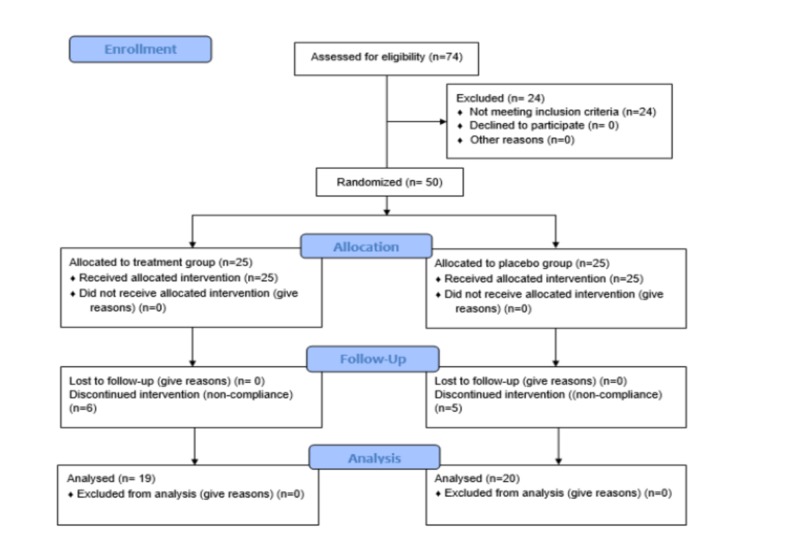
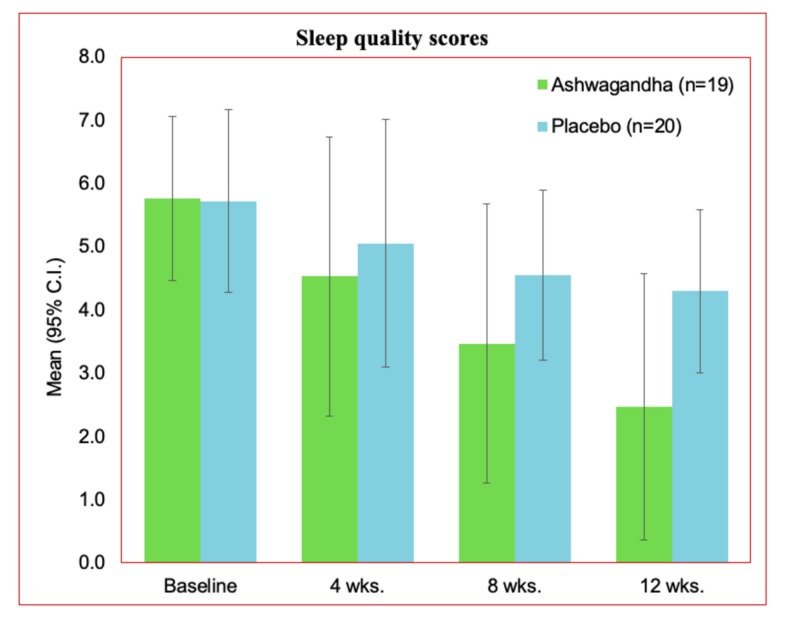
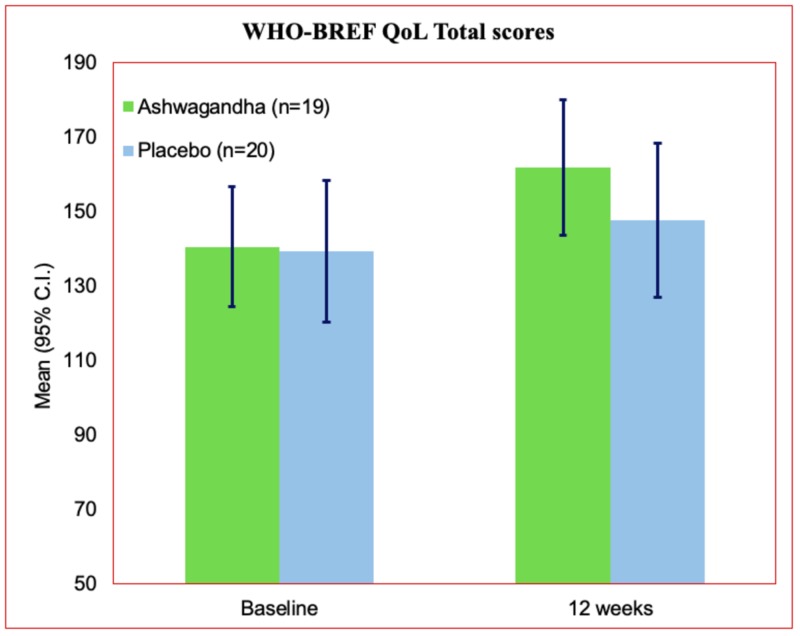
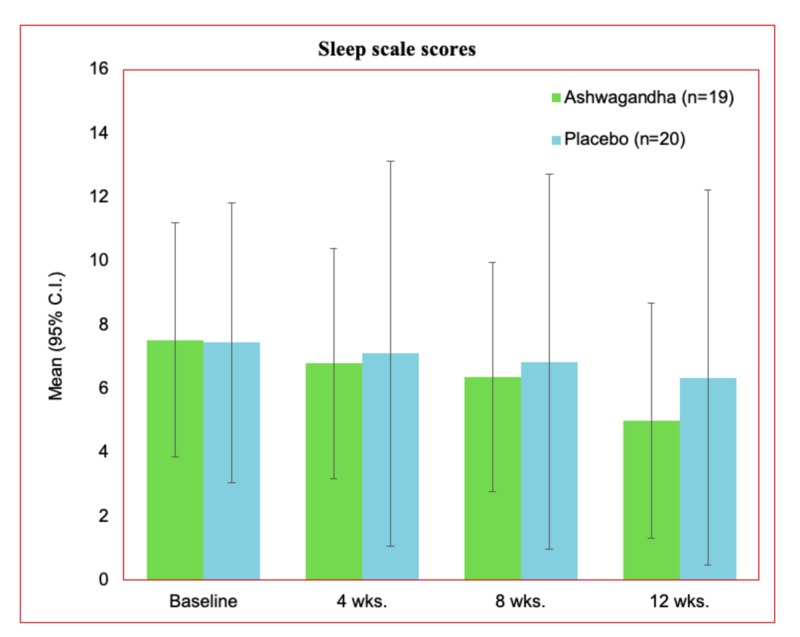
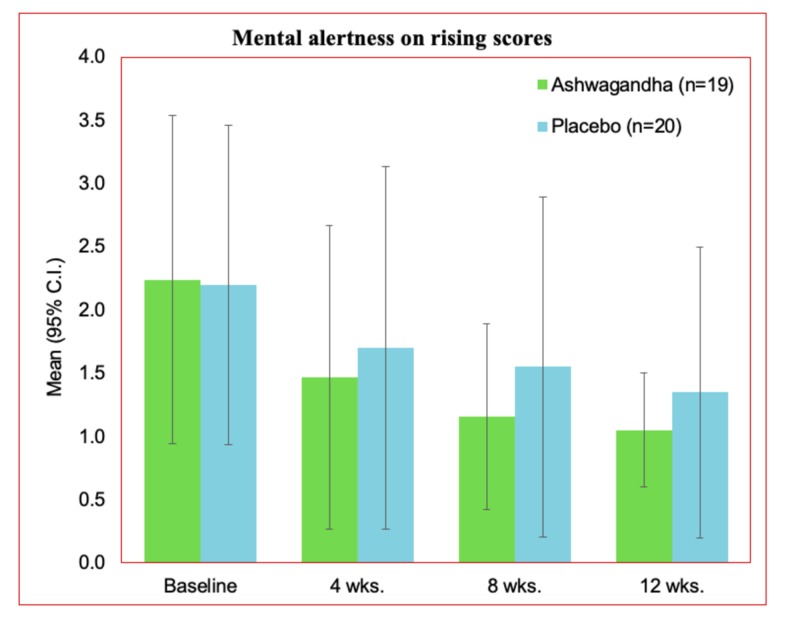
Background Ashwagandha is an excellent adaptogen that is being used since ancient times in Ayurvedic medicine. Traditionally, it is used for various ailments and general well-being, including the treatment of geriatric patients. Managing quality of life (QoL) remains a challenge for the elderly population, especially joint pain management, sleep, and general well-being. With a growing global elderly population, QoL management with efficient medication and supplementation is the major healthcare requirement. Objective The objective of this study was to assess the safety, efficacy, and tolerability of Ashwagandha ( (L.) Dunal.) root extract on the improvement of general health and sleep in elderly people. Methods This 12-week, prospective, randomized, double-blind, placebo-controlled study was conducted on individuals of either gender aged between 65-80 years. Participants were randomized to receive Ashwagandha root extract at a dose of 600 mg/day (n = 25) orally, or identical placebo capsules with the same dose (n = 25) for 12 weeks. Efficacy was assessed using the WHOQOL-BREF questionnaire, sleep quality, mental alertness on rising, and Physician's Global Assessment of Efficacy to Therapy (PGAET). The safety and tolerability were assessed using the clinical adverse events reporting and Patient's Global Assessment of Tolerability to Therapy (PGATT). Results Statistically significant (P<0.0001) improvement was observed in the Ashwagandha treatment group compared to the placebo. The mean (SD) total score of WHOQOL-BREF improved from 140.53 (8.25) at the baseline to 161.84(9.32) at the end of the study. The individual domain scores were also improved. At baseline, the sleep quality and the mental alertness on rising were comparatively low in both the groups. However, upon intervention, a significant increase in the quality of sleep (P<0.0001) and mental alertness (P<0.034) was observed in the Ashwagandha treatment group when compared to the placebo group. Overall improvement was observed for the general wellbeing, sleep quality, and mental alertness in the study population. The experimental group population displayed good tolerability to the test product and it was reported as safe and beneficial by the study participants. Conclusion The study outcomes suggest that Ashwagandha root extract was efficient in improving the QoL, sleep quality, and mental alertness as self-assessed by the elderly participants. The recommended dose used in this study could be effective for the elderly population.
南非醉茄是一种出色的适应原,在阿育吠陀医学中已被使用了数千年。传统上,它用于治疗各种疾病并促进整体健康,包括老年患者的治疗。对老年人群而言,管理生活质量(QoL)仍然是一项挑战,尤其是关节疼痛管理、睡眠和整体健康方面。随着全球老年人口的不断增加,通过有效的药物和补充剂来管理生活质量是主要的医疗保健需求。
本研究的目的是评估南非醉茄((L.) Dunal.)根提取物对改善老年人总体健康和睡眠的安全性、有效性和耐受性。
这项为期12周的前瞻性、随机、双盲、安慰剂对照研究针对年龄在65至80岁之间的男性和女性个体进行。参与者被随机分为两组,一组每天口服600毫克南非醉茄根提取物(n = 25),另一组服用相同剂量的安慰剂胶囊(n = 25),为期12周。使用世界卫生组织生活质量简表(WHOQOL - BREF)问卷、睡眠质量、起床时的精神警觉性以及医生对治疗效果的整体评估(PGAET)来评估疗效。通过临床不良事件报告和患者对治疗耐受性的整体评估(PGATT)来评估安全性和耐受性。
与安慰剂组相比,南非醉茄治疗组在统计学上有显著改善(P<0.0001)。WHOQOL - BREF的平均(标准差)总分从基线时的140.53(8.25)提高到研究结束时的161.84(9.32)。各个领域的得分也有所提高。在基线时,两组的睡眠质量和起床时的精神警觉性相对较低。然而,经过干预后与安慰剂组相比,南非醉茄治疗组的睡眠质量(P<0.0001)和精神警觉性(P<0.034)有显著提高。研究人群在总体健康、睡眠质量和精神警觉性方面都有整体改善。实验组人群对测试产品显示出良好的耐受性,研究参与者报告其安全且有益。
研究结果表明,南非醉茄根提取物在改善老年参与者自我评估的生活质量、睡眠质量和精神警觉性方面是有效的。本研究中使用的推荐剂量对老年人群可能有效。