Commissariat aux Energies Atomique et Alternative, Fundamental Research Division, Jacob Institut, Laboratoire de Cancérologie expérimentale, CEA, F-92265 Fontenay-aux-Roses, France.
Gustave Roussy, Institut National de la Santé et de la Recherche Médicale, U1138, 94800 Villejuif, France.
Int J Mol Sci. 2020 Jan 31;21(3):940. doi: 10.3390/ijms21030940.
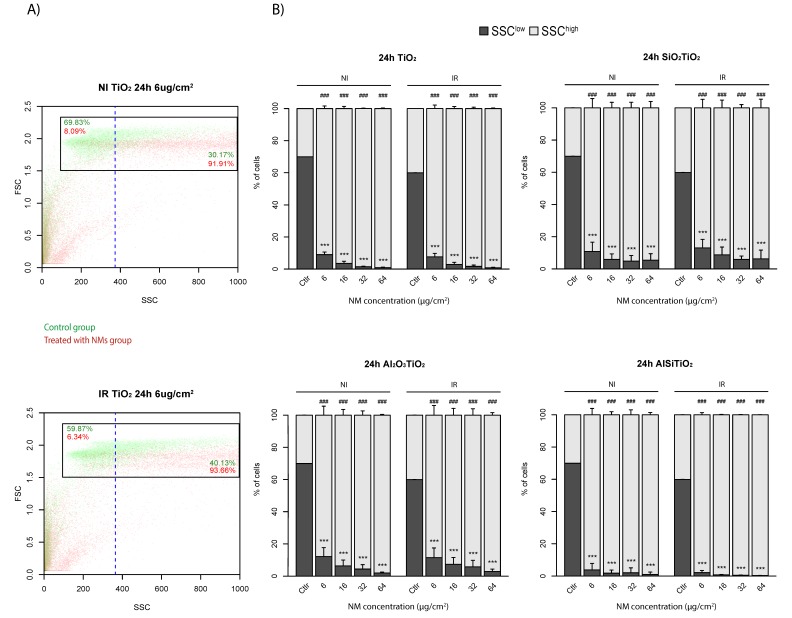
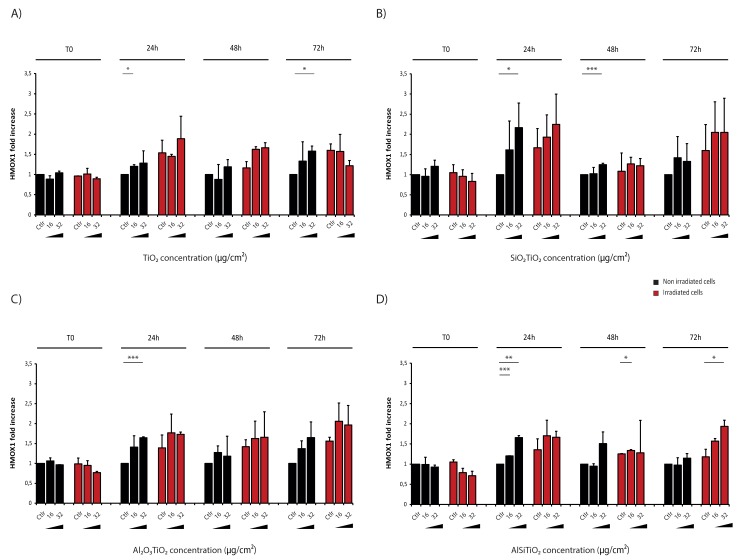
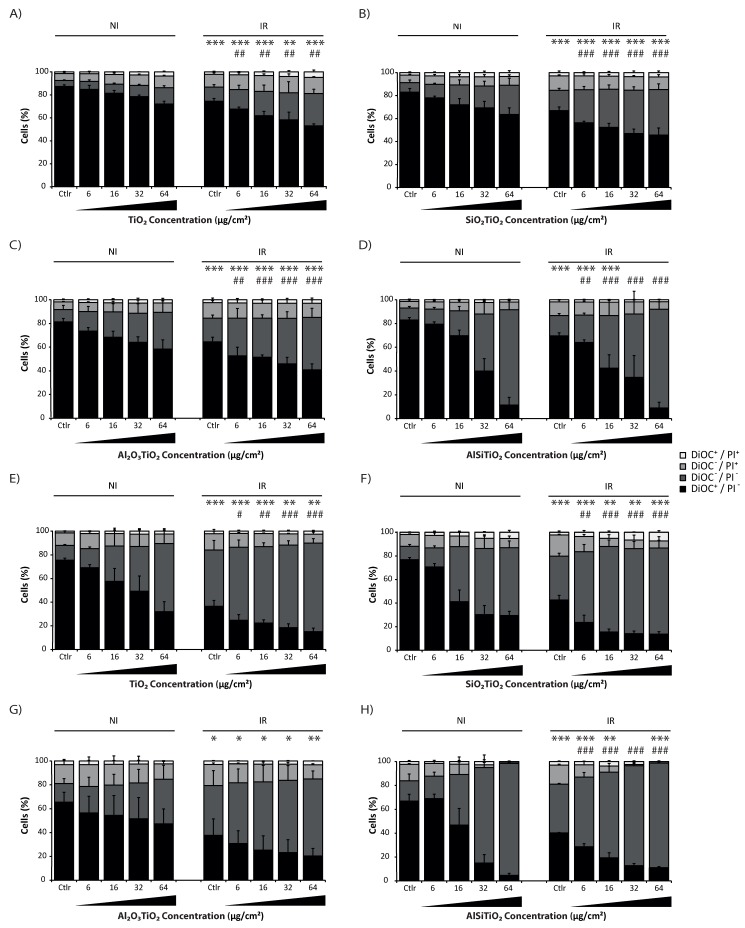
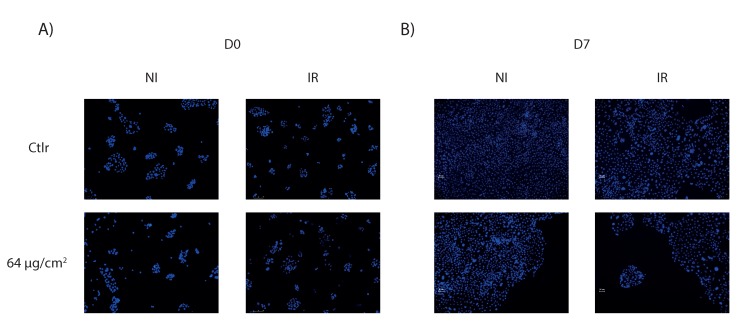
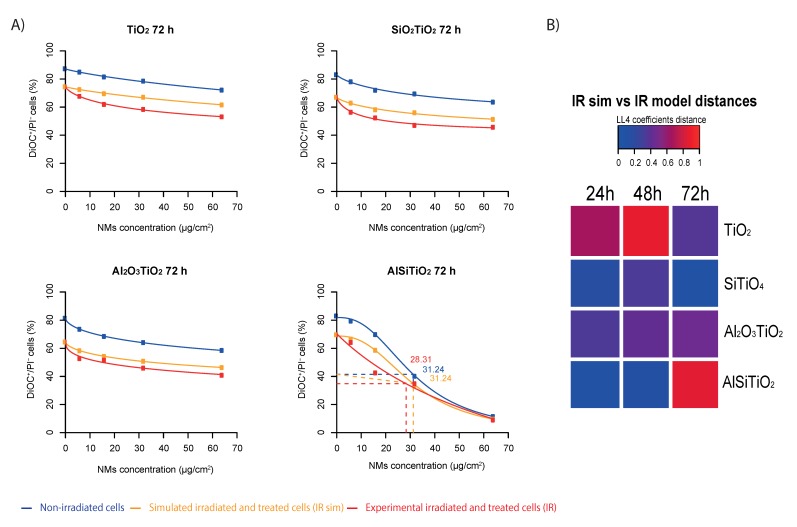
Among nanomaterials (NMs), titanium dioxide (TiO) is one of the most manufactured NMs and can be found in many consumers' products such as skin care products, textiles and food (as E171 additive). Moreover, due to its most attractive property, a photoactivation upon non-ionizing UVA radiation, TiO NMs is widely used as a decontaminating agent. Uncontrolled contaminations by TiO NMs during their production (professional exposure) or by using products (consumer exposure) are rather frequent. So far, TiO NMs cytotoxicity is still a matter of controversy depending on biological models, types of TiO NMs, suspension preparation and biological endpoints. TiO NMs photoactivation has been widely described for UV light radiation exposure, it could lead to reactive oxygen species production, known to be both cyto- and genotoxic on human cells. After higher photon energy exposition, such as X-rays used for radiotherapy and for medical imaging, TiO NMs photoactivation still occurs. Importantly, the question of its hazard in the case of body contamination of persons receiving radiotherapy was never addressed, knowing that healthy tissues surrounding the tumor are indeed exposed. The present work focuses on the analysis of human normal bronchiolar cell response after co-exposition TiO NMs (with different coatings) and ionizing radiation. Our results show a clear synergistic effect, in terms of cell viability, cell death and oxidative stress, between TiO NMS and radiation.
在纳米材料 (NMs) 中,二氧化钛 (TiO) 是制造量最大的纳米材料之一,存在于许多消费者产品中,如护肤品、纺织品和食品 (作为 E171 添加剂)。此外,由于其最具吸引力的特性,即在非电离 UVA 辐射下的光激活特性,TiO NMs 被广泛用作去污剂。在生产过程中 (职业暴露) 或使用产品时 (消费者暴露),TiO NMs 不受控制的污染相当频繁。到目前为止,TiO NMs 的细胞毒性仍然存在争议,这取决于生物模型、TiO NMs 的类型、悬浮液的制备和生物终点。TiO NMs 的光激活已广泛描述为暴露于紫外光辐射,它可能导致活性氧物质的产生,已知对人体细胞具有细胞毒性和遗传毒性。在更高的光子能量暴露后,如用于放射治疗和医学成像的 X 射线,TiO NMs 的光激活仍然会发生。重要的是,在接受放射治疗的人的身体污染的情况下,其危害的问题从未被提及,因为肿瘤周围的健康组织确实会受到照射。本工作重点分析了 TiO NMs(具有不同涂层)和电离辐射共同暴露后对人正常细支气管细胞的反应。我们的结果表明,TiO NMs 和辐射之间在细胞活力、细胞死亡和氧化应激方面存在明显的协同效应。