Department of Internal Medicine, Division of Neurology, School of Medicine, Showa University, Tokyo 142-8666, Japan.
Department of Pharmacology, School of Medicine, Showa University, Tokyo 142-8666, Japan.
Int J Mol Sci. 2020 Jan 31;21(3):952. doi: 10.3390/ijms21030952.
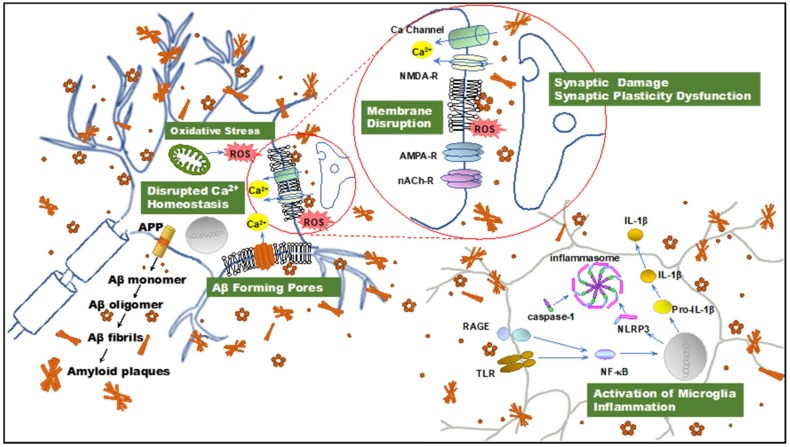
Worldwide, Alzheimer's disease (AD) is the most common age-related neurodegenerative disease and is characterized by unique pathological hallmarks in the brain, including plaques composed of amyloid β-protein (Aβ) and neurofibrillary tangles of tau protein. Genetic studies, biochemical data, and animal models have suggested that Aβ is responsible for the pathogenesis of AD (i.e., the amyloid hypothesis). Indeed, Aβ molecules tend to aggregate, forming oligomers, protofibrils, and mature fibrils. However, while these Aβ species form amyloid plaques of the type implicated in AD neurodegeneration, recent clinical trials designed to reduce the production of Aβ and/or the plaque burden have not demonstrated clinical efficacy. In addition, recent studies using synthetic Aβ peptides, cell culture models, Arctic transgenic mice, and human samples of AD brain tissues have suggested that the pre-fibrillar forms of Aβ, particularly Aβ protofibrils, may be the most critical species, compared with extracellular fibrillar forms. We recently reported that protofibrils of Aβ disturbed membrane integrity by inducing reactive oxygen species generation and lipid peroxidation, resulting in decreased membrane fluidity, intracellular calcium dysregulation, depolarization, and synaptic toxicity. Therefore, the therapeutic reduction of protofibrils may prevent the progression of AD by ameliorating neuronal damage and cognitive dysfunction through multiple mechanisms.
在全球范围内,阿尔茨海默病(AD)是最常见的与年龄相关的神经退行性疾病,其特征是大脑中存在独特的病理标志物,包括由淀粉样β蛋白(Aβ)组成的斑块和tau 蛋白的神经纤维缠结。遗传研究、生化数据和动物模型表明,Aβ是 AD 发病机制的罪魁祸首(即淀粉样蛋白假说)。事实上,Aβ分子容易聚集,形成寡聚体、原纤维和成熟纤维。然而,尽管这些 Aβ 物种形成了与 AD 神经退行性变有关的淀粉样斑块,但旨在减少 Aβ 产生和/或斑块负担的最近临床试验并未显示出临床疗效。此外,最近使用合成 Aβ 肽、细胞培养模型、北极转基因小鼠和 AD 脑组织的人类样本的研究表明,与细胞外纤维形式相比,Aβ 的预纤维形式,特别是 Aβ 原纤维,可能是最关键的物种。我们最近报告称,Aβ 原纤维通过诱导活性氧生成和脂质过氧化破坏膜完整性,导致膜流动性降低、细胞内钙失调、去极化和突触毒性。因此,通过多种机制减轻神经元损伤和认知功能障碍,减少原纤维的治疗可能会阻止 AD 的进展。