Department of Medical and Surgical Sciences, Magna Græcia University, 88100 Catanzaro, Italy.
Science of Health Department, Magna Græcia University, 88100 Catanzaro, Italy.
Nutrients. 2020 Jan 31;12(2):382. doi: 10.3390/nu12020382.
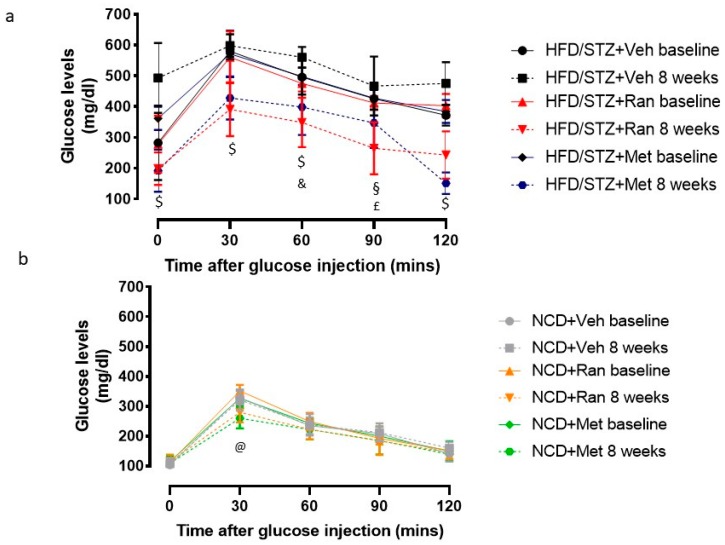
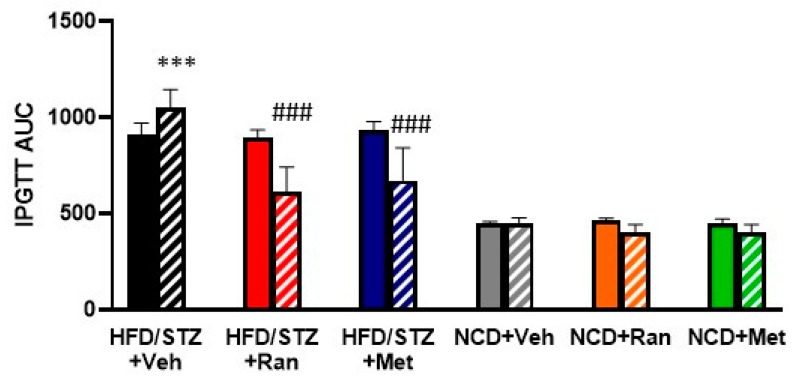
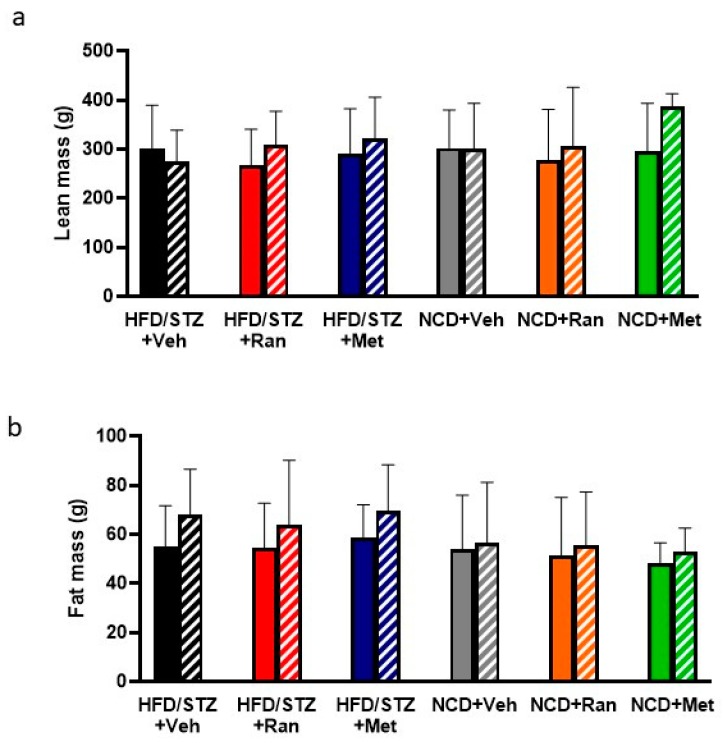
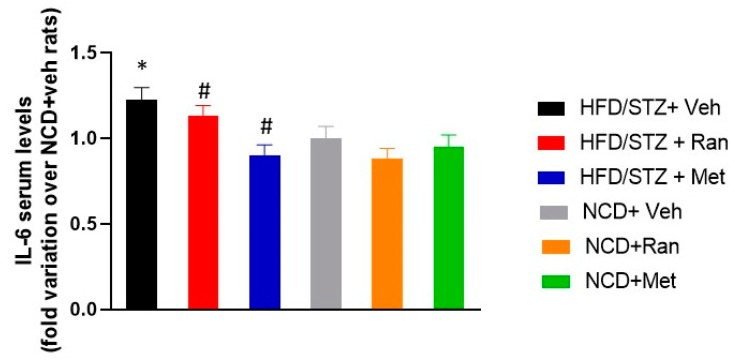
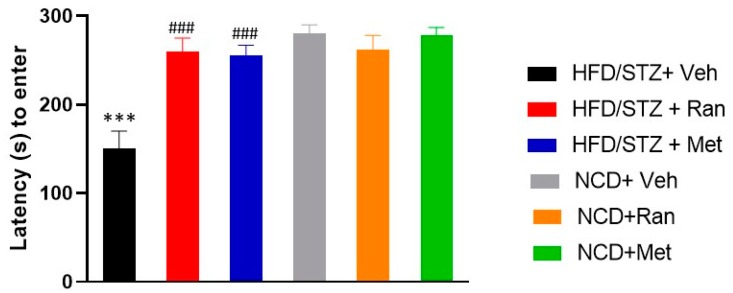
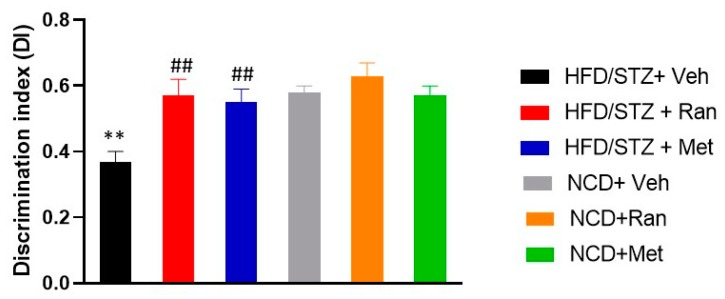
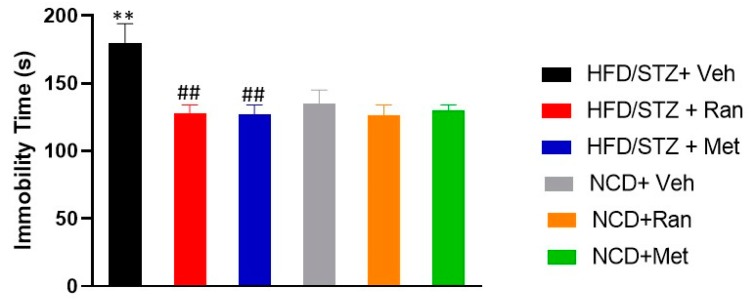
Type 2 diabetes mellitus (T2DM) is a risk factor for cognitive impairment. Ranolazine, an anti-ischemic drug used in the treatment of angina pectoris, has been shown to possess hypoglycemic properties in pre-clinical and clinical studies. The aim of this study was to evaluate the effects of ranolazine on glucose metabolism and cognitive function in a T2DM model of Wistar rats. Diabetes was induced by a high fat diet (HFD) and streptozotocin (STZ). The control group received a normal caloric diet (NCD) and sodium citrate buffer. Metformin, an effective hypoglycemic drug, was employed as a positive control. Animals were divided into the following groups: HFD/STZ + Ranolazine, HFD/STZ + Metformin, HFD/STZ + Vehicle, NCD + Vehicle, NCD + Ranolazine, and NCD + Metformin. Rats received ranolazine (20 mg/kg), metformin (300 mg/kg), or water, for 8 weeks. At the end of the treatments, all animals underwent to an intraperitoneal glucose tolerance test (IPGTT) and behavioral tests, including passive avoidance, novel object recognition, forced swimming, and elevate plus maze tests. Interleukin-6 plasma levels in the six treatment groups were assessed by Elisa assay. Body mass composition was estimated by nuclear magnetic resonance (NMR). Glucose responsiveness significantly improved in the HFD/STZ + Ranolazine ( < 0.0001) and HFD/STZ + Metformin ( = 0.003) groups. There was a moderate effect on blood glucose levels in the NCD + Ranolazine and NCD + Metformin groups. Lean body mass was significantly increased in the HFD/STZ + Ranolazine and HFD/STZ + Metformin animals, compared to HFD/STZ + Vehicle animals. Ranolazine improved learning and long-term memory in HFD/STZ + Ranolazine compared to HFD/STZ + Vehicle ( < 0.001) and ameliorated the pro-inflammatory profile of diabetic mice. These results support the hypothesis of a protective effect of ranolazine against cognitive decline caused by T2DM.
2 型糖尿病(T2DM)是认知障碍的一个危险因素。雷诺嗪是一种用于治疗心绞痛的抗缺血药物,在临床前和临床研究中已显示出具有降血糖作用。本研究旨在评估雷诺嗪对 Wistar 大鼠 2 型糖尿病模型葡萄糖代谢和认知功能的影响。糖尿病通过高脂肪饮食(HFD)和链脲佐菌素(STZ)诱导。对照组给予正常热量饮食(NCD)和柠檬酸钠缓冲液。二甲双胍作为一种有效的降糖药物,作为阳性对照。动物分为以下几组:HFD/STZ+雷诺嗪、HFD/STZ+二甲双胍、HFD/STZ+载体、NCD+载体、NCD+雷诺嗪和 NCD+二甲双胍。大鼠给予雷诺嗪(20mg/kg)、二甲双胍(300mg/kg)或水,治疗 8 周。治疗结束时,所有动物均行腹腔内葡萄糖耐量试验(IPGTT)和行为学测试,包括被动回避、新物体识别、强迫游泳和高架十字迷宫测试。采用 Elisa 法检测 6 组治疗动物的白细胞介素 6 血浆水平。采用磁共振(NMR)估计体重成分。HFD/STZ+雷诺嗪(<0.0001)和 HFD/STZ+二甲双胍(=0.003)组的葡萄糖反应性显著改善。NCD+雷诺嗪和 NCD+二甲双胍组的血糖水平有中度影响。与 HFD/STZ+载体动物相比,HFD/STZ+雷诺嗪和 HFD/STZ+二甲双胍动物的瘦体重显著增加。与 HFD/STZ+载体(<0.001)相比,HFD/STZ+雷诺嗪可改善 HFD/STZ+雷诺嗪动物的学习和长期记忆,并改善糖尿病小鼠的促炎表型。这些结果支持雷诺嗪对 2 型糖尿病引起的认知能力下降具有保护作用的假说。