Department of Medicine, Division of Oncology, Stanford University School of Medicine, Stanford, CA, USA.
Department of Genetics, Stanford University School of Medicine, Stanford, CA, USA.
Nat Genet. 2019 Jul;51(7):1113-1122. doi: 10.1038/s41588-019-0423-x. Epub 2019 Jun 17.
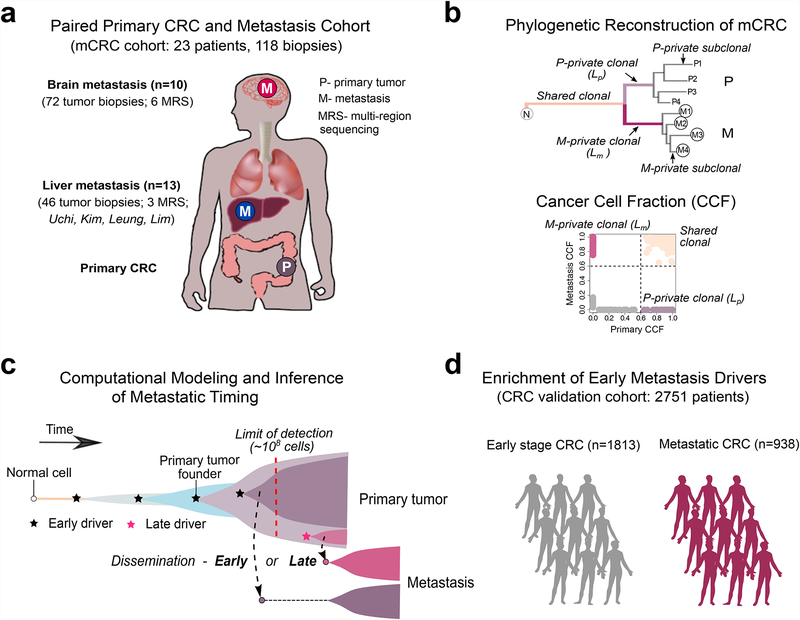
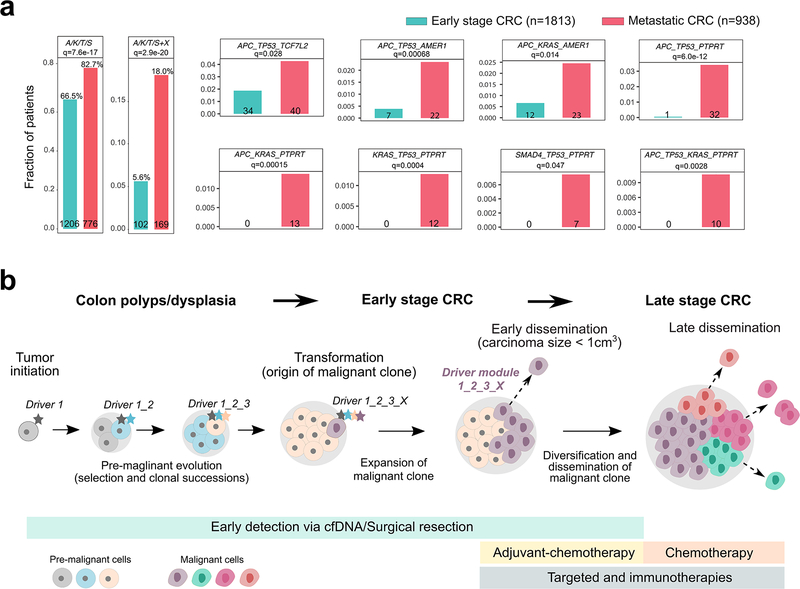
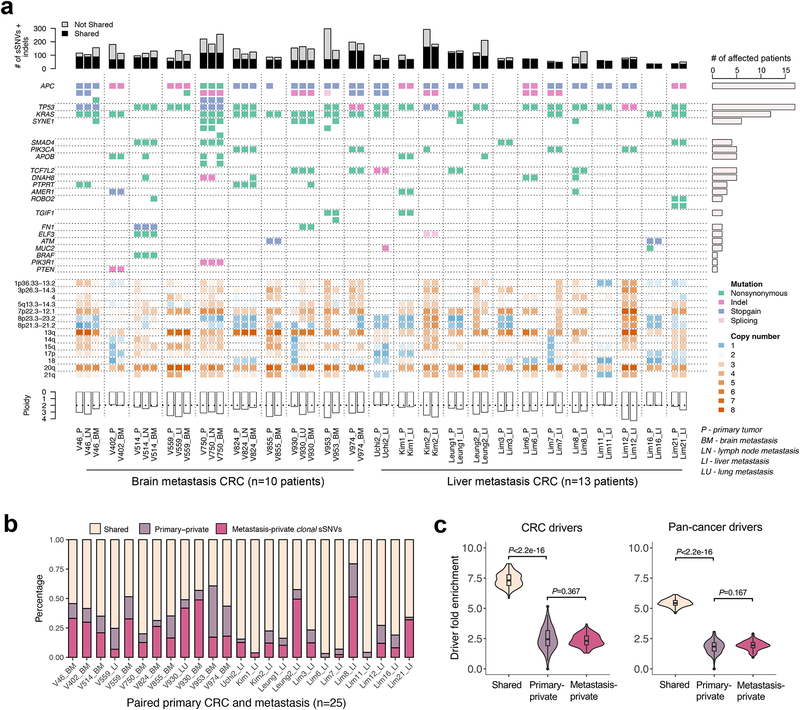
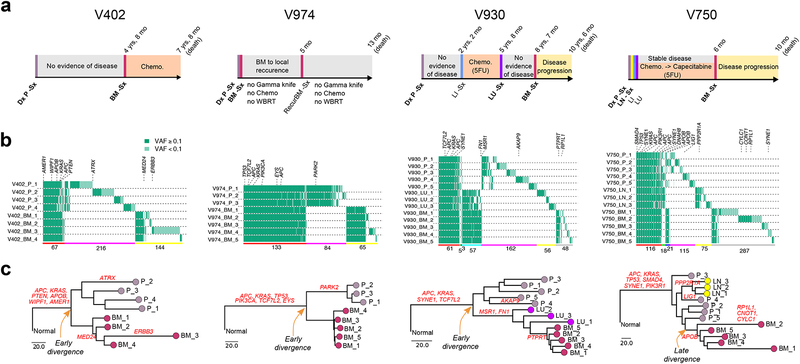
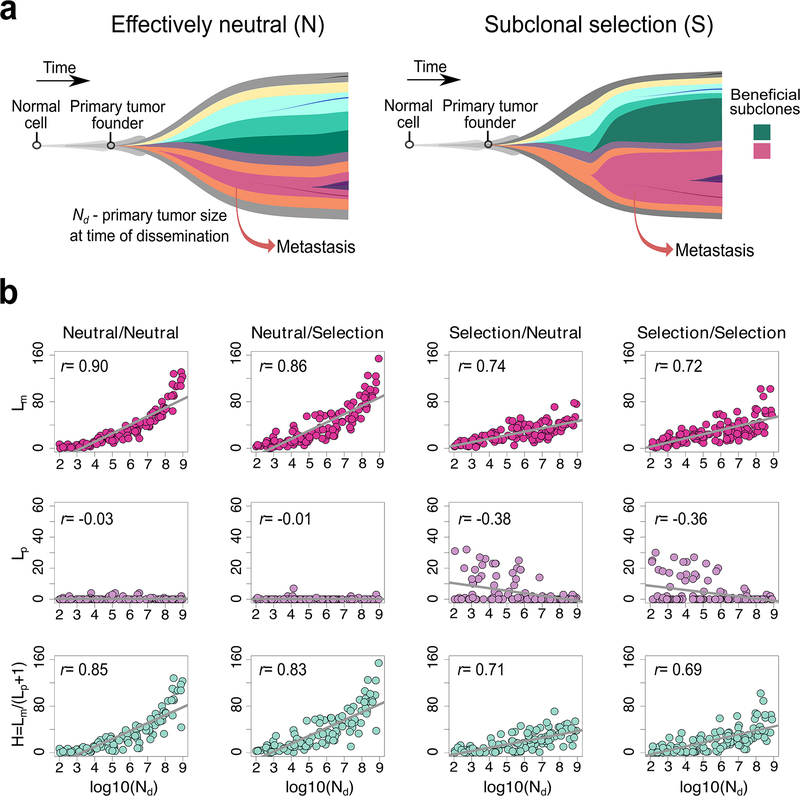
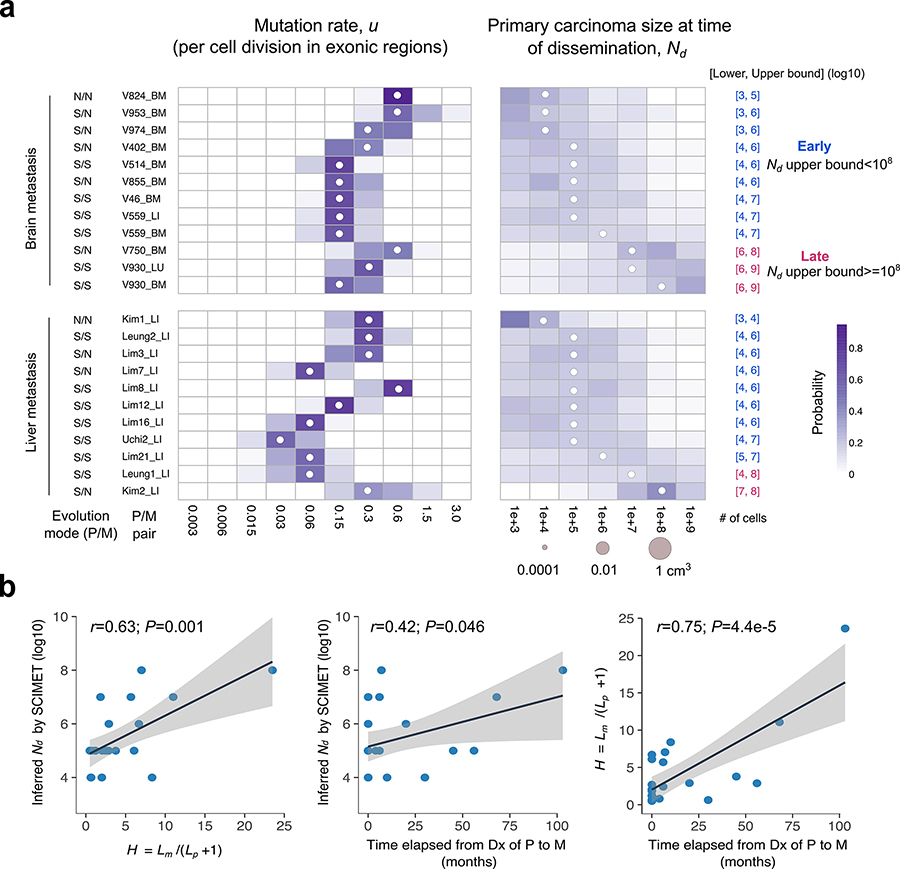
Both the timing and molecular determinants of metastasis are unknown, hindering treatment and prevention efforts. Here we characterize the evolutionary dynamics of this lethal process by analyzing exome-sequencing data from 118 biopsies from 23 patients with colorectal cancer with metastases to the liver or brain. The data show that the genomic divergence between the primary tumor and metastasis is low and that canonical driver genes were acquired early. Analysis within a spatial tumor growth model and statistical inference framework indicates that early disseminated cells commonly (81%, 17 out of 21 evaluable patients) seed metastases while the carcinoma is clinically undetectable (typically, less than 0.01 cm). We validated the association between early drivers and metastasis in an independent cohort of 2,751 colorectal cancers, demonstrating their utility as biomarkers of metastasis. This conceptual and analytical framework provides quantitative in vivo evidence that systemic spread can occur early in colorectal cancer and illuminates strategies for patient stratification and therapeutic targeting of the canonical drivers of tumorigenesis.
转移的时间和分子决定因素尚不清楚,这阻碍了治疗和预防工作。在这里,我们通过分析 23 名患有结直肠癌并转移至肝脏或脑部的患者的 118 个活检样本的外显子组测序数据,来描述这一致命过程的进化动态。数据表明,原发肿瘤和转移瘤之间的基因组差异较小,并且经典的驱动基因很早就被获得。在空间肿瘤生长模型和统计推断框架内进行的分析表明,早期播散的细胞通常(81%,21 名可评估患者中的 17 名)在癌症临床上尚未检测到(通常小于 0.01cm)时就会形成转移。我们在另一个独立的 2751 例结直肠癌队列中验证了早期驱动因素与转移之间的关联,证明它们可用作转移的生物标志物。这个概念和分析框架提供了定量的体内证据,表明结直肠癌的系统性扩散可能很早就发生,并阐明了患者分层和针对肿瘤发生的经典驱动因素进行治疗靶向的策略。