Department of Chemistry, Pennsylvania State University, New Kensington, PA, 15068, USA.
Department of Electro-Mechanical Engineering Technology, Pennsylvania State University, New Kensington, PA, 15068, USA.
Nat Commun. 2020 Feb 5;11(1):727. doi: 10.1038/s41467-020-14538-z.
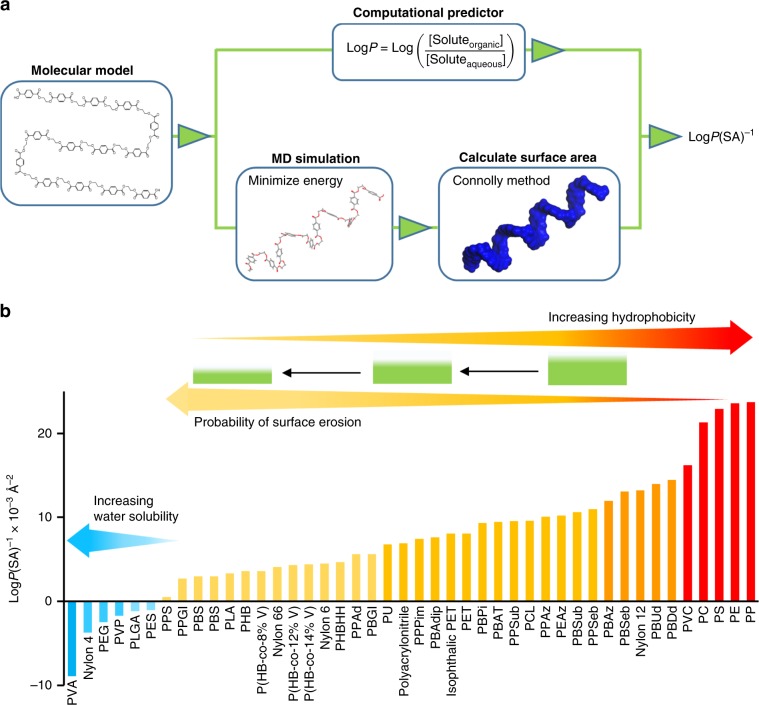
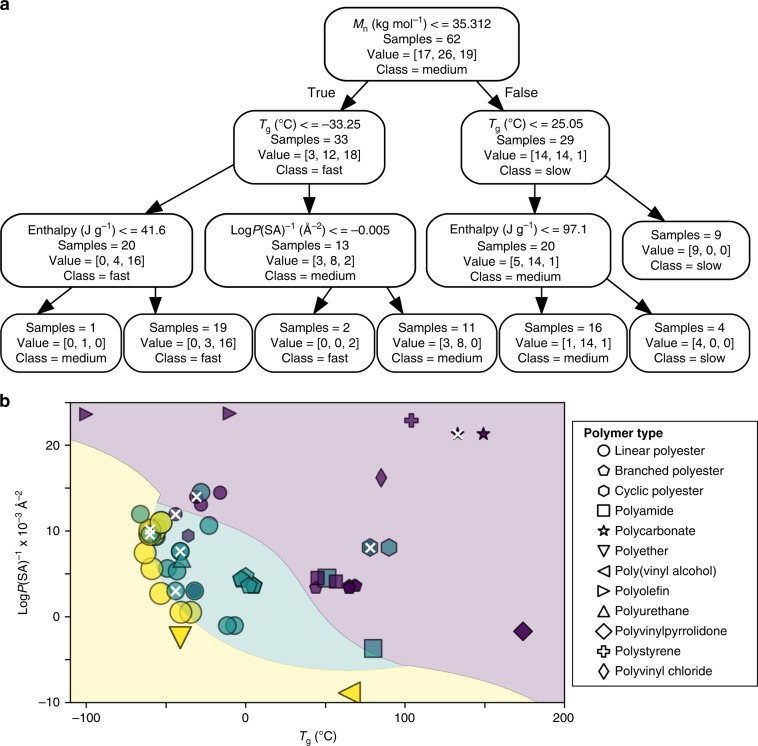
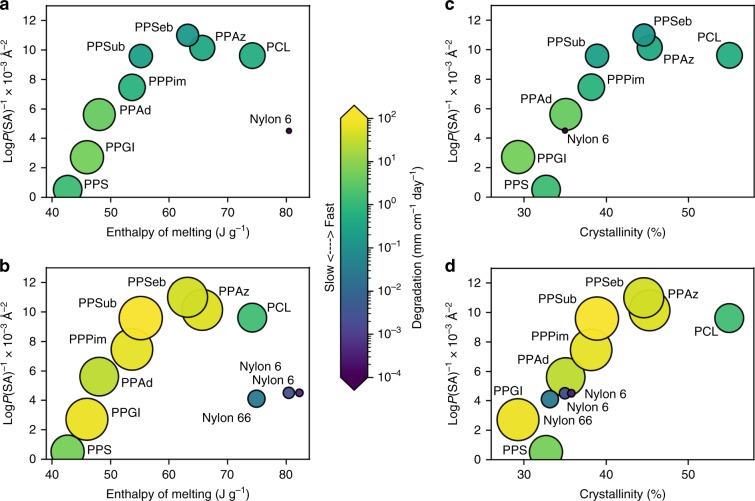
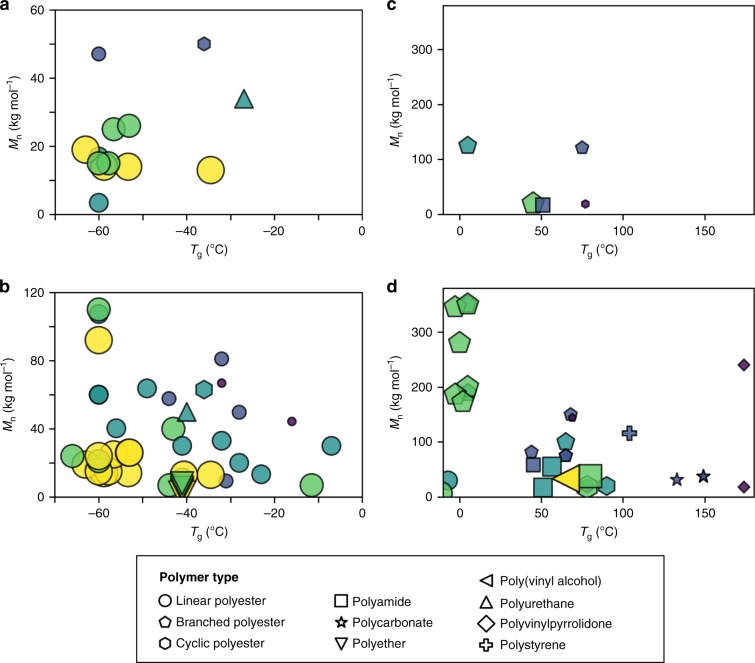
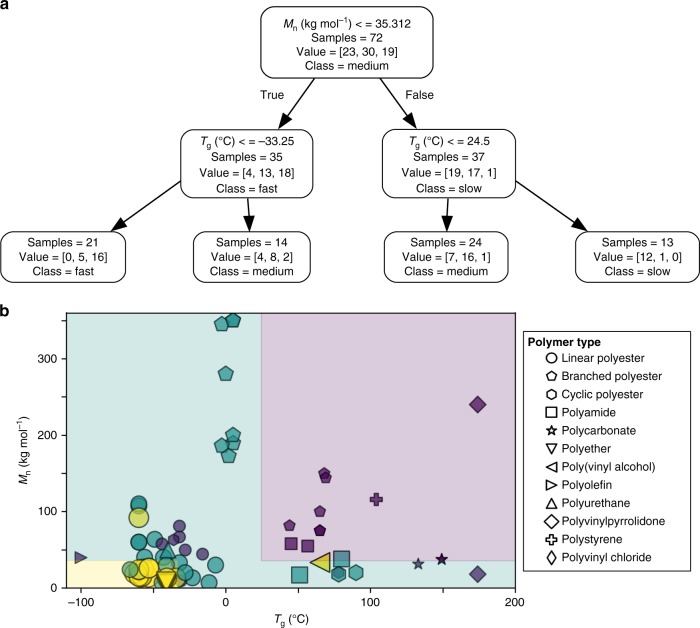
As plastic marine debris continues to accumulate in the oceans, many important questions surround this global dilemma. In particular, how many descriptors would be necessary to model the degradation behavior of ocean plastics or understand if degradation is possible? Here, we report a data-driven approach to elucidate degradation trends of plastic debris by linking abiotic and biotic degradation behavior in seawater with physical properties and molecular structures. The results reveal a hierarchy of predictors to quantify surface erosion as well as combinations of features, like glass transition temperature and hydrophobicity, to classify ocean plastics into fast, medium, and slow degradation categories. Furthermore, to account for weathering and environmental factors, two equations model the influence of seawater temperature and mechanical forces.
随着塑料海洋垃圾在海洋中不断积累,许多与这一全球性难题相关的重要问题仍待解决。特别是,需要多少描述符才能模拟海洋塑料的降解行为,或者了解降解是否可能?在这里,我们通过将海水的非生物和生物降解行为与物理性质和分子结构联系起来,报告了一种数据驱动的方法来阐明塑料碎片的降解趋势。结果揭示了一种定量表面侵蚀的预测因子层次结构,以及玻璃化转变温度和疏水性等特征的组合,可将海洋塑料分为快速、中速和慢速降解类别。此外,为了考虑风化和环境因素,两个方程分别模拟了海水温度和机械力的影响。