Information Sciences Institute, 4676 Admiralty Way, Marina Del Rey, Los Angeles, CA, 90292, USA.
Cornell University, 418 Phillips Hall, Ithaca, NY, 14853, USA.
Nat Commun. 2020 Feb 5;11(1):707. doi: 10.1038/s41467-020-14394-x.
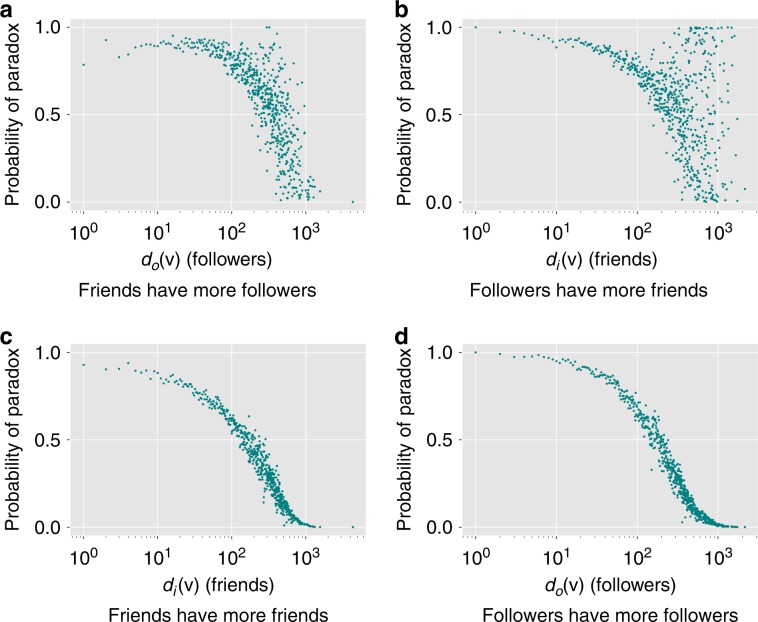
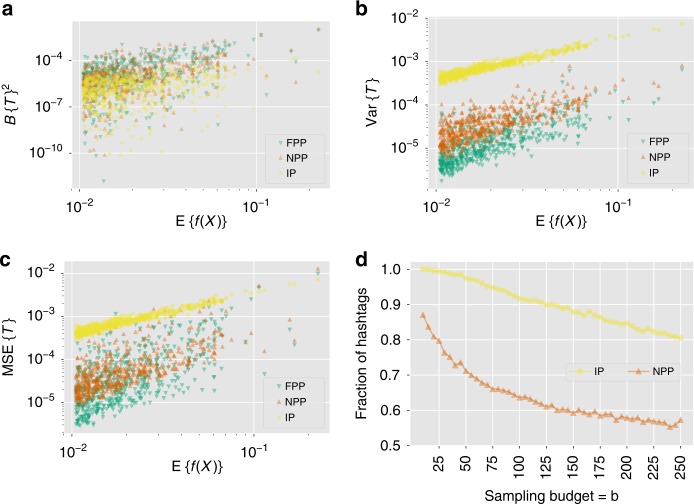
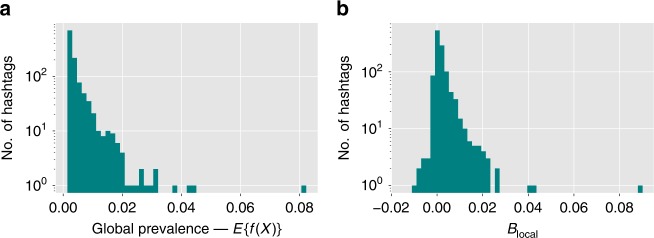
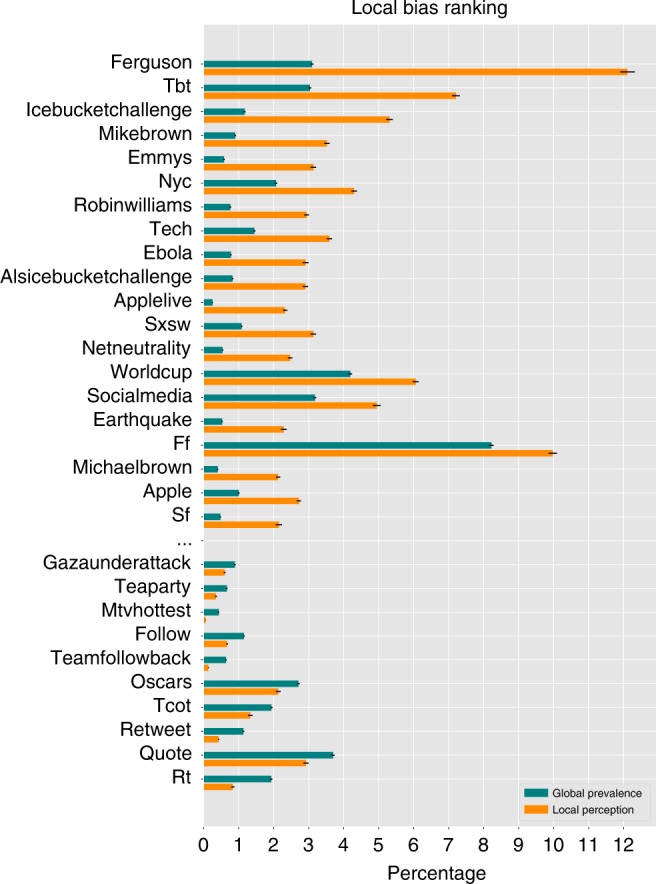
Social networks shape perceptions by exposing people to the actions and opinions of their peers. However, the perceived popularity of a trait or an opinion may be very different from its actual popularity. We attribute this perception bias to friendship paradox and identify conditions under which it appears. We validate the findings empirically using Twitter data. Within posts made by users in our sample, we identify topics that appear more often within users' social feeds than they do globally among all posts. We also present a polling algorithm that leverages the friendship paradox to obtain a statistically efficient estimate of a topic's global prevalence from biased individual perceptions. We characterize the polling estimate and validate it through synthetic polling experiments on Twitter data. Our paper elucidates the non-intuitive ways in which the structure of directed networks can distort perceptions and presents approaches to mitigate this bias.
社交网络通过让人们接触到同伴的行为和意见来塑造认知。然而,人们对某种特质或观点的感知流行度可能与它的实际流行度大不相同。我们将这种认知偏差归因于友谊悖论,并确定了它出现的条件。我们使用 Twitter 数据进行了实证验证。在我们样本中用户发布的帖子中,我们确定了在用户的社交源中比在所有帖子中的全局范围内出现更频繁的主题。我们还提出了一种投票算法,该算法利用友谊悖论从有偏差的个人认知中获得主题全局流行度的统计有效估计。我们描述了投票估计,并通过在 Twitter 数据上进行的合成投票实验对其进行了验证。我们的论文阐明了有向网络的结构可以以非直观的方式扭曲认知,并提出了减轻这种偏差的方法。