European Molecular Biology Laboratory, European Bioinformatics Institute (EMBL-EBI), Cambridge, UK.
European Molecular Biology Laboratory, Genome Biology Unit, Heidelberg, Germany.
Nature. 2020 Feb;578(7793):122-128. doi: 10.1038/s41586-019-1907-7. Epub 2020 Feb 6.
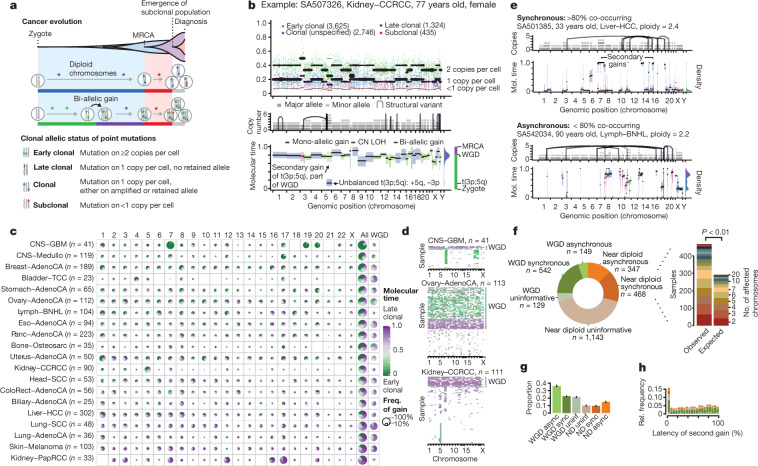
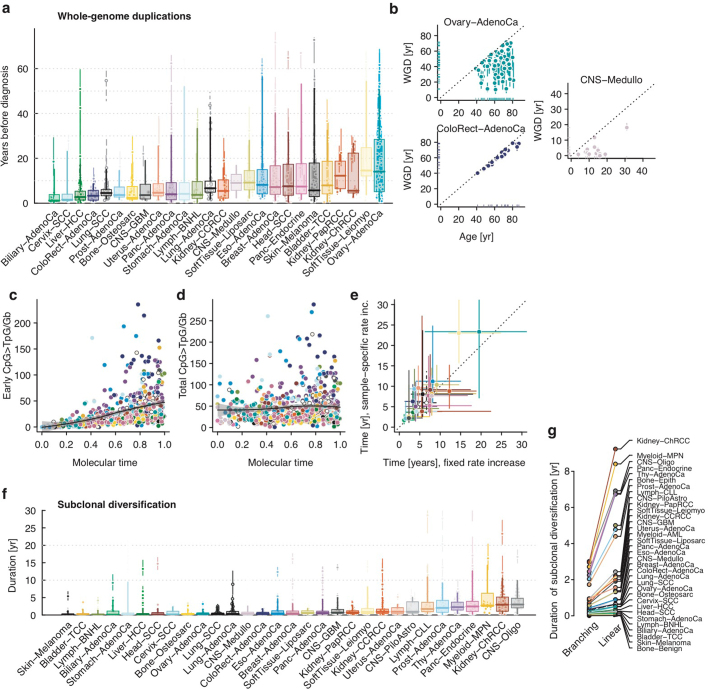
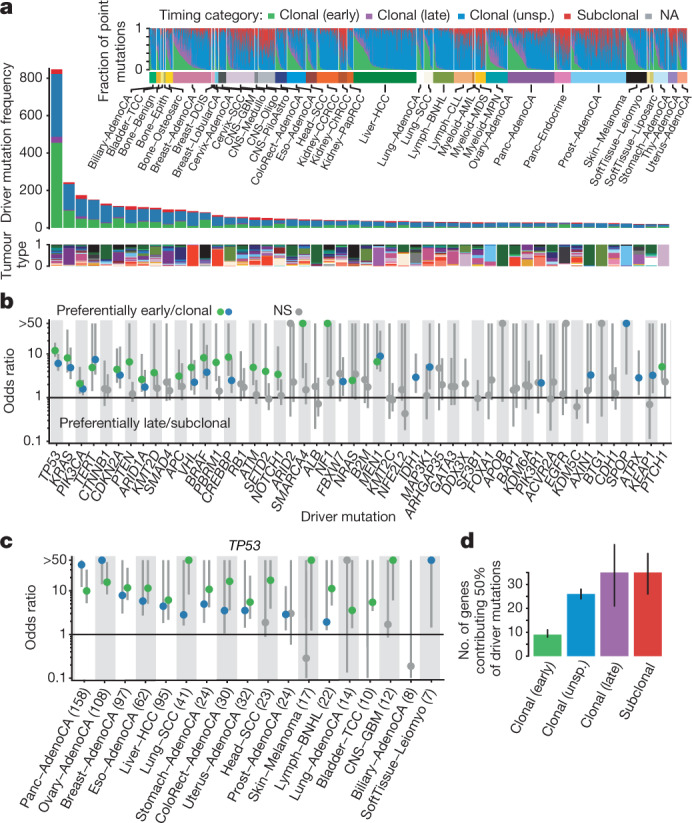
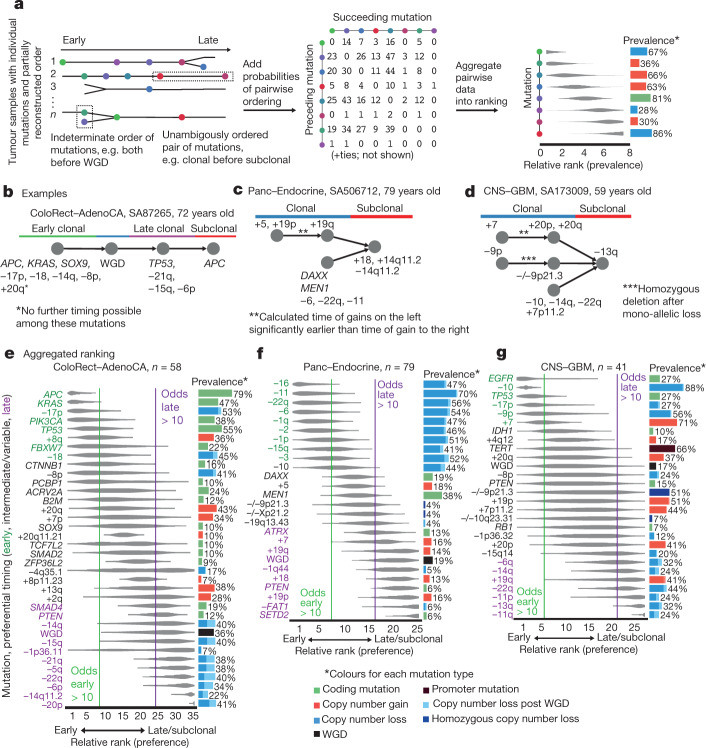
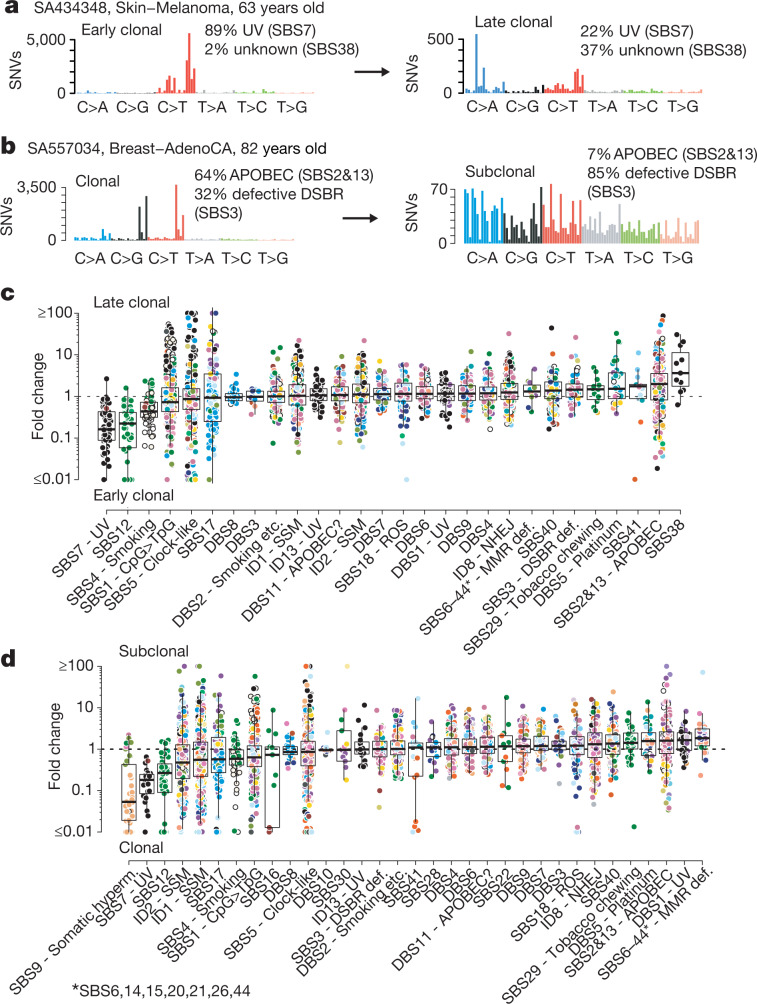
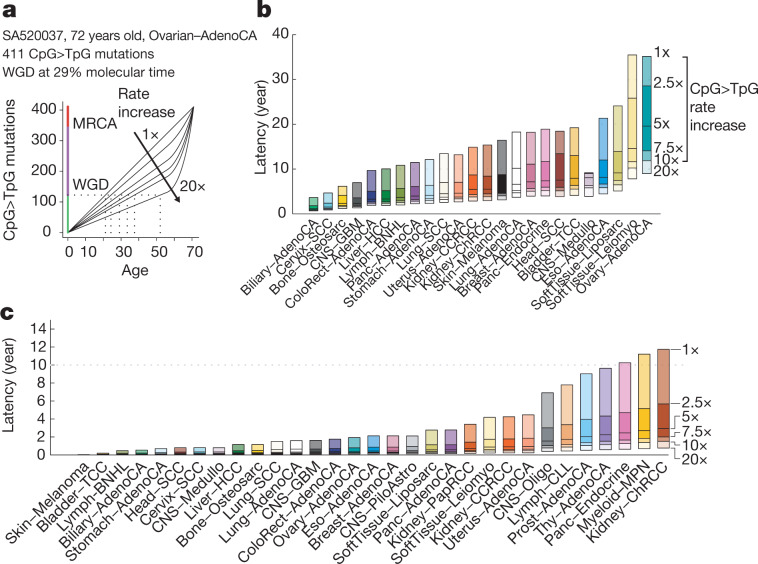
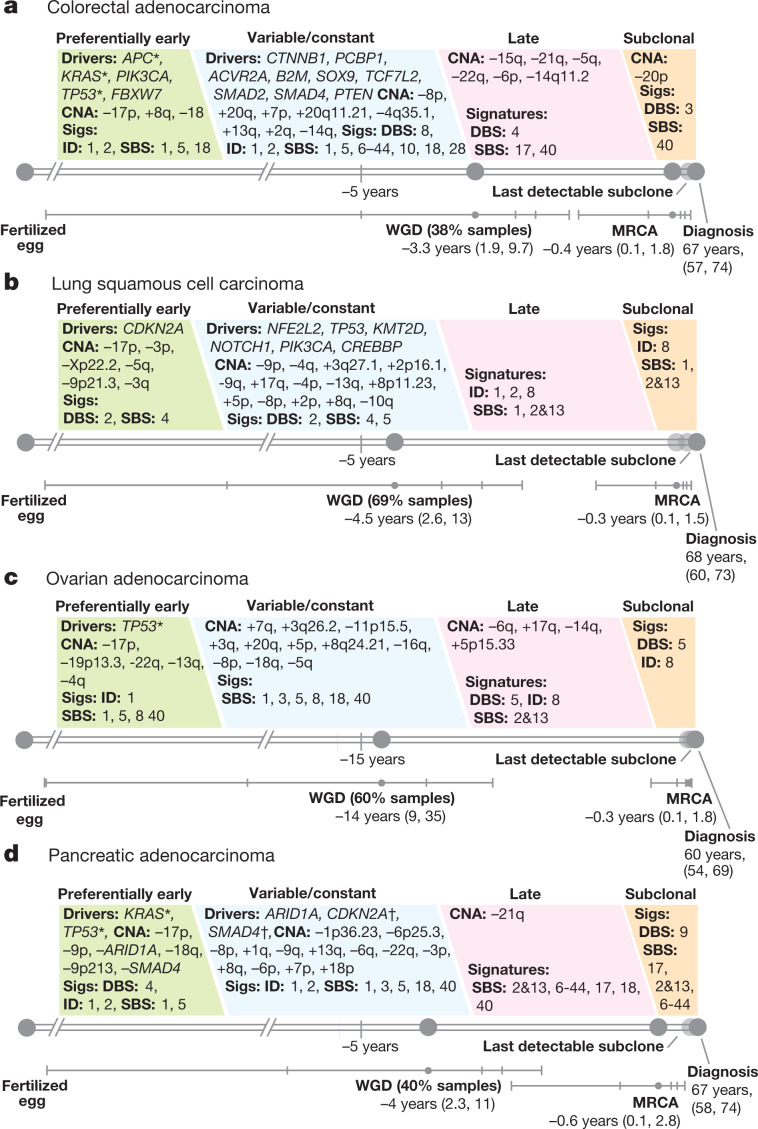
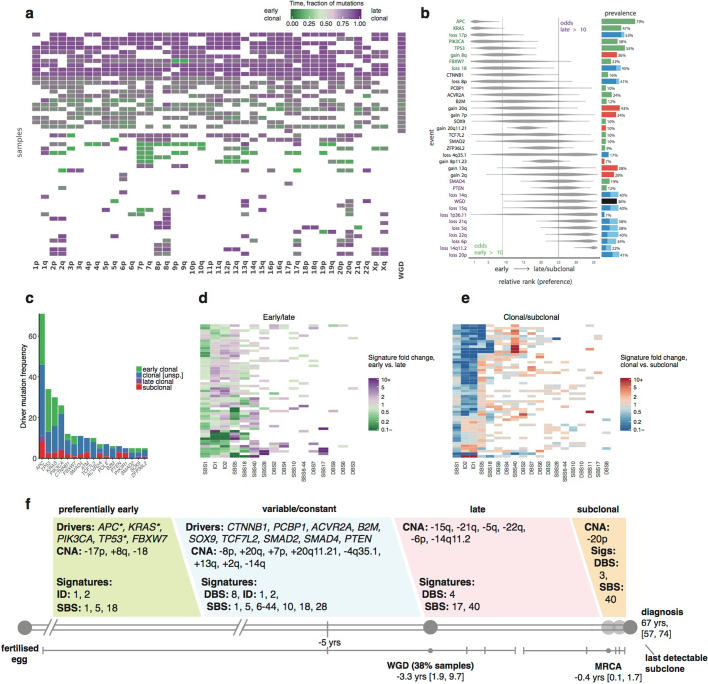
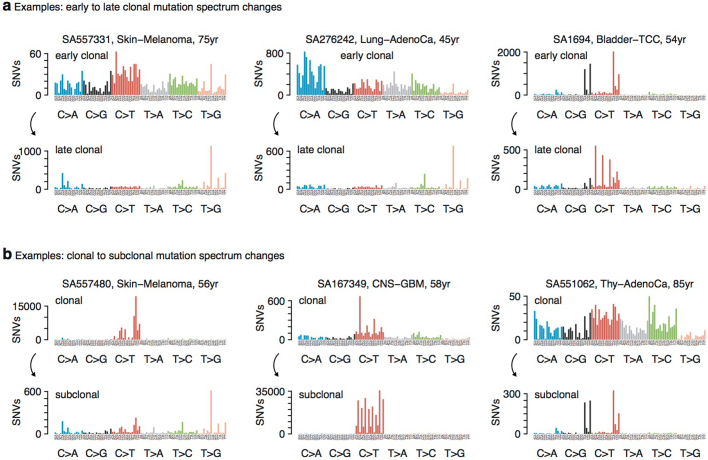
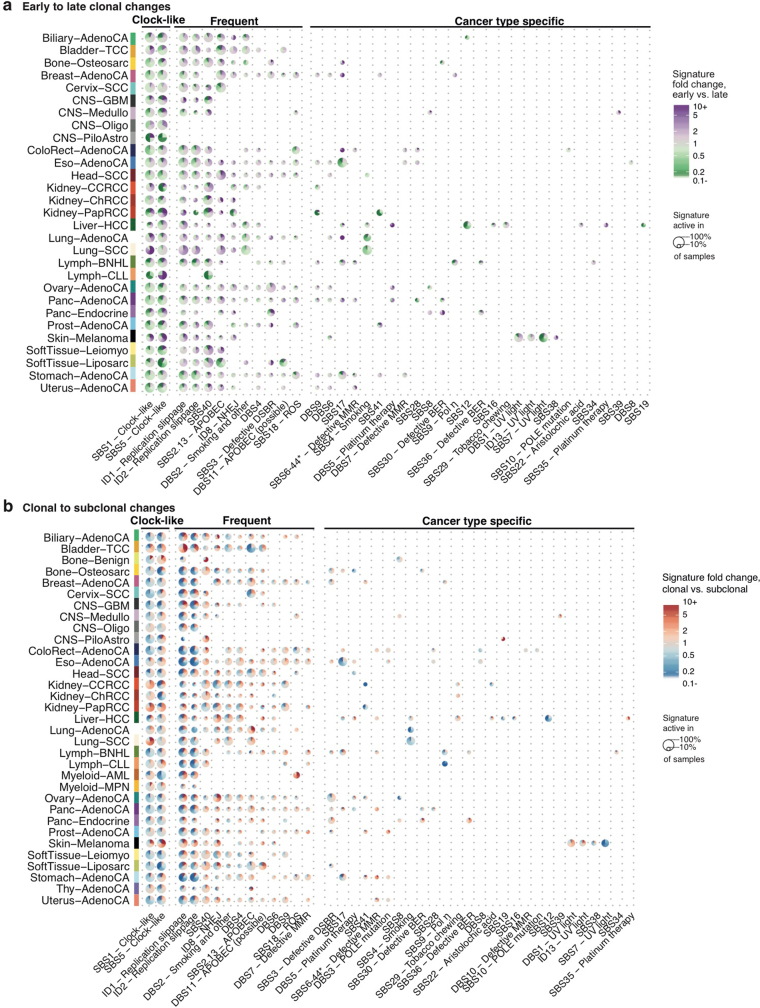
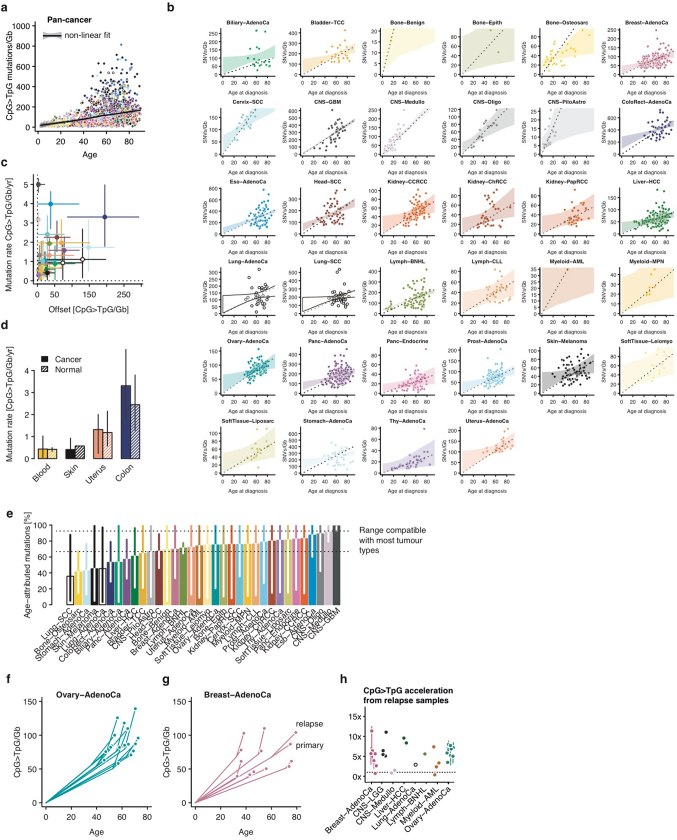
Cancer develops through a process of somatic evolution. Sequencing data from a single biopsy represent a snapshot of this process that can reveal the timing of specific genomic aberrations and the changing influence of mutational processes. Here, by whole-genome sequencing analysis of 2,658 cancers as part of the Pan-Cancer Analysis of Whole Genomes (PCAWG) Consortium of the International Cancer Genome Consortium (ICGC) and The Cancer Genome Atlas (TCGA), we reconstruct the life history and evolution of mutational processes and driver mutation sequences of 38 types of cancer. Early oncogenesis is characterized by mutations in a constrained set of driver genes, and specific copy number gains, such as trisomy 7 in glioblastoma and isochromosome 17q in medulloblastoma. The mutational spectrum changes significantly throughout tumour evolution in 40% of samples. A nearly fourfold diversification of driver genes and increased genomic instability are features of later stages. Copy number alterations often occur in mitotic crises, and lead to simultaneous gains of chromosomal segments. Timing analyses suggest that driver mutations often precede diagnosis by many years, if not decades. Together, these results determine the evolutionary trajectories of cancer, and highlight opportunities for early cancer detection.
癌症是通过体细胞进化过程发展而来的。对单个活检样本的测序数据代表了这一过程的一个快照,可以揭示特定基因组异常的发生时间和突变过程的变化影响。在这里,我们通过全基因组测序分析了 2658 种癌症,这些癌症是国际癌症基因组联盟(ICGC)和癌症基因组图谱(TCGA)的全基因组分析泛癌计划(PCAWG)联盟的一部分,我们重建了 38 种癌症的突变过程和驱动突变序列的生命史和进化。早期致癌作用的特征是受限制的一组驱动基因中的突变,以及特定的拷贝数增加,如胶质母细胞瘤中的三体 7 和髓母细胞瘤中的 17q 等臂染色体。在 40%的样本中,肿瘤进化过程中的突变谱发生了显著变化。驱动基因的多样化和基因组不稳定性的增加是晚期的特征。拷贝数改变经常发生在有丝分裂危机中,并导致染色体片段的同时获得。时间分析表明,驱动突变通常在诊断前出现多年,如果不是几十年的话。总之,这些结果决定了癌症的进化轨迹,并为早期癌症检测提供了机会。