Banach Mateusz, Piotr Fabian, Katarzyna Stapor, Leszek Konieczny, Roterman Irena
Department of bioinformatics and Telemedicine, Jagiellonian University - Medical College, Lazarza 16, 31-530 Krakow, Poland.
Silesian Technical University, Institute of Computer Science, 44-100 Gliwice, Akademicka 16 Poland.
Bioinformation. 2020 Jan 15;16(1):21-25. doi: 10.6026/97320630016021. eCollection 2020.
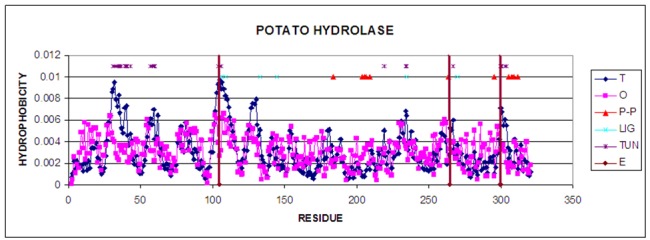
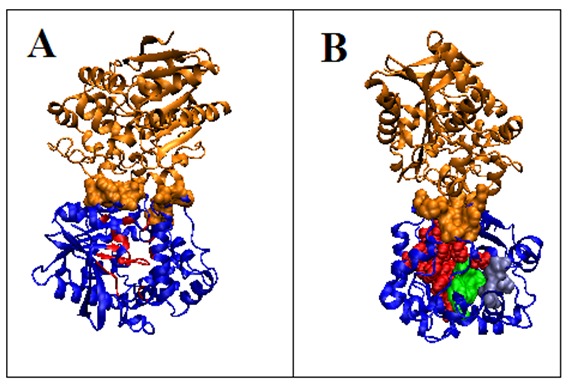
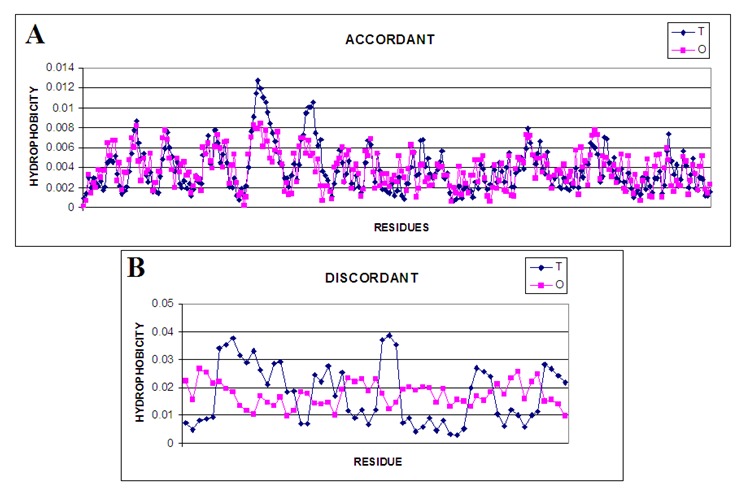
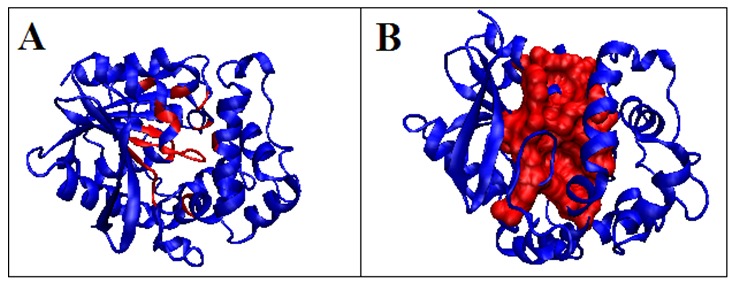
Enzymes with an active center hidden in the middle of the molecule in a tunnel-like cavity constitute an interesting object of analysis due to the highly specialized environment for the course of the catalytic reaction. Identifying the tunnel is a challenge in itself. Moreover, the structural conditioning for the course of the reaction provides information on the diversity of the environment, which must necessarily meet the conditions of high specificity. The use of a fuzzy oil drop model to identify residues constituting the walls of the tunnel located in the center of the protein seems highly justified. The fuzzy oil drop model, which assumes the highest concentration of hydrophobicity in the center of the molecule, in these enzymes shows a significant hydrophobicity deficit resulting from the absence of any residues in the central part of the molecule. Comparison of the expected distribution in consistent with the 3D Gaussian distribution where the observed distribution resulting from the interaction of residues in the protein shows significant differences precisely in the positions of residues located near the center of the molecule. The inside characteristics of the tunnel are the background for the enzymatic reaction. This environment additionally constitutes an external force field, which creates favorable conditions for carrying out the catalytic process. The use of fuzzy oil drop model has been verified using the potato (solanum tuberosum) epoxide hydrolase I. This forms the preliminary basis for testing the fuzzy oil drop model. The data presented here provides an impetus for a large scale analysis of all proteins containing tunnels in enzyme structures available in the Protein Data Bank (PDB).
由于催化反应过程所处的高度特殊环境,那些活性中心隐藏在分子中间类似隧道状腔体内的酶构成了一个有趣的分析对象。识别这个隧道本身就是一项挑战。此外,反应过程的结构条件提供了有关环境多样性的信息,这种环境必须满足高度特异性的条件。使用模糊油滴模型来识别构成位于蛋白质中心的隧道壁的残基似乎非常合理。模糊油滴模型假设分子中心的疏水性最高,但在这些酶中却显示出明显的疏水性不足,这是由于分子中心没有任何残基所致。将预期分布与符合三维高斯分布的情况进行比较,结果发现蛋白质中残基相互作用产生的观察分布在分子中心附近的残基位置上恰恰显示出显著差异。隧道的内部特征是酶促反应的背景。这种环境还构成了一个外力场,为催化过程创造了有利条件。模糊油滴模型的应用已通过马铃薯(茄属)环氧化物水解酶I得到验证。这构成了测试模糊油滴模型的初步基础。这里呈现的数据为大规模分析蛋白质数据库(PDB)中所有具有酶结构隧道的蛋白质提供了动力。