Tunneling Group, Biotechnology Centre, Silesian University of Technology, Gliwice, Poland.
Biotechnology Centre, Silesian University of Technology, Gliwice, Poland.
PLoS Comput Biol. 2022 May 17;18(5):e1010119. doi: 10.1371/journal.pcbi.1010119. eCollection 2022 May.
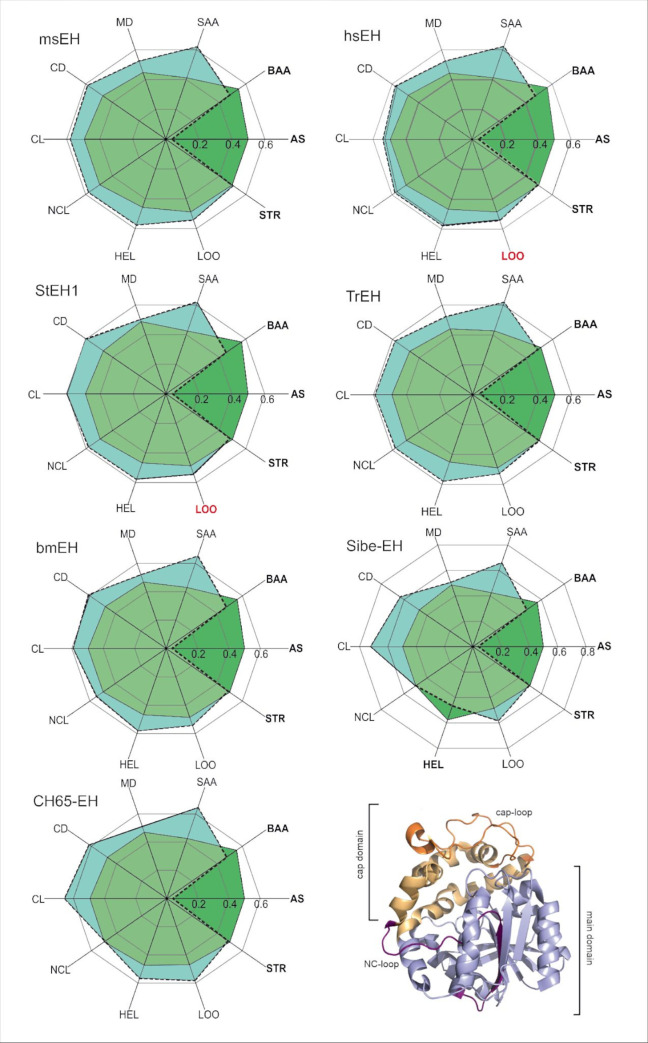
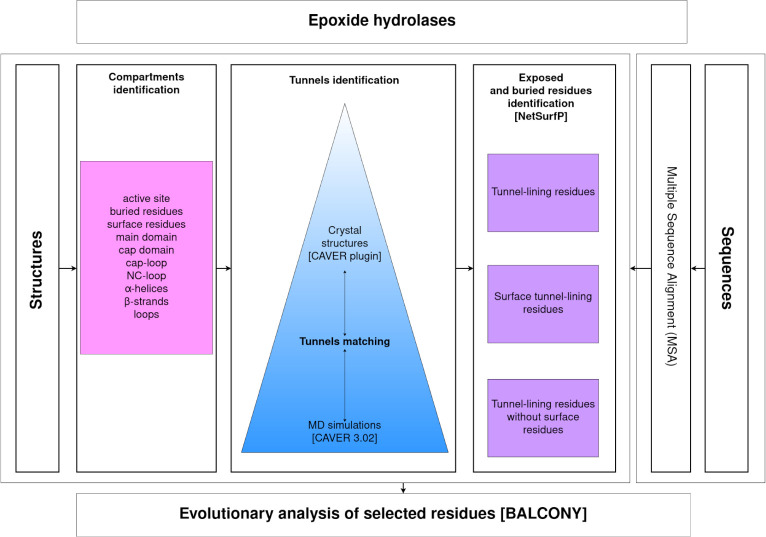
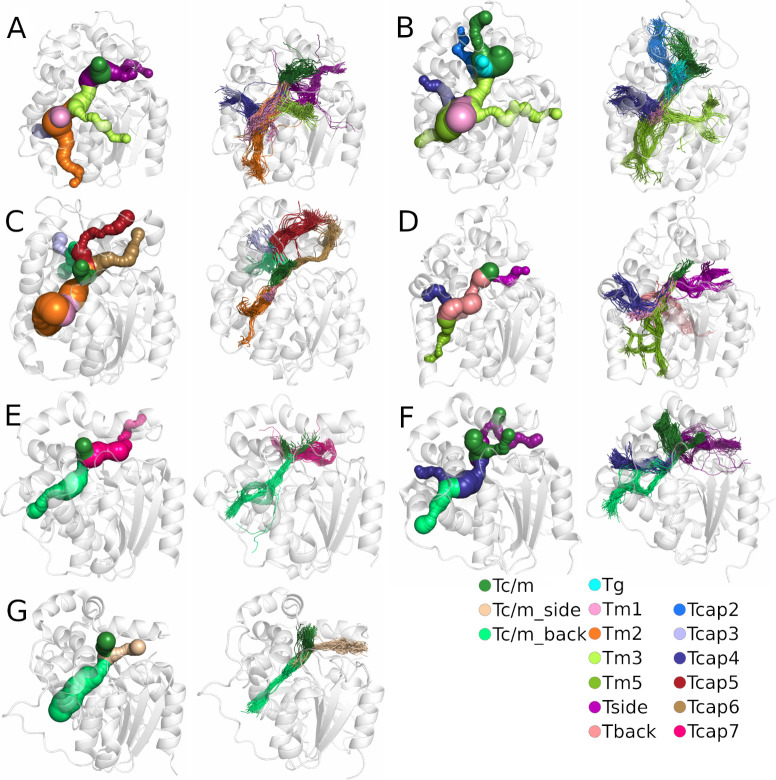
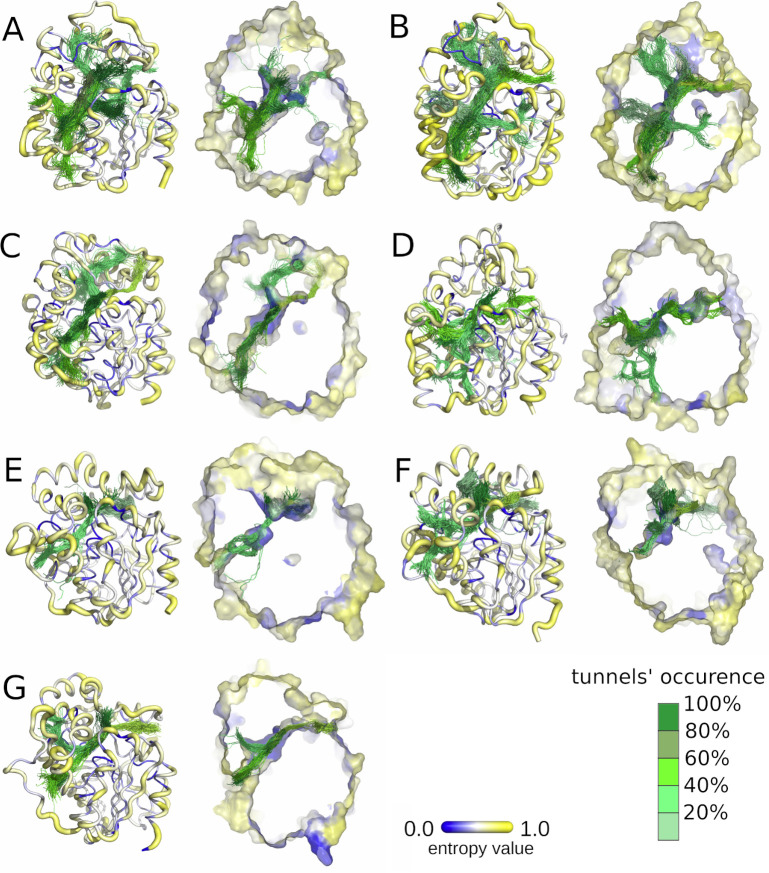
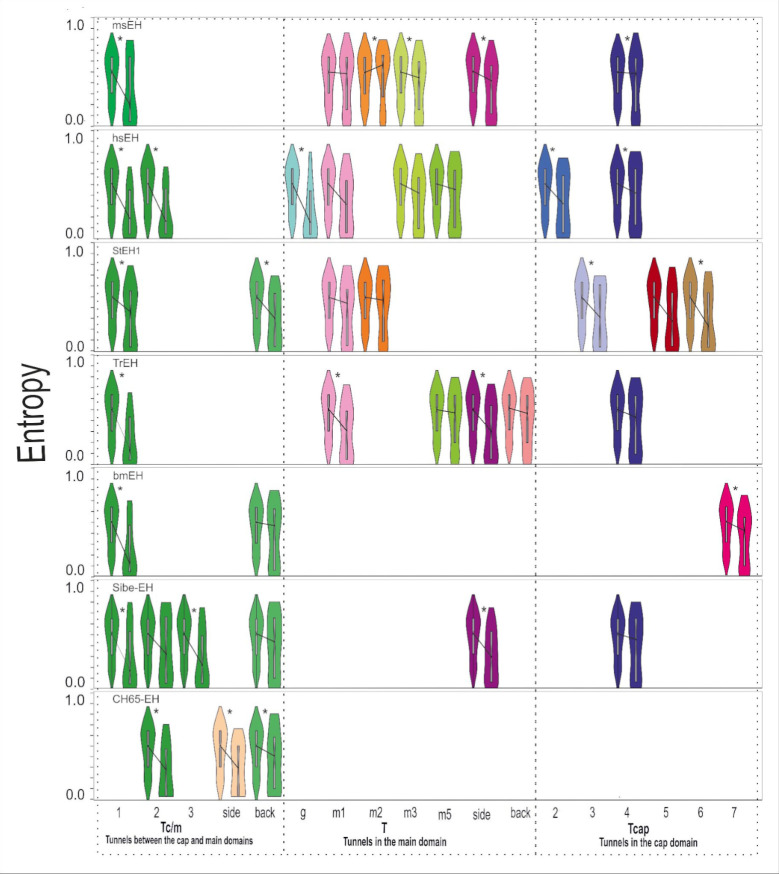
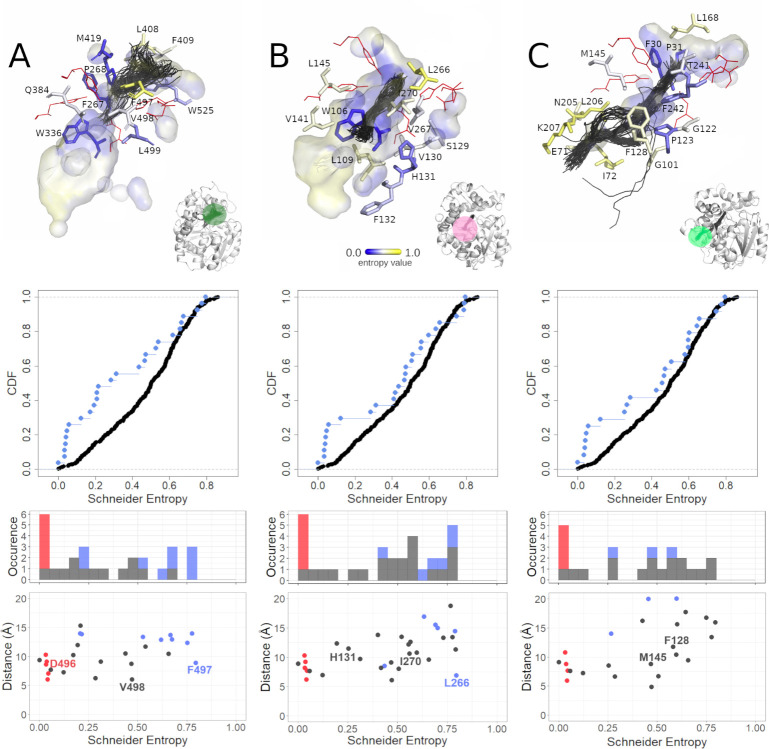
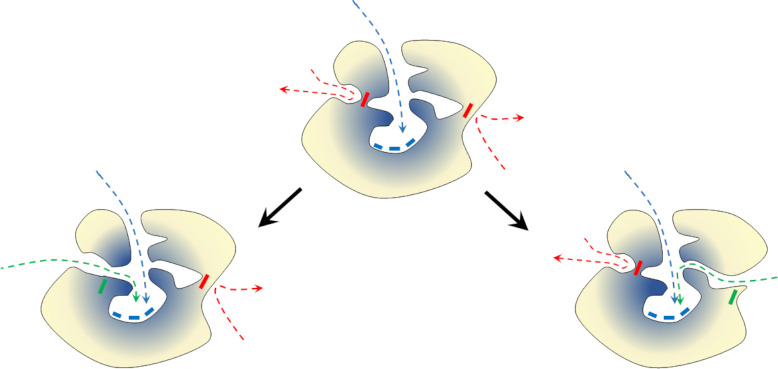
The evolutionary variability of a protein's residues is highly dependent on protein region and function. Solvent-exposed residues, excluding those at interaction interfaces, are more variable than buried residues whereas active site residues are considered to be conserved. The abovementioned rules apply also to α/β-hydrolase fold proteins-one of the oldest and the biggest superfamily of enzymes with buried active sites equipped with tunnels linking the reaction site with the exterior. We selected soluble epoxide hydrolases as representative of this family to conduct the first systematic study on the evolution of tunnels. We hypothesised that tunnels are lined by mostly conserved residues, and are equipped with a number of specific variable residues that are able to respond to evolutionary pressure. The hypothesis was confirmed, and we suggested a general and detailed way of the tunnels' evolution analysis based on entropy values calculated for tunnels' residues. We also found three different cases of entropy distribution among tunnel-lining residues. These observations can be applied for protein reengineering mimicking the natural evolution process. We propose a 'perforation' mechanism for new tunnels design via the merging of internal cavities or protein surface perforation. Based on the literature data, such a strategy of new tunnel design could significantly improve the enzyme's performance and can be applied widely for enzymes with buried active sites.
蛋白质残基的进化可变性高度依赖于蛋白质区域和功能。暴露在溶剂中的残基(不包括相互作用界面处的残基)比埋藏在内部的残基具有更高的可变性,而活性位点残基则被认为是保守的。上述规则也适用于α/β-水解酶折叠蛋白——这是最古老和最大的酶超家族之一,其埋藏的活性位点配备有将反应位点与外部连接起来的隧道。我们选择可溶性环氧化物水解酶作为该家族的代表,对隧道的进化进行了首次系统研究。我们假设隧道由大多数保守残基组成,并配备了一些能够应对进化压力的特定可变残基。该假设得到了证实,我们提出了一种基于隧道残基熵值计算的通用且详细的隧道进化分析方法。我们还发现了隧道衬里残基中熵分布的三种不同情况。这些观察结果可应用于模仿自然进化过程的蛋白质再工程。我们提出了一种通过内部空腔融合或蛋白质表面穿孔来设计新隧道的“穿孔”机制。基于文献数据,这种新隧道设计策略可以显著提高酶的性能,并可广泛应用于具有埋藏活性位点的酶。