Department of Preventive Dentistry, School and Hospital of Stomatology, Fujian Medical University, 246 Yang Qiao Middle Road, Fuzhou 350000, China.
Key laboratory of Stomatology of Fujian Province, School and Hospital of Stomatology, Fujian Medical University, 88 Jiaotong Rd, Fuzhou 350004, China.
Int J Biol Sci. 2020 Jan 1;16(4):598-610. doi: 10.7150/ijbs.36407. eCollection 2020.
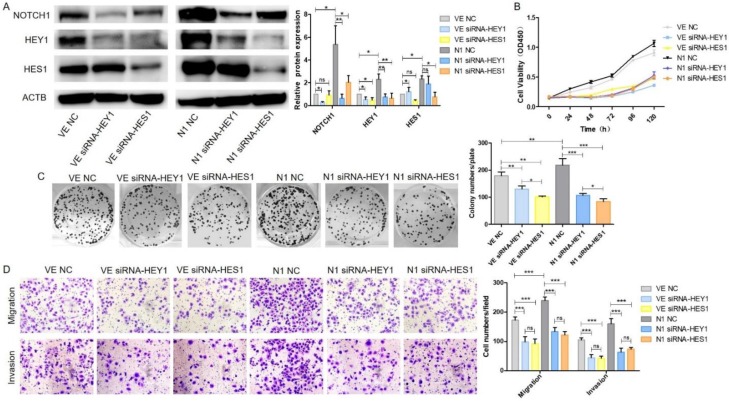
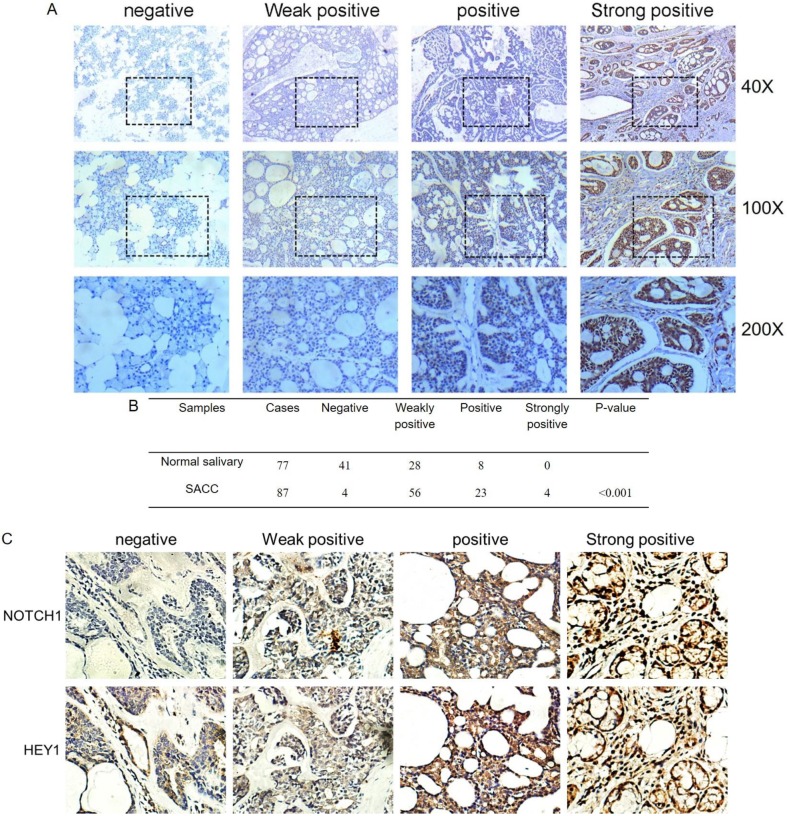
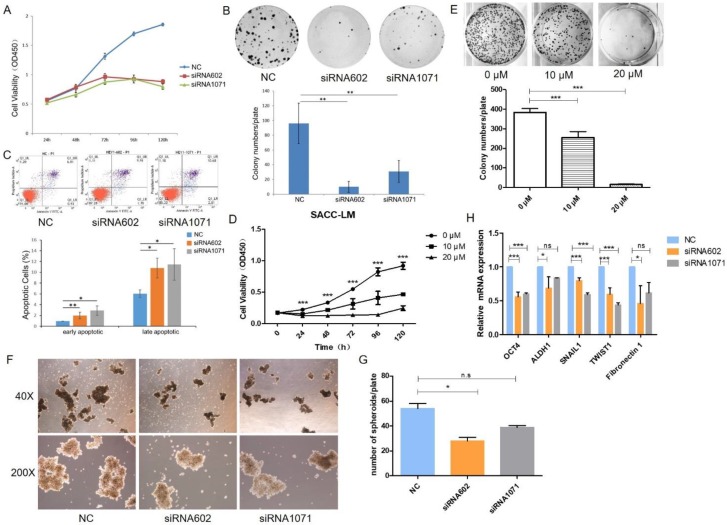
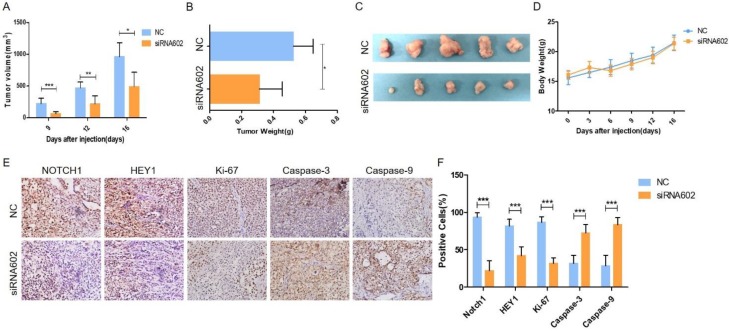
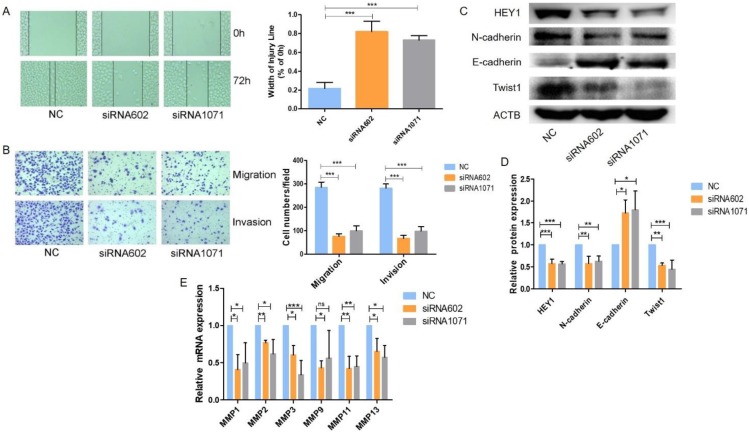
Our previous study demonstrated a close relationship between the NOTCH signaling pathway and salivary adenoid cystic carcinoma (SACC). Its receptor gene, NOTCH1, and its downstream gene, HES1, contribute to the proliferation, invasion and metastasis of SACC. Accumulating evidence supports HEY1 as another effector of the signaling pathway. The purpose of this study was to explore the effects of the NOTCH1-HEY1 pathway on the proliferation, invasion and metastasis of SACC cells. Our results verified that HEY1 is a specific molecular target of the NOTCH signaling pathway in SACC cells and that its expression in carcinoma is much higher than that in paracarcinoma tissues. The expression of NOTCH1 and HEY1 are positively correlated in the salivary adenoid cystic carcinoma tissues. NOTCH1 is significantly related to the activation of HEY1 in SACC, and that HEY1 reciprocally regulates NOTCH1 expression in SACC. HEY1 promotes cell proliferation and spheroid formation and inhibits cell apoptosis . In addition, HEY1 enhances the tumorigenicity of SACC . Furthermore, HEY1 increases cell invasion and metastasis by driving the expression of epithelial-mesenchymal transition (EMT)-related genes and MMPs. The results of this study indicate that the NOTCH1-HEY1 pathway is specifically upregulated in SACC and promotes cell proliferation, self-renewal, invasion, metastasis and the expression of EMT-related genes and MMPs. Our findings suggest that a NOTCH1-HEY1 pathway inhibitor might therefore have potential therapeutic applications in treating SACC patients by inhibiting cancer cell growth and metastasis.
我们之前的研究表明 NOTCH 信号通路与唾液腺腺样囊性癌(SACC)密切相关。其受体基因 NOTCH1 和下游基因 HES1 促进 SACC 的增殖、侵袭和转移。越来越多的证据支持 HEY1 是该信号通路的另一个效应因子。本研究旨在探讨 NOTCH1-HEY1 通路对 SACC 细胞增殖、侵袭和转移的影响。我们的结果证实,HEY1 是 SACC 细胞中 NOTCH 信号通路的特异性分子靶点,其在癌组织中的表达明显高于癌旁组织。NOTCH1 和 HEY1 在唾液腺腺样囊性癌组织中的表达呈正相关。NOTCH1 与 SACC 中 HEY1 的激活显著相关,而 HEY1 则在 SACC 中反向调节 NOTCH1 的表达。HEY1 促进细胞增殖和球体形成,抑制细胞凋亡。此外,HEY1 通过驱动上皮-间充质转化(EMT)相关基因和 MMPs 的表达增强 SACC 的致瘤性。本研究结果表明,NOTCH1-HEY1 通路在 SACC 中特异性上调,促进细胞增殖、自我更新、侵袭、转移以及 EMT 相关基因和 MMPs 的表达。我们的研究结果表明,NOTCH1-HEY1 通路抑制剂可能通过抑制癌细胞生长和转移,在治疗 SACC 患者方面具有潜在的治疗应用价值。