Center for Molecular Medicine and Genetics, Wayne State University, Detroit, MI, U.S.A.
Center for Integrative Metabolic and Endocrine Research, Wayne State University, Detroit, MI, U.S.A.
Biochem J. 2020 Feb 14;477(3):583-600. doi: 10.1042/BCJ20190467.
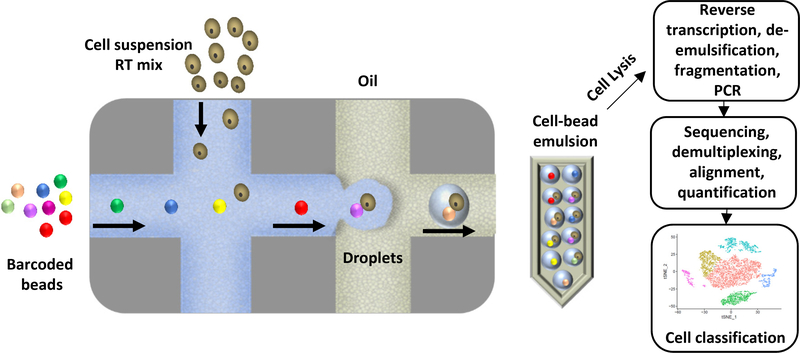
A central function of adipose tissue is in the management of systemic energy homeostasis that is achieved through the co-ordinated regulation of energy storage and mobilization, adipokine release, and immune functions. With the dramatic increase in the prevalence of obesity and obesity-related metabolic disease over the past 30 years, there has been extensive interest in targeting adipose tissue for therapeutic benefit. However, in order for this goal to be achieved it is essential to establish a comprehensive atlas of adipose tissue cellular composition and define mechanisms of intercellular communication that mediate pathologic and therapeutic responses. While traditional methods, such as fluorescence-activated cell sorting (FACS) and genetic lineage tracing, have greatly advanced the field, these approaches are inherently limited by the choice of markers and the ability to comprehensively identify and characterize dynamic interactions among stromal cells within the tissue microenvironment. Single cell RNA sequencing (scRNAseq) has emerged as a powerful tool for deconvolving cellular heterogeneity and holds promise for understanding the development and plasticity of adipose tissue under normal and pathological conditions. scRNAseq has recently been used to characterize adipose stem cell (ASC) populations and has provided new insights into subpopulations of macrophages that arise during anabolic and catabolic remodeling in white adipose tissue. The current review summarizes recent findings that use this technology to explore adipose tissue heterogeneity and plasticity.
脂肪组织的一个主要功能是管理全身能量稳态,这是通过能量储存和动员、脂联素释放和免疫功能的协调调节来实现的。在过去 30 年中,肥胖症和肥胖相关代谢性疾病的患病率显著增加,因此人们广泛关注针对脂肪组织进行治疗的益处。然而,为了实现这一目标,必须建立脂肪组织细胞组成的综合图谱,并确定介导病理和治疗反应的细胞间通讯机制。虽然传统方法,如荧光激活细胞分选(FACS)和遗传谱系追踪,极大地推动了该领域的发展,但这些方法本质上受到标记物选择和全面识别和描述组织微环境中基质细胞之间动态相互作用的能力的限制。单细胞 RNA 测序(scRNAseq)已成为解析细胞异质性的强大工具,并有望在正常和病理条件下理解脂肪组织的发育和可塑性。scRNAseq 最近被用于描述脂肪干细胞(ASC)群体,并为在白色脂肪组织中合成代谢和分解代谢重塑过程中出现的巨噬细胞亚群提供了新的见解。本综述总结了最近利用该技术探索脂肪组织异质性和可塑性的研究结果。