Department of Psychology, The University of Hong Kong.
Department of Psychology, Northwestern University.
Psychol Bull. 2020 Mar;146(3):218-244. doi: 10.1037/bul0000223.
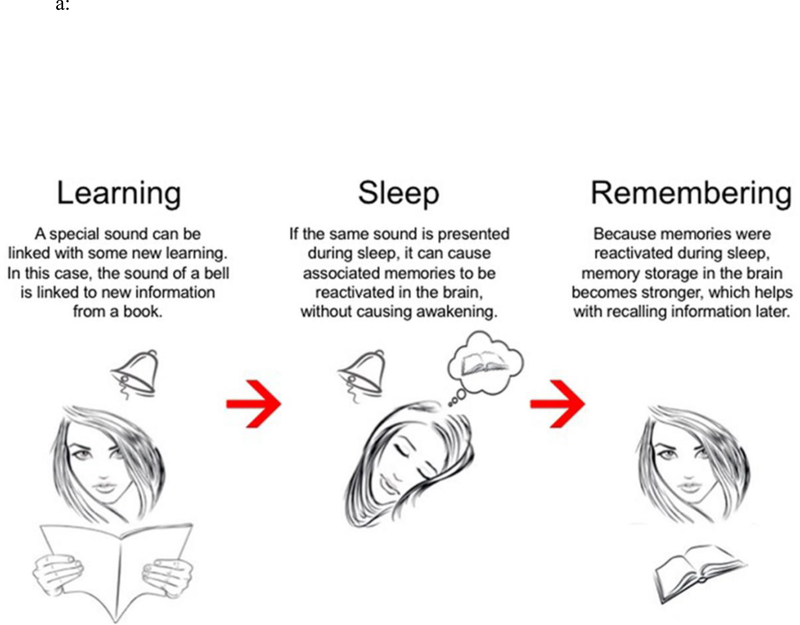
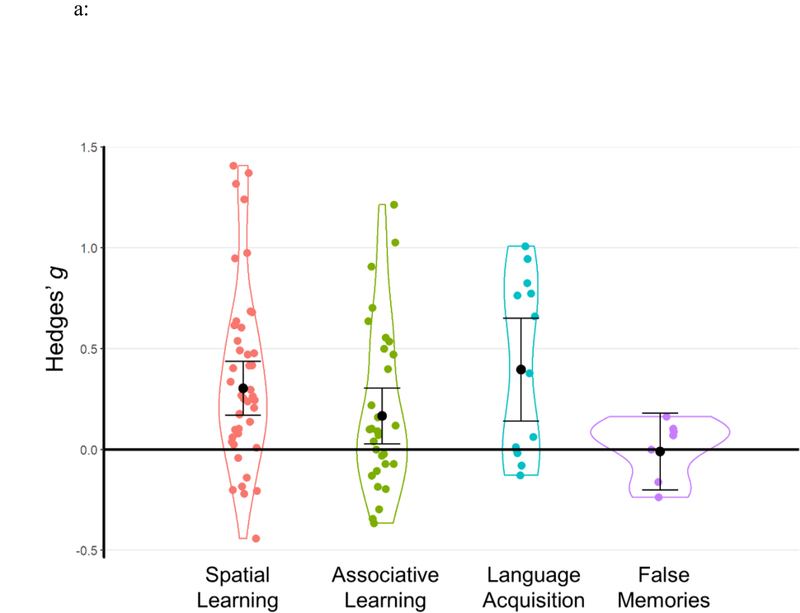
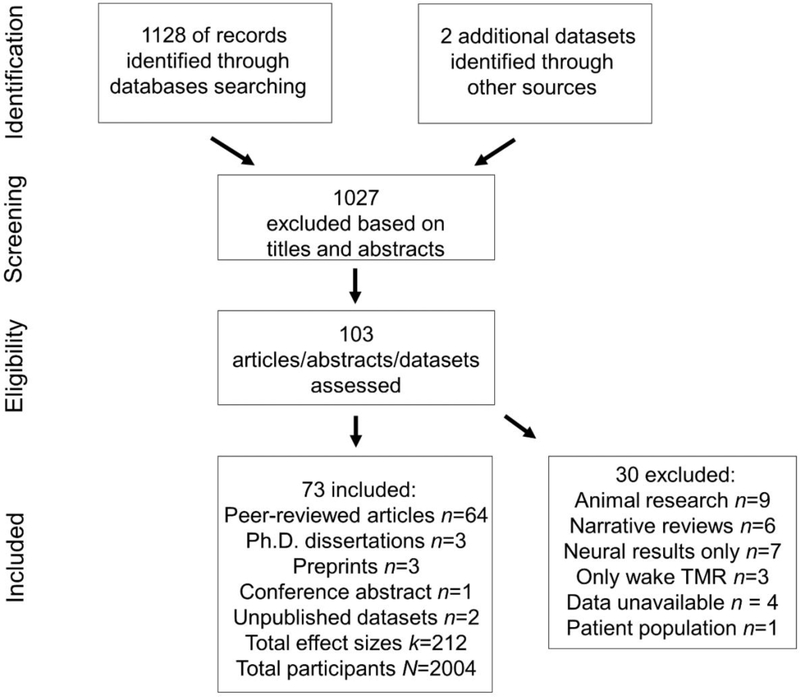
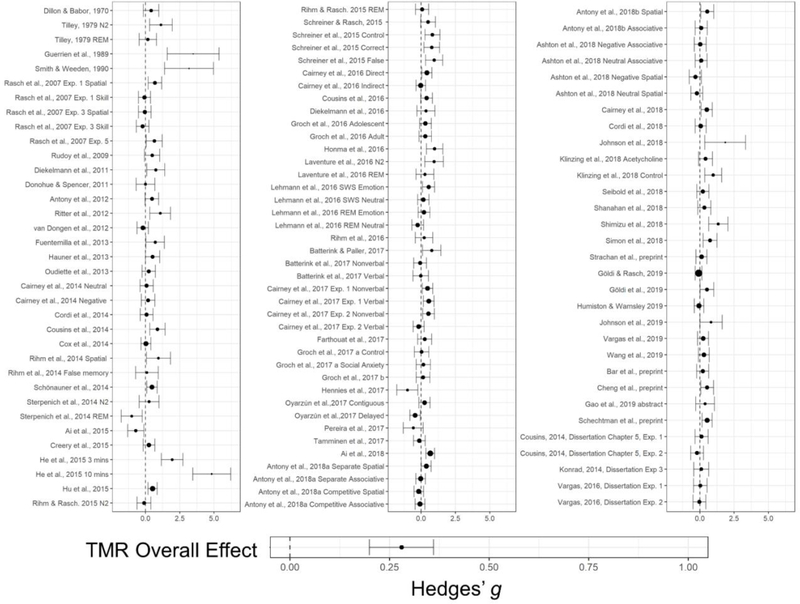
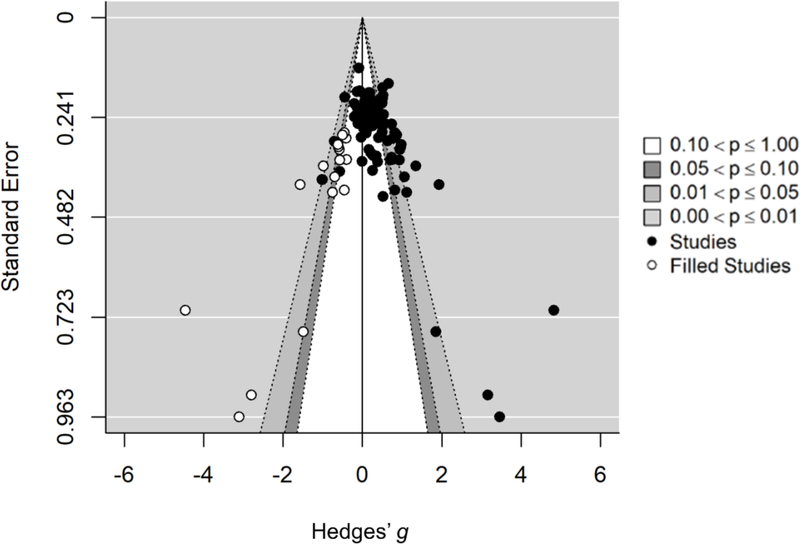
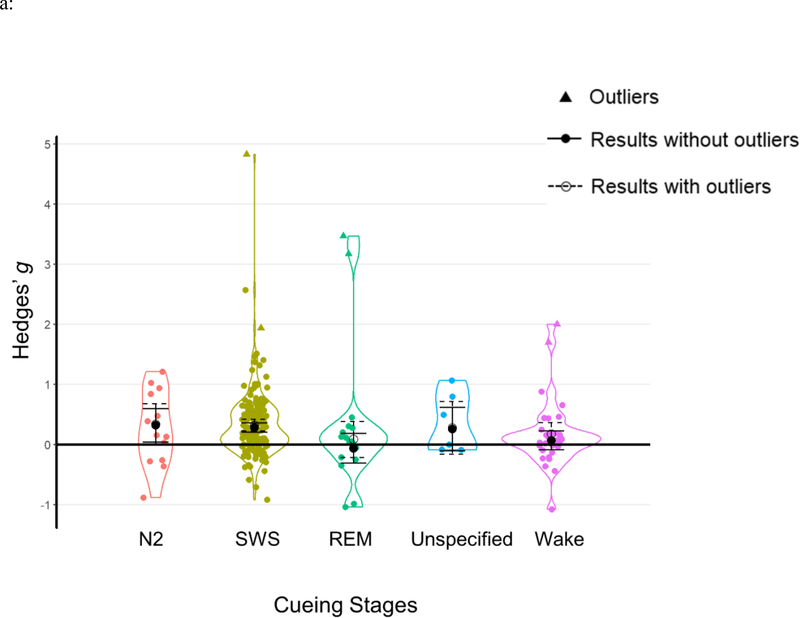
Targeted memory reactivation (TMR) is a methodology employed to manipulate memory processing during sleep. TMR studies have great potential to advance understanding of sleep-based memory consolidation and corresponding neural mechanisms. Research making use of TMR has developed rapidly, with over 70 articles published in the last decade, yet no quantitative analysis exists to evaluate the overall effects. Here we present the first meta-analysis of sleep TMR, compiled from 91 experiments with 212 effect sizes (N = 2,004). Based on multilevel modeling, overall sleep TMR was highly effective (Hedges' g = 0.29, 95% CI [0.21, 0.38]), with a significant effect for two stages of non-rapid-eye-movement (NREM) sleep (Stage NREM 2: Hedges' g = 0.32, 95% CI [0.04, 0.60]; and slow-wave sleep: Hedges' g = 0.27, 95% CI [0.20, 0.35]). In contrast, TMR was not effective during REM sleep nor during wakefulness in the present analyses. Several analysis strategies were used to address the potential relevance of publication bias. Additional analyses showed that TMR improved memory across multiple domains, including declarative memory and skill acquisition. Given that TMR can reinforce many types of memory, it could be useful for various educational and clinical applications. Overall, the present meta-analysis provides substantial support for the notion that TMR can influence memory storage during NREM sleep, and that this method can be useful for understanding neurocognitive mechanisms of memory consolidation. (PsycINFO Database Record (c) 2020 APA, all rights reserved).
靶向记忆再激活(TMR)是一种在睡眠期间操纵记忆处理的方法。TMR 研究具有很大的潜力,可以深入了解基于睡眠的记忆巩固和相应的神经机制。利用 TMR 的研究发展迅速,在过去十年中发表了超过 70 篇文章,但尚未进行定量分析来评估整体效果。在这里,我们呈现了第一个关于睡眠 TMR 的荟萃分析,该分析综合了 91 项实验的 212 个效应量(N = 2004)。基于多层次模型,整体睡眠 TMR 的效果非常显著(Hedges'g=0.29,95%CI[0.21,0.38]),非快速眼动(NREM)睡眠的两个阶段(NREM 睡眠 2 期:Hedges'g=0.32,95%CI[0.04,0.60];慢波睡眠:Hedges'g=0.27,95%CI[0.20,0.35])也具有显著效果。相比之下,在本分析中,TMR 在 REM 睡眠期间和清醒状态下均无效。采用了几种分析策略来解决潜在的发表偏倚问题。进一步的分析表明,TMR 可以改善多个领域的记忆,包括陈述性记忆和技能习得。鉴于 TMR 可以增强多种类型的记忆,它可能对各种教育和临床应用有用。总的来说,本荟萃分析为 TMR 可以影响 NREM 睡眠期间的记忆存储这一观点提供了充分的支持,并且这种方法对于理解记忆巩固的神经认知机制可能是有用的。(PsycINFO 数据库记录(c)2020 APA,保留所有权利)。