de Aguiar Greca Sophie-Christine, Kyrou Ioannis, Pink Ryan, Randeva Harpal, Grammatopoulos Dimitris, Silva Elisabete, Karteris Emmanouil
College of Health and Life Sciences, Brunel University London, Uxbridge UB8 3PH, UK.
Aston Medical Research Institute, Aston Medical School, Aston University, Birmingham B4 7ET, UK.
J Clin Med. 2020 Feb 3;9(2):405. doi: 10.3390/jcm9020405.
Endocrine-disrupting chemicals (EDCs) are environmental chemicals/toxicants that humans are exposed to, interfering with the action of multiple hormones. Bisphenol A (BPA) is classified as an EDC with xenoestrogenic activity with potentially adverse effects in reproduction. Currently, a significant knowledge gap remains regarding the complete spectrum of BPA-induced effects on the human placenta. As such, the present study examined the effects of physiologically relevant doses of BPA in vitro.
qRT-PCR, Western blotting, immunofluorescence, ELISA, microarray analyses, and bioinformatics have been employed to study the effects of BPA using nonsyncytialised (non-ST) and syncytialised (ST) BeWo cells.
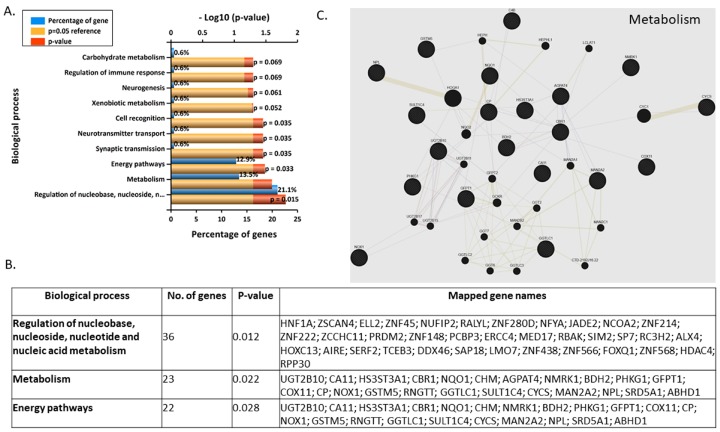
Treatment with 3 nM BPA led to an increase in cell number and altered the phosphorylation status of p38, an effect mediated primarily via the membrane-bound estrogen receptor (GPR30). Nonbiased microarray analysis identified 1195 and 477 genes that were differentially regulated in non-ST BeWo cells, whereas in ST BeWo cells, 309 and 158 genes had altered expression when treated with 3 and 10 nM, respectively. Enriched pathway analyses in non-ST BeWo identified a leptin and insulin overlap (3 nM), methylation pathways (10 nM), and differentiation of white and brown adipocytes (common). In the ST model, most significantly enriched were the nuclear factor erythroid 2-related factor 2 (NRF2) pathway (3 nM) and mir-124 predicted interactions with cell cycle and differentiation (10 nM).
Collectively, our data offer a new insight regarding BPA effects at the placental level, and provide a potential link with metabolic changes that can have an impact on the developing fetus.
内分泌干扰化学物质(EDCs)是人类接触的环境化学物质/毒物,会干扰多种激素的作用。双酚A(BPA)被归类为具有外源性雌激素活性的EDC,对生殖可能产生不利影响。目前,关于BPA对人胎盘的完整影响谱仍存在重大知识空白。因此,本研究在体外研究了生理相关剂量BPA的作用。
采用qRT-PCR、蛋白质印迹法、免疫荧光法、酶联免疫吸附测定、微阵列分析和生物信息学方法,使用未融合(非ST)和融合(ST)的BeWo细胞研究BPA的作用。
用3 nM BPA处理导致细胞数量增加,并改变了p38的磷酸化状态,这种作用主要通过膜结合雌激素受体(GPR30)介导。无偏微阵列分析鉴定出在非ST BeWo细胞中1195个和477个基因表达有差异,而在ST BeWo细胞中,用3 nM和10 nM处理时分别有309个和158个基因表达发生改变。在非ST BeWo细胞中进行的富集通路分析确定了瘦素和胰岛素重叠通路(3 nM)、甲基化通路(10 nM)以及白色和棕色脂肪细胞的分化通路(共同通路)。在ST模型中,最显著富集的是核因子红细胞2相关因子2(NRF2)通路(3 nM)以及mir-124与细胞周期和分化的预测相互作用(10 nM)。
总体而言,我们的数据为BPA在胎盘水平的作用提供了新的见解,并提供了与可能影响发育中胎儿的代谢变化的潜在联系。