Department of Animal Science, Shandong Agricultural University, Shandong Key Lab for Animal Biotechnology and Disease Control, Taian, Shandong, P. R. China 271018.
Department of Animal Science, Shandong Agricultural University, Shandong Key Lab for Animal Biotechnology and Disease Control, Taian, Shandong, P. R. China 271018.
Poult Sci. 2020 Feb;99(2):734-743. doi: 10.1016/j.psj.2019.12.023. Epub 2020 Jan 24.
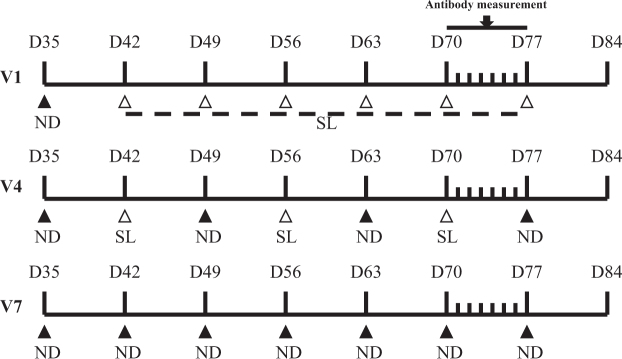
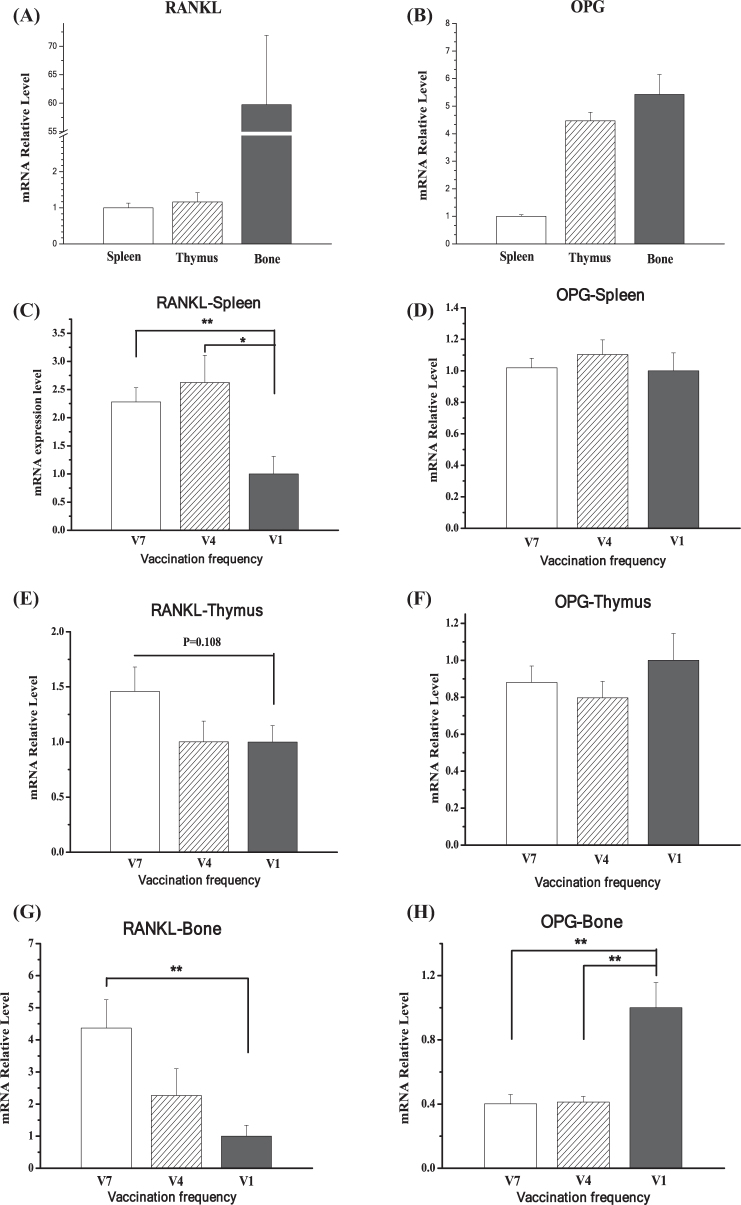
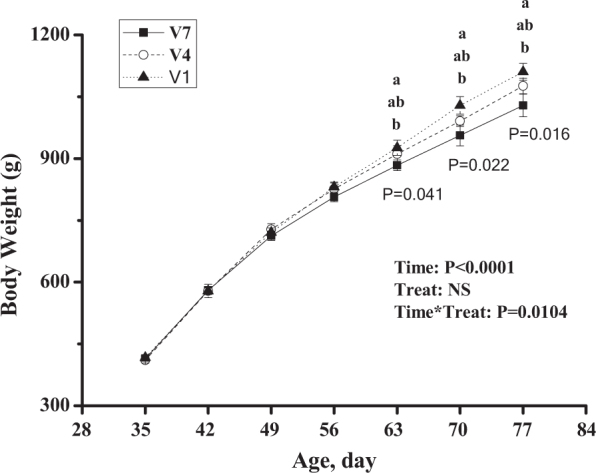
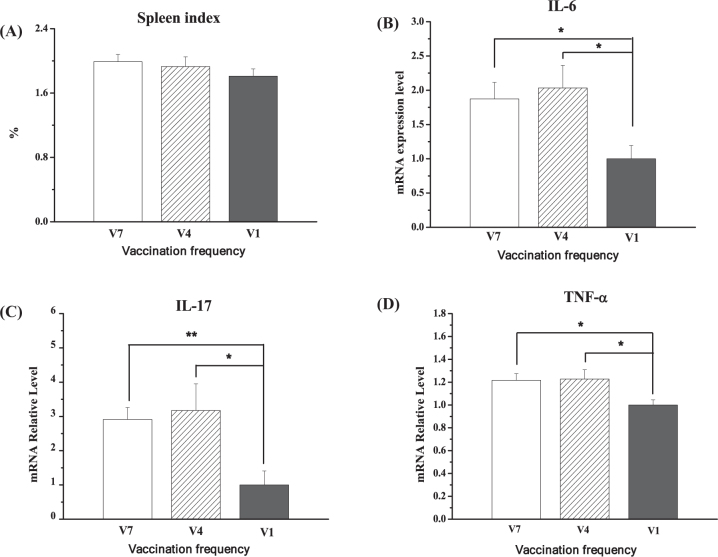
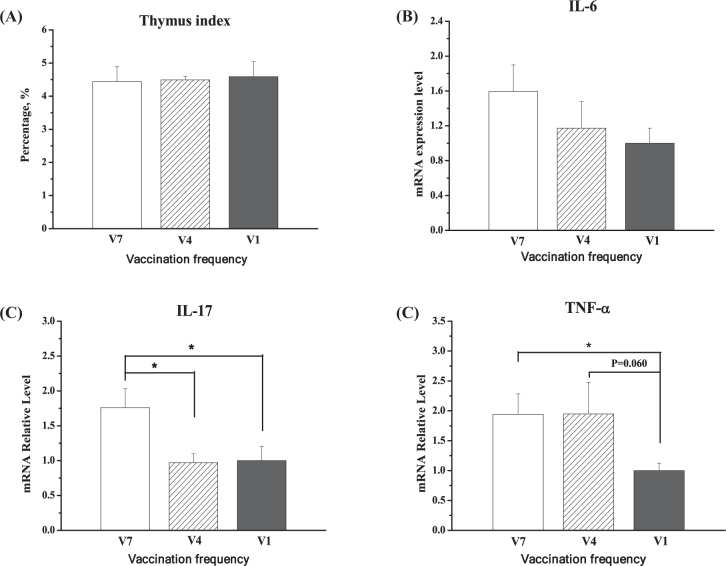
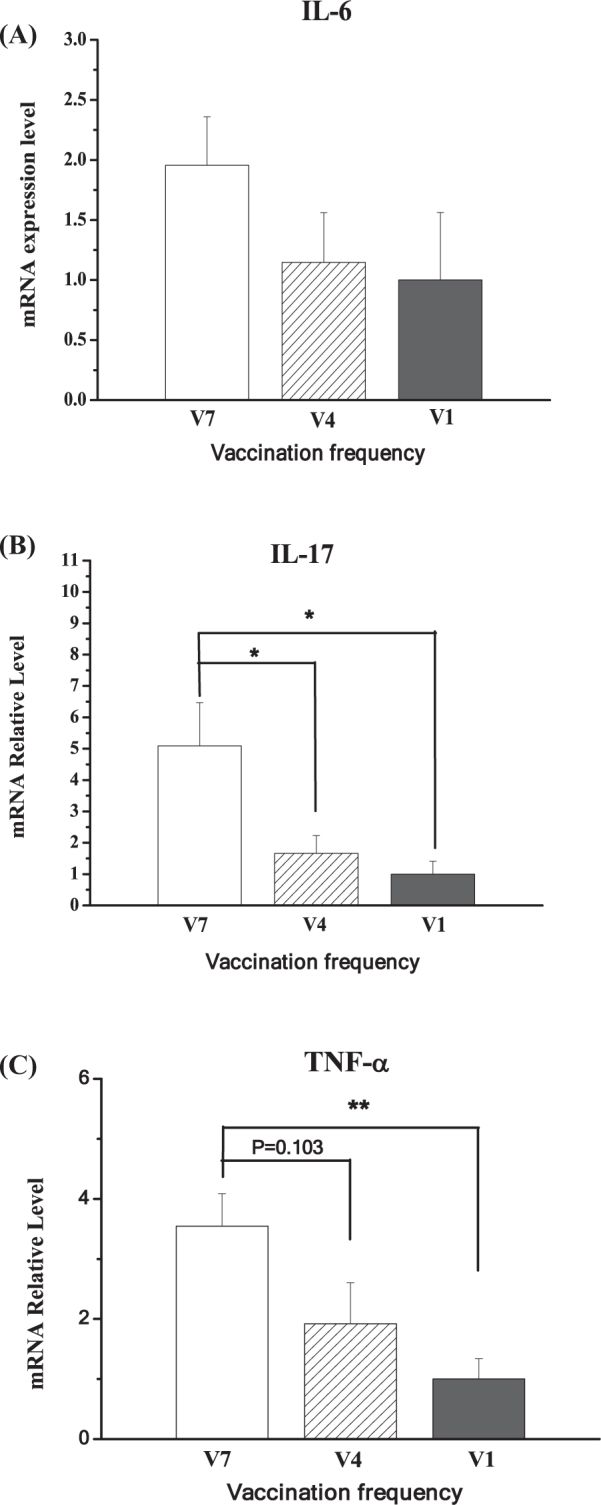
In poultry production, vaccination is an effective measure to protect chickens from diseases. Vaccination, however, is a stressor that may induce stress responses that interfere with the growth and development of chickens. The interaction between the skeletal and immune systems on bone quality has gained more attention. In the present study, the influence of high frequency vaccinations on the bone development of layer pullets was investigated. Thirty 35-day-old SPF White Leghorn layer pullets were obtained and randomly subjected to the following treatments: vaccinated against Newcastle disease (ND) with LoSota vaccine once at 35-day-old (V1, control); 4 times at 35, 49, 63, and 77 d of age (V4); and 7 times at 35, 42, 49, 56, 63, 70, and 77 d of age (V7). The body weight and organ index of the spleen, thymus, and tibia were recorded. The antibody titer and serum and the tibia calcium and phosphorus concentrations were measured. The transcription levels of the IL-6, IL-17, TNF-α, receptor activator of NF-κB ligand (RANKL), and osteoprotegerin (OPG) genes were determined in spleen, thymus, and the tibia. The results showed that V7 decreased body weight and increased the ND antibody titer, compared to V1-chickens. The expression levels of IL-6, IL-17, and TNF-α were upregulated in spleen, thymus, and the tibia of V7 chickens. In the tibia, RANKL was upregulated, while OPG was downregulated by V7 treatment. The results indicate that high frequency vaccination induces immune stress and impairs bone development. The results suggest that the augmented cytokine expression in immune organs and the tibia is associated with activation of the OPG/RANKL pathway, which, in turn, enhances osteoclastogenesis. The appropriate frequency of vaccination should support optimal bone development and full immunoprotection in layer pullets.
在禽类生产中,接种疫苗是保护鸡免受疾病侵害的有效措施。然而,接种疫苗是一种应激源,可能会引起应激反应,干扰鸡的生长和发育。骨骼和免疫系统之间对骨质量的相互作用受到了更多的关注。在本研究中,研究了高频接种疫苗对蛋鸡骨骼发育的影响。将 30 只 35 日龄 SPF 白来航蛋鸡随机分为以下处理组:35 日龄时用 Losota 疫苗接种一次新城疫(ND)(V1,对照组);35、49、63 和 77 日龄时接种 4 次(V4);35、42、49、56、63、70 和 77 日龄时接种 7 次(V7)。记录体重和脾脏、胸腺和胫骨的器官指数。测量抗体滴度和血清以及胫骨钙和磷浓度。测定脾脏、胸腺和胫骨中白细胞介素-6(IL-6)、白细胞介素-17(IL-17)、肿瘤坏死因子-α(TNF-α)、核因子-κB 受体激活剂配体(RANKL)和骨保护素(OPG)基因的转录水平。与 V1 组相比,V7 组体重降低,ND 抗体滴度升高。V7 组鸡的脾脏、胸腺和胫骨中 IL-6、IL-17 和 TNF-α 的表达水平上调。在胫骨中,RANKL 上调,而 OPG 下调。结果表明,高频接种会引起免疫应激,损害骨骼发育。结果表明,免疫器官和胫骨中细胞因子表达的增加与 OPG/RANKL 途径的激活有关,从而增强破骨细胞生成。蛋鸡适宜的接种频率应支持最佳的骨骼发育和充分的免疫保护。