Hirano Takuro, Shinsato Yoshinari, Tanabe Kan, Higa Nayuta, Kamil Muhammad, Kawahara Kohichi, Yamamoto Masatatsu, Minami Kentaro, Shimokawa Michiko, Arigami Takaaki, Yanagita Shigehiro, Matushita Daisuke, Uenosono Yoshikazu, Ishigami Sumiya, Kijima Yuko, Maemura Kosei, Kitazono Ikumi, Tanimoto Akihide, Furukawa Tatsuhiko, Natsugoe Shoji
Department of Digestive Surgery, Breast and Thyroid Surgery, Kagoshima University Graduate School of Medical and Dental Sciences, Kagoshima, Japan.
Department of Molecular Oncology, Kagoshima University Graduate School of Medical and Dental Sciences, Kagoshima, Japan.
Oncogenesis. 2020 Feb 6;9(2):13. doi: 10.1038/s41389-020-0190-7.
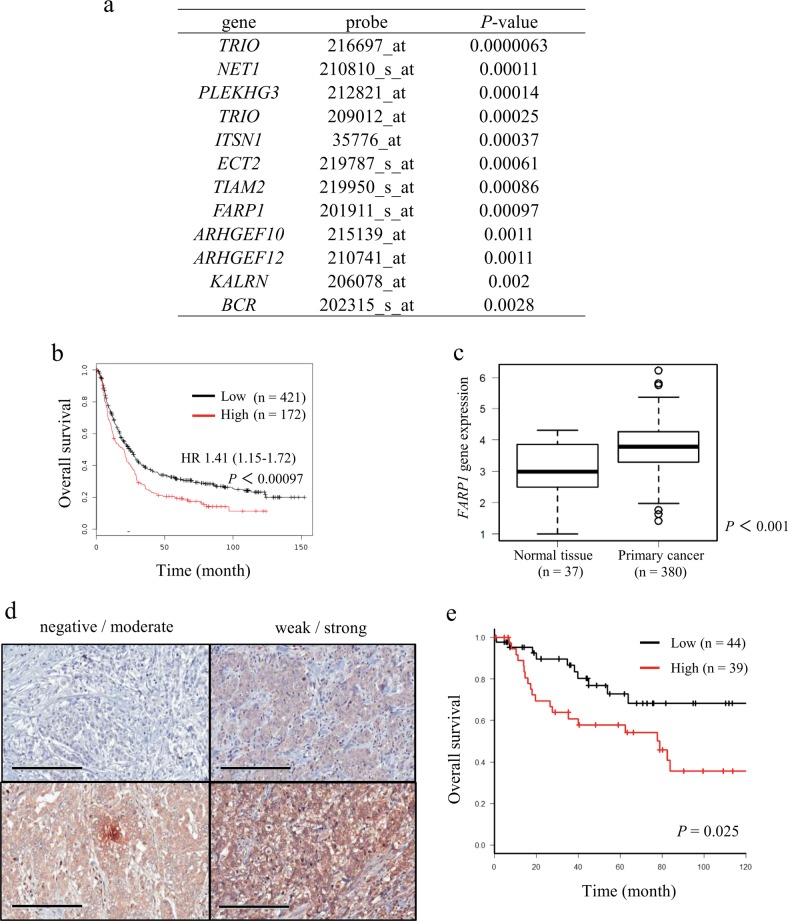
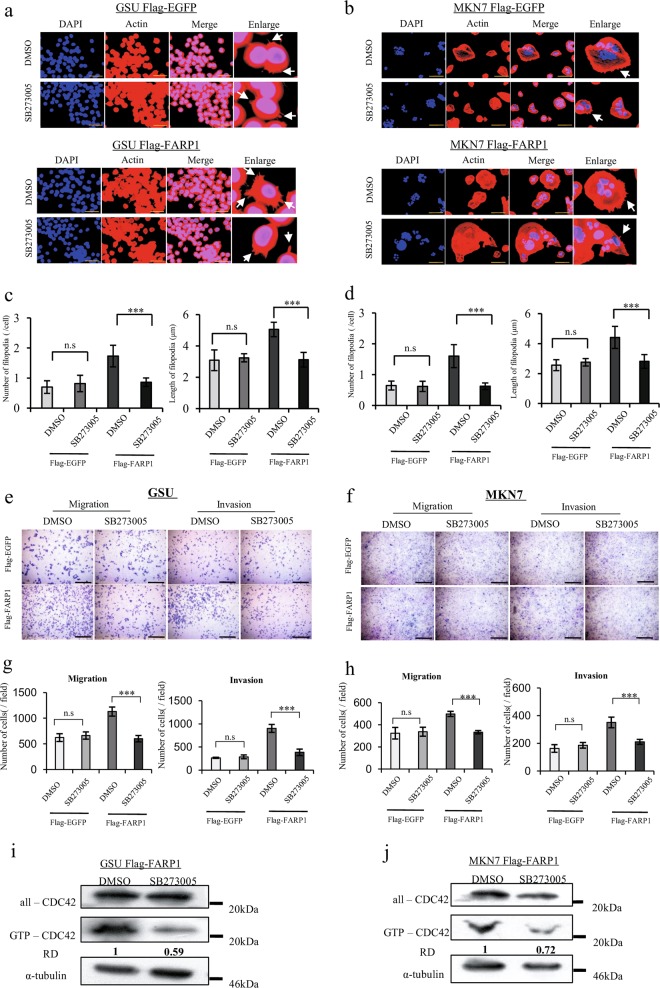
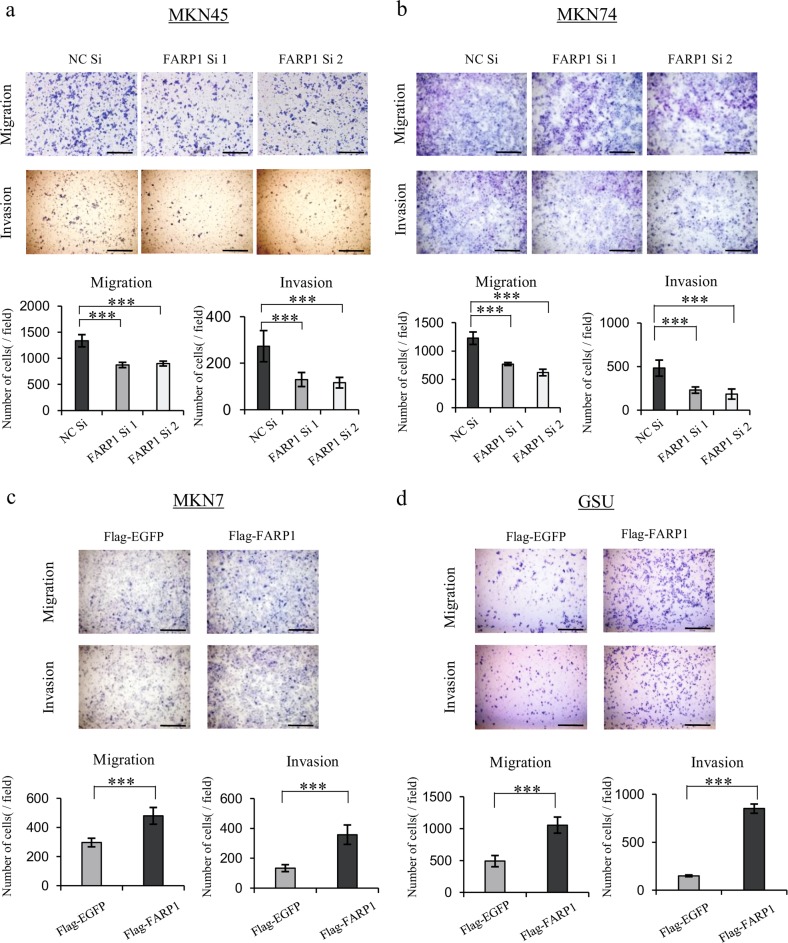
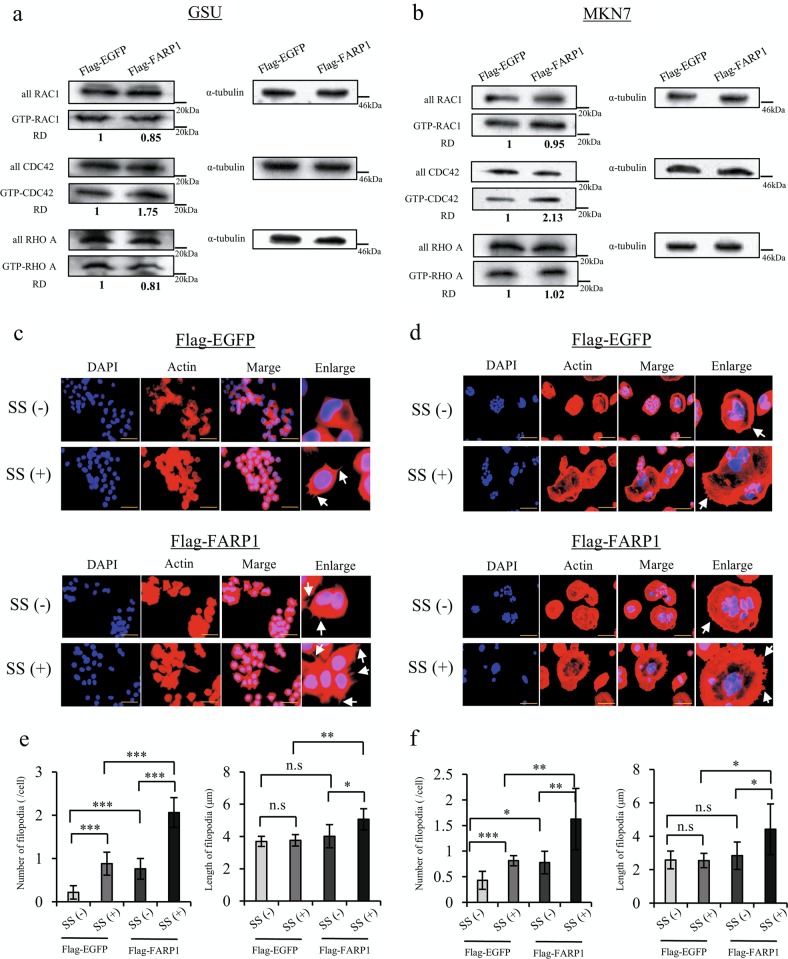
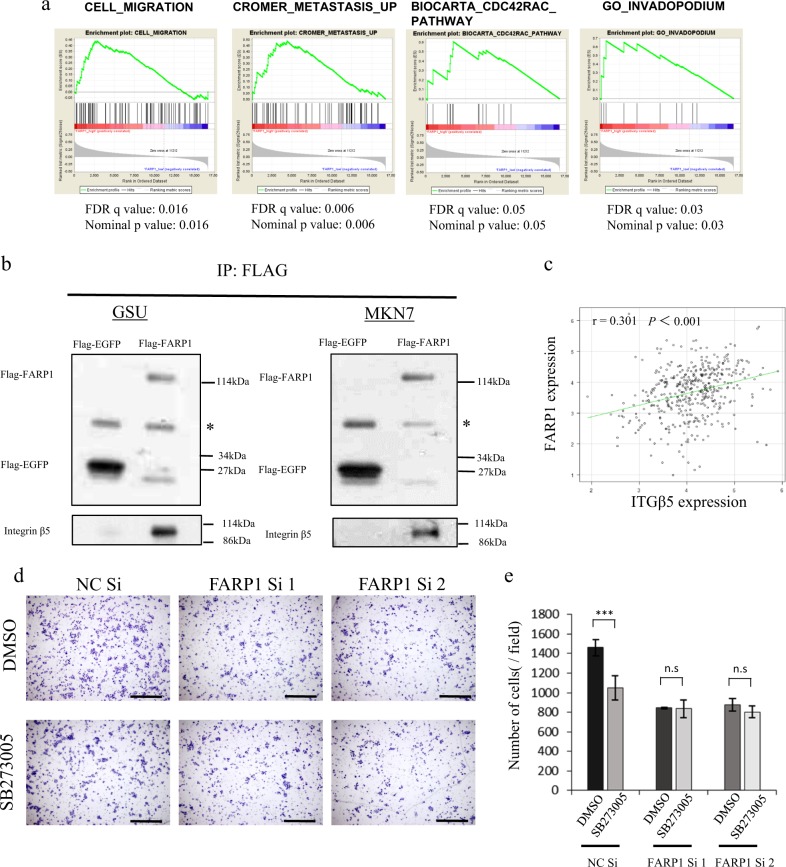
Considering the poor prognosis of most advanced cancers, prevention of invasion and metastasis is essential for disease control. Ras homologous (Rho) guanine exchange factors (GEFs) and their signaling cascade could be potential therapeutic targets in advanced cancers. We conducted in silico analyses of The Cancer Genome Atlas expression data to identify candidate Rho-GEF genes showing aberrant expression in advanced gastric cancer and found FERM, Rho/ArhGEF, and pleckstrin domain protein 1 (FARP1) expression is related to poor prognosis. Analyses in 91 clinical advanced gastric cancers of the relationship of prognosis and pathological factors with immunohistochemical expression of FARP1 indicated that high expression of FARP1 is significantly associated with lymphatic invasion, lymph metastasis, and poor prognosis of the patients (P = 0.025). In gastric cancer cells, FARP1 knockdown decreased cell motility, whereas FARP1 overexpression promoted cell motility and filopodium formation via CDC42 activation. FARP1 interacted with integrin β5, and a potent integrin αvβ5 inhibitor (SB273005) prevented cell motility in only high FARP1-expressing gastric cancer cells. These results suggest that the integrin αvβ5-FARP1-CDC42 axis plays a crucial role in gastric cancer cell migration and invasion. Thus, regulatory cascade upstream of Rho can be a specific and promising target of advanced cancer treatment.
鉴于大多数晚期癌症预后较差,预防侵袭和转移对于疾病控制至关重要。Ras同源(Rho)鸟嘌呤交换因子(GEF)及其信号级联可能是晚期癌症潜在的治疗靶点。我们对癌症基因组图谱表达数据进行了计算机分析,以鉴定在晚期胃癌中显示异常表达的候选Rho-GEF基因,发现FERM、Rho/ArhGEF和普列克底物蛋白结构域蛋白1(FARP1)的表达与预后不良相关。对91例临床晚期胃癌中FARP1免疫组化表达与预后及病理因素关系的分析表明,FARP1高表达与患者的淋巴侵袭、淋巴转移及预后不良显著相关(P = 0.025)。在胃癌细胞中,FARP1敲低降低了细胞运动性,而FARP1过表达通过激活CDC42促进了细胞运动性和丝状伪足形成。FARP1与整合素β5相互作用,一种有效的整合素αvβ5抑制剂(SB273005)仅在高表达FARP1的胃癌细胞中阻止细胞运动。这些结果表明,整合素αvβ5-FARP1-CDC42轴在胃癌细胞迁移和侵袭中起关键作用。因此,Rho上游的调节级联可能是晚期癌症治疗的一个特定且有前景的靶点。