Chen Wenbiao, Lin Chenhong, Gong Lan, Chen Jianing, Liang Yan, Zeng Ping, Diao Hongyan
1State Key Laboratory for Diagnosis and Treatment of Infectious Diseases, Collaborative Innovation Center for Diagnosis and Treatment of Infectious Diseases, The First Affiliated Hospital, College of Medicine, Zhejiang University, Hangzhou, 310003, China; 2St. George and Sutherland Clinical School, University of New South Wales, SydneyNSW2052, Australia.
Curr Genomics. 2019 May;20(4):231-245. doi: 10.2174/1389202920666190820122126.
Long non-coding RNAs (lncRNAs) are emerging as important regulators in the modulation of virus infection by targeting mRNA transcription. However, their roles in chronic hepatitis B (CHB) remain to be elucidated.
The study aimed to explore the lncRNAs and mRNA expression profiles in CHB and asymp-tomatic HBsAg carriers (ASC) and construct mRNA-lncRNA co-expression profile and ceRNA net-works to identify the potential targets of diagnosis and treatment in CHB.
We determined the expression profiles of lncRNAs and mRNAs in CHB and ASC using mi-croarray analysis. Gene ontology (GO) and Kyoto Encyclopedia of Genes and Genomes (KEGG) path-way enrichment analyses were performed to explore their function. We also constructed co-expression, cis-regulatory, and competing endogenous RNA (ceRNA) networks with bioinformatics methods.
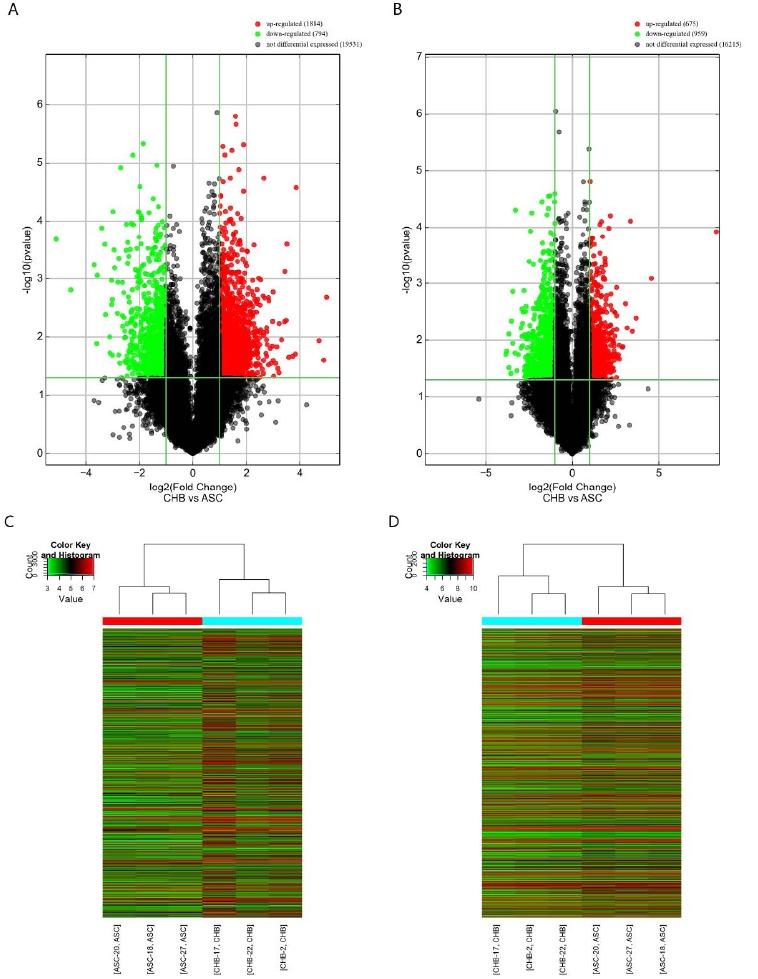
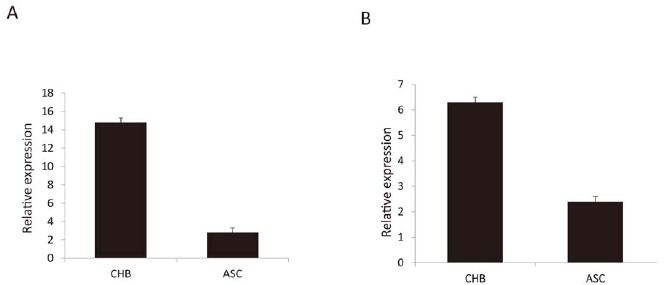
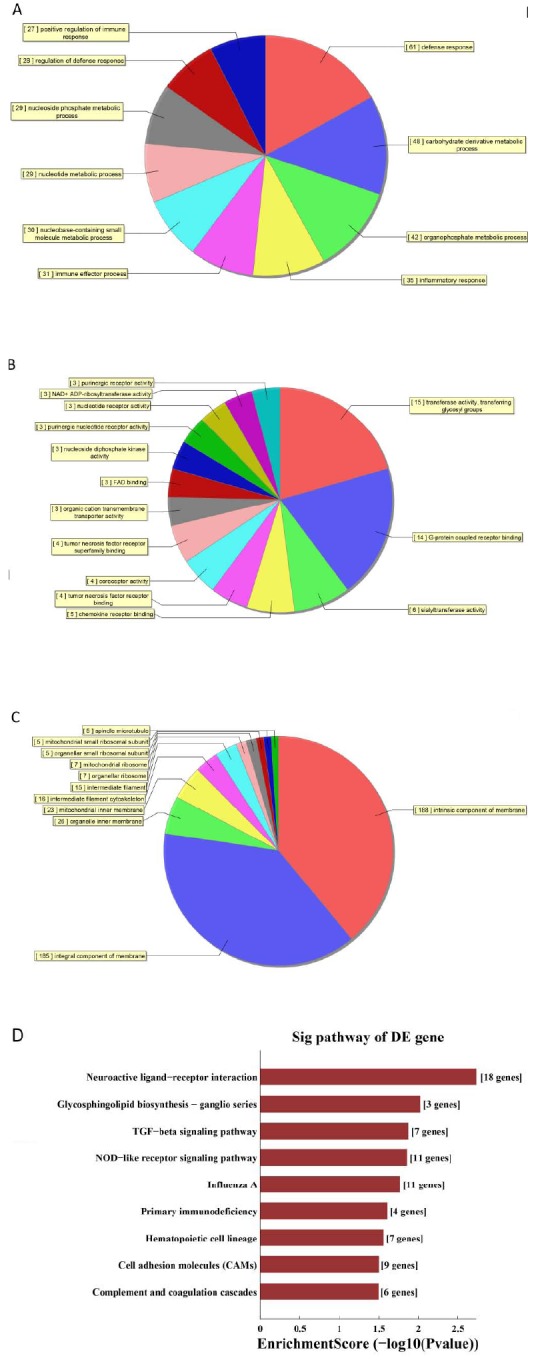
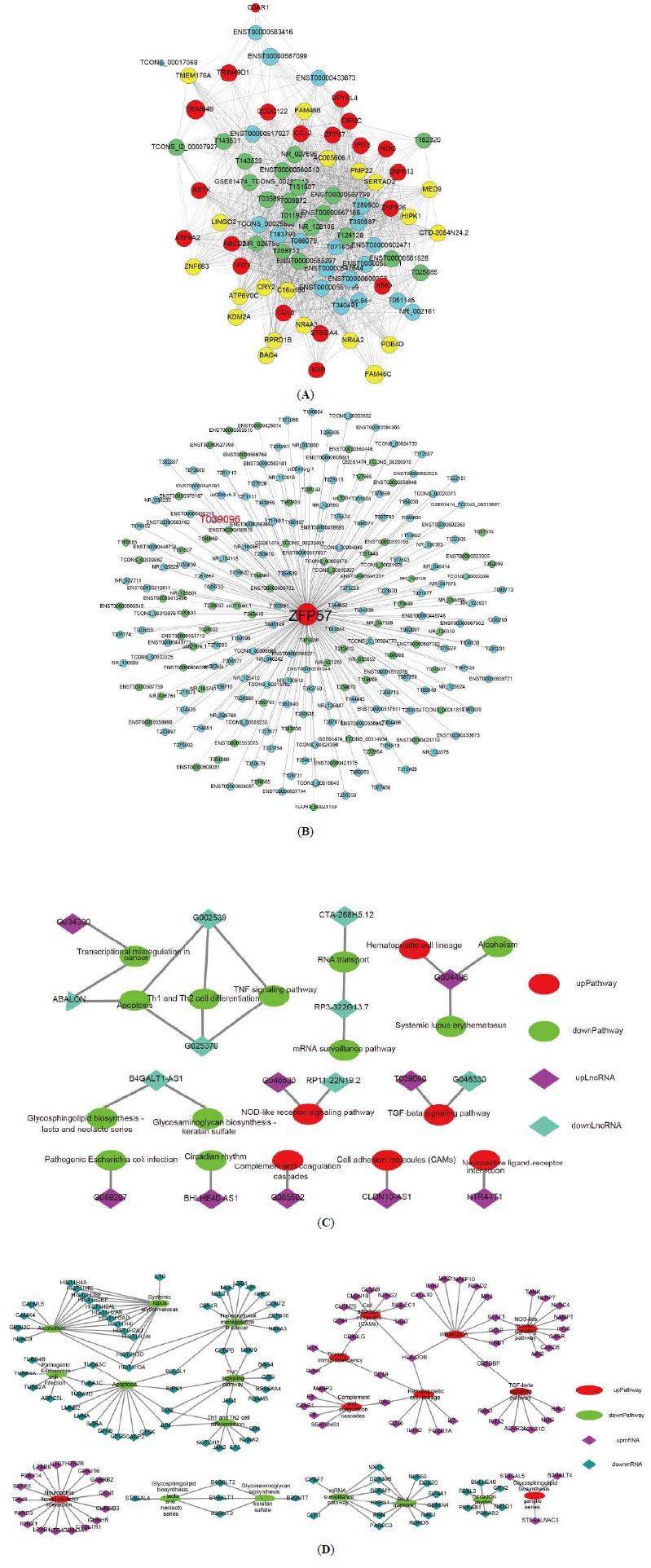
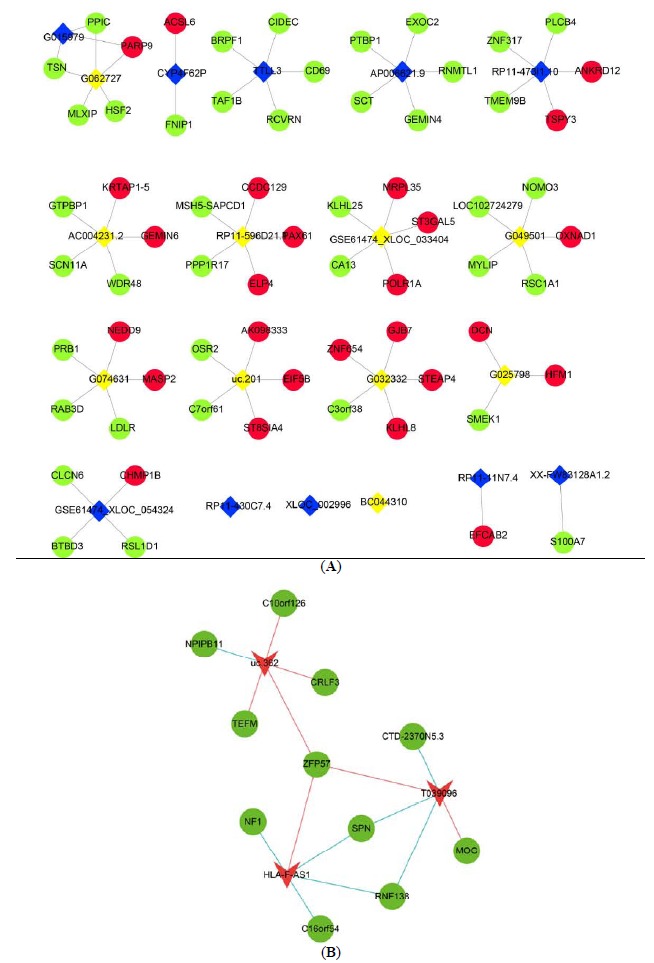
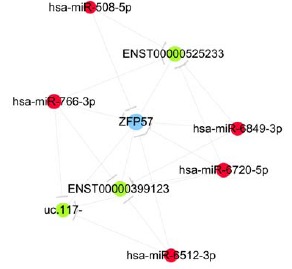
We identified 1634 mRNAs and 5550 lncRNAs that were differentially expressed between CHB and ASC. Significantly enriched GO terms and pathways were identified, many of which were linked to immune processes and inflammatory responses. Co-expression analysis showed 1196 relation-ships between the top 20 up/downregulated lncRNAs and mRNA, especially 213 lncRNAs interacted with ZFP57. The ZFP57-specific ceRNA network covered 3 lncRNAs, 5 miRNAs, and 17 edges. Cis-correlation analysis showed that lncRNA T039096 was paired with the most differentially expressed gene, ZFP57. Moreover, by expending the clinical samples size, the qRT-PCR results showed that the expression of ZFP57 and T039096 increased in CHB compared to ASC.
Our study provides insights into the roles of mRNA and lncRNA networks in CHB, high-lighting potential applications of lncRNA-T039096 and mRNA-ZFP57 for diagnosis and treatment.
长链非编码RNA(lncRNAs)正逐渐成为通过靶向mRNA转录来调节病毒感染的重要调控因子。然而,它们在慢性乙型肝炎(CHB)中的作用仍有待阐明。
本研究旨在探索CHB和无症状HBsAg携带者(ASC)中的lncRNAs和mRNA表达谱,并构建mRNA-lncRNA共表达谱和ceRNA网络,以确定CHB潜在的诊断和治疗靶点。
我们使用微阵列分析确定CHB和ASC中lncRNAs和mRNAs的表达谱。进行基因本体(GO)和京都基因与基因组百科全书(KEGG)通路富集分析以探索它们的功能。我们还使用生物信息学方法构建了共表达、顺式调控和竞争性内源RNA(ceRNA)网络。
我们鉴定出CHB和ASC之间差异表达的1634个mRNA和5550个lncRNA。鉴定出显著富集的GO术语和通路,其中许多与免疫过程和炎症反应相关。共表达分析显示前20个上调/下调lncRNAs与mRNA之间有1196种关系,特别是213个lncRNAs与ZFP57相互作用。ZFP57特异性ceRNA网络涵盖3个lncRNA、5个miRNA和17条边。顺式相关性分析显示lncRNA T039096与差异表达最大的基因ZFP57配对。此外,通过扩大临床样本量,qRT-PCR结果显示与ASC相比,CHB中ZFP57和T039096的表达增加。
我们的研究为mRNA和lncRNA网络在CHB中的作用提供了见解,突出了lncRNA-T039096和mRNA-ZFP57在诊断和治疗中的潜在应用。