Han Zegang, Hu Yan, Tian Qin, Cao Yiwen, Si Aijun, Si Zhanfeng, Zang Yihao, Xu Chenyu, Shen Weijuan, Dai Fan, Liu Xia, Fang Lei, Chen Hong, Zhang Tianzhen
State Key Laboratory of Crop Genetics and Germplasm Enhancement, Nanjing Agricultural University, Nanjing, China.
Zhejiang Provincial Key Laboratory of Crop Genetic Resources, Institute of Crop Science, Plant Precision Breeding Academy, College of Agriculture and Biotechnology, Zhejiang University, Hangzhou, China.
Plant Biotechnol J. 2020 Oct;18(10):2002-2014. doi: 10.1111/pbi.13356. Epub 2020 Feb 29.
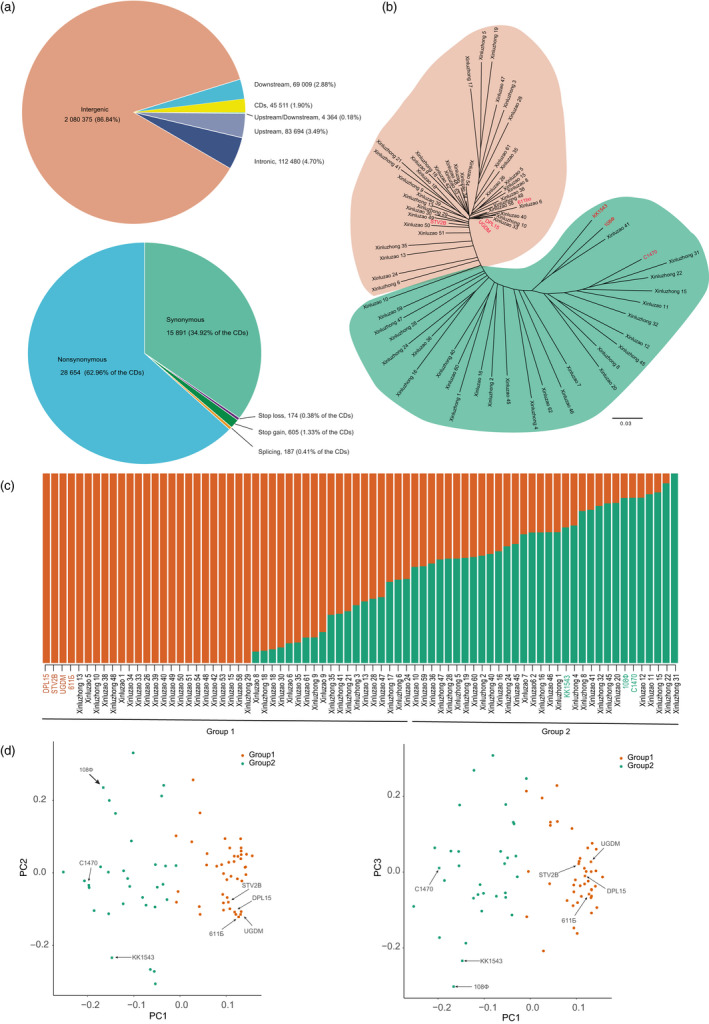
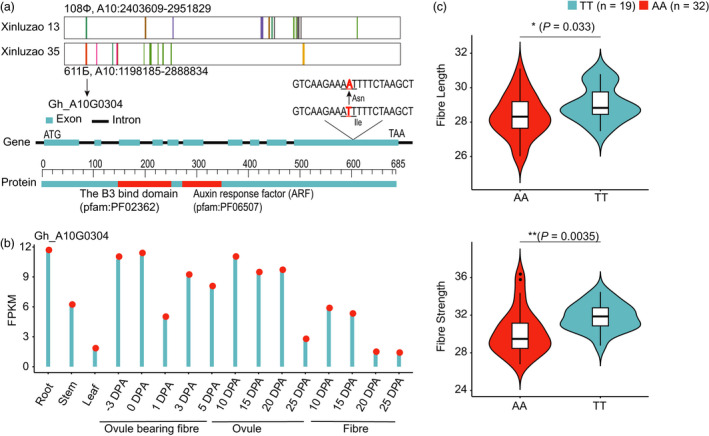
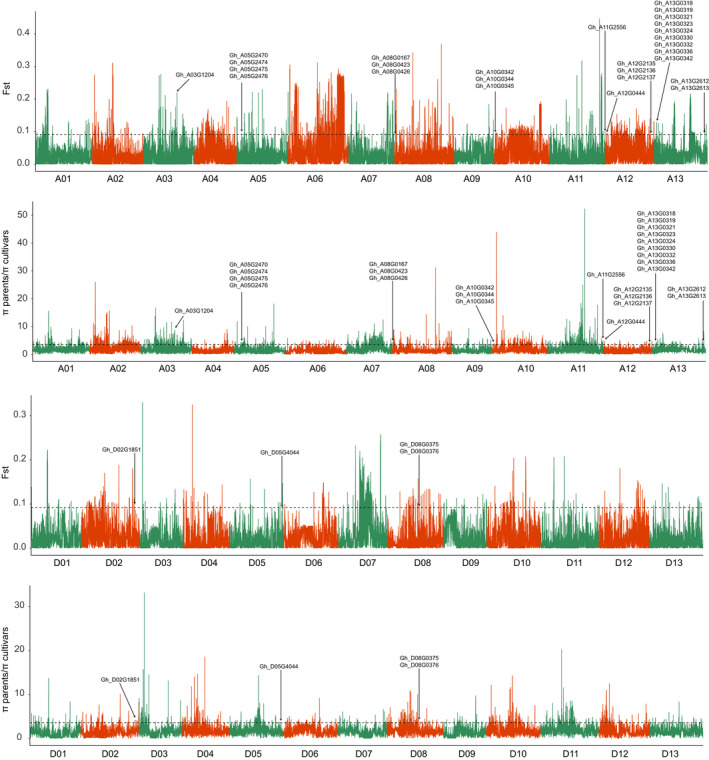
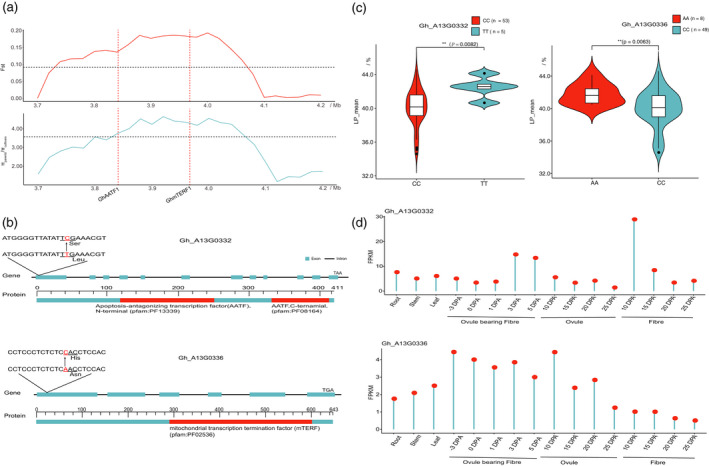
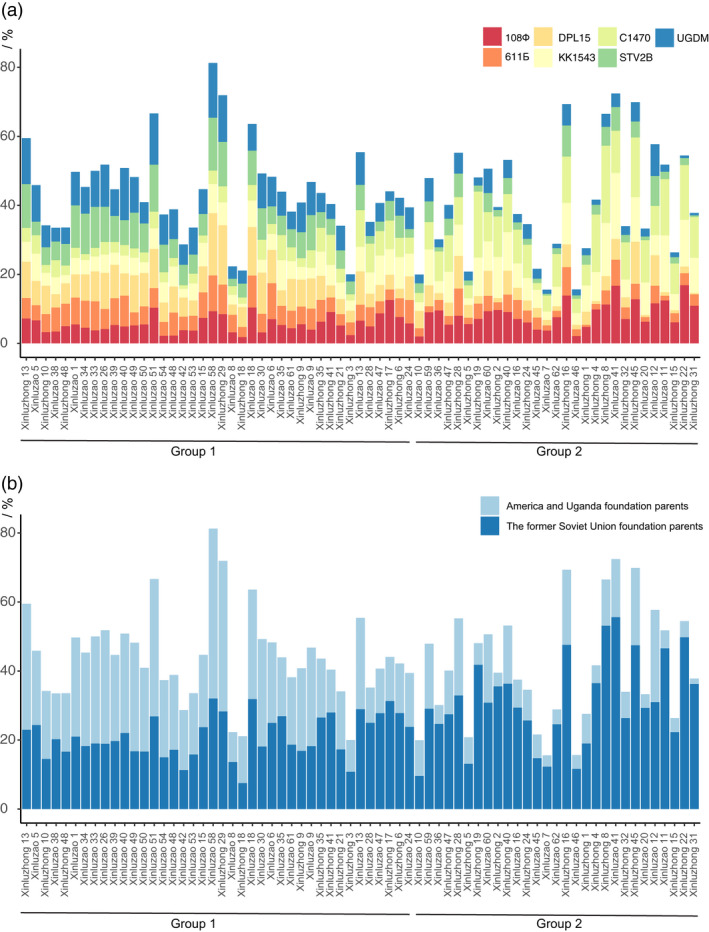
Xinjiang has been the largest and highest yield cotton production region not only in China, but also in the world. Improvements in Upland cotton cultivars in Xinjiang have occurred via pedigree selection and/or crossing of elite alleles from the former Soviet Union and other cotton producing regions of China. But it is unclear how genomic constitutions from foundation parents have been selected and inherited. Here, we deep-sequenced seven historic foundation parents, comprising four cultivars introduced from the former Soviet Union (108Ф, C1470, 611Б and KK1543) and three from United States and Africa (DPL15, STV2B and UGDM), and re-sequenced sixty-nine Xinjiang modern cultivars. Phylogenetic analysis of more than 2 million high-quality single nucleotide polymorphisms allowed their classification two groups, suggesting that Xinjiang Upland cotton cultivars were not only spawned from 108Ф, C1470, 611Б and KK1543, but also had a close kinship with DPL15, STV2B and UGDM. Notably, identity-by-descent (IBD) tracking demonstrated that the former Soviet Union cultivars have made a huge contribution to modern cultivar improvement in Xinjiang. A total of 156 selective sweeps were identified. Among them, apoptosis-antagonizing transcription factor gene (GhAATF1) and mitochondrial transcription termination factor family protein gene (GhmTERF1) were highly involved in the determination of lint percentage. Additionally, the auxin response factor gene (GhARF3) located in inherited IBD segments from 108Ф and 611Б was highly correlated with fibre quality. These results provide an insight into the genomics of artificial selection for improving cotton production and facilitate next-generation precision breeding of cotton and other crops.
新疆一直是中国乃至世界上最大且棉花产量最高的产区。新疆陆地棉品种的改良是通过系谱选择和/或从前苏联及中国其他棉花产区导入优良等位基因实现的。但尚不清楚基础亲本的基因组构成是如何被选择和遗传的。在此,我们对7个历史悠久的基础亲本进行了深度测序,其中包括4个从前苏联引进的品种(108Ф、C1470、611Б和KK1543)以及3个来自美国和非洲的品种(DPL15、STV2B和UGDM),并对69个新疆现代品种进行了重测序。对200多万个高质量单核苷酸多态性进行系统发育分析,可将它们分为两组,这表明新疆陆地棉品种不仅起源于108Ф、C1470、611Б和KK1543,而且与DPL15、STV2B和UGDM也有密切的亲缘关系。值得注意的是,基于家系的同一性(IBD)追踪表明,前苏联品种对新疆现代品种的改良做出了巨大贡献。共鉴定出156个选择性清除区域。其中,凋亡拮抗转录因子基因(GhAATF1)和线粒体转录终止因子家族蛋白基因(GhmTERF1)高度参与皮棉百分比的决定。此外,位于从108Ф和611Б遗传的IBD片段中的生长素响应因子基因(GhARF3)与纤维品质高度相关。这些结果为棉花生产改良的人工选择基因组学提供了见解,并有助于棉花及其他作物的下一代精准育种。