Department of Psychiatry, Yale School of Medicine, New Haven, CT, USA.
VA Connecticut Healthcare System, West Haven, CT, USA.
Mol Psychiatry. 2021 Jun;26(6):2238-2253. doi: 10.1038/s41380-020-0668-x. Epub 2020 Feb 7.
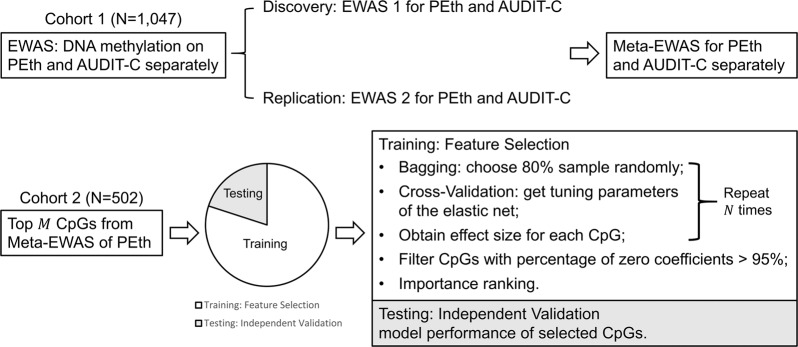
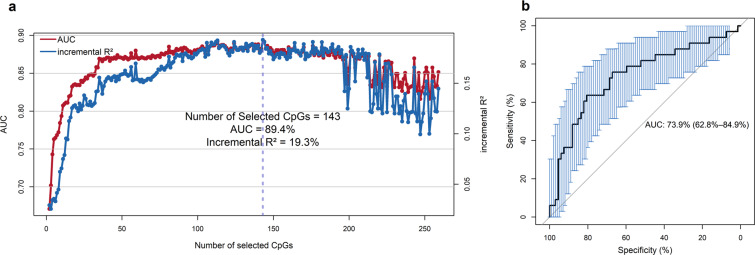
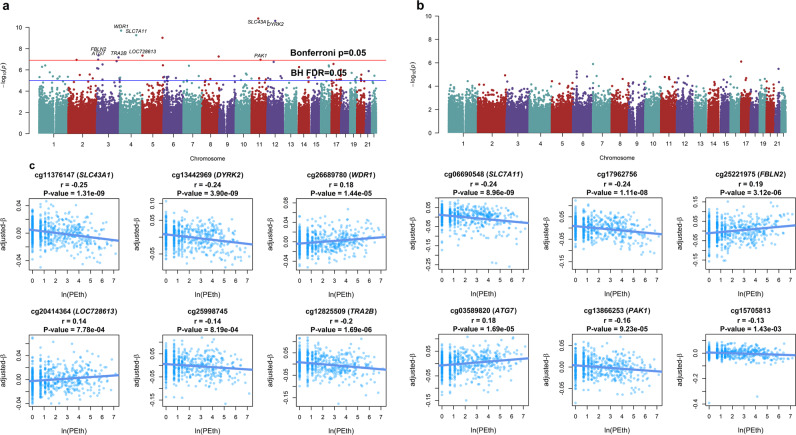
The process of diagnosing hazardous alcohol drinking (HAD) is based on self-reported data and is thereby vulnerable to bias. There has been an interest in developing epigenetic biomarkers for HAD that might complement clinical assessment. Because alcohol consumption has been previously linked to DNA methylation (DNAm), we aimed to select DNAm signatures in blood to predict HAD from two demographically and clinically distinct populations (N = 1,549). We first separately conducted an epigenome-wide association study (EWAS) for phosphatidylethanol (PEth), an objective measure of alcohol consumption, and for self-reported alcohol consumption in Cohort 1. We identified 83 PEth-associated CpGs, including 23 CpGs previously associated with alcohol consumption or alcohol use disorder. In contrast, no CpG reached epigenome-wide significance on self-reported alcohol consumption. Using a machine learning approach, two CpG subsets from EWAS on PEth and on self-reported alcohol consumption from Cohort 1 were separately tested for the prediction of HAD in Cohort 2. We found that a subset of 143 CpGs selected from the EWAS on PEth showed an excellent prediction of HAD with the area under the receiver operating characteristic curve (AUC) of 89.4% in training set and 73.9% in validation set of Cohort 2. However, CpGs preselected from the EWAS on self-reported alcohol consumption showed a poor prediction of HAD with AUC 75.2% in training set and 57.6% in validation set. Our results demonstrate that an objective measure for alcohol consumption is a more informative phenotype than self-reported data for revealing epigenetic mechanisms. The PEth-associated DNAm signature in blood could serve as a robust biomarker for alcohol consumption.
诊断危险饮酒(HAD)的过程基于自我报告的数据,因此容易出现偏差。人们一直有兴趣开发用于 HAD 的表观遗传生物标志物,这些标志物可能有助于临床评估。由于先前已经发现酒精消耗与 DNA 甲基化(DNAm)有关,因此我们旨在从两个在人口统计学和临床方面都不同的人群(N = 1549)中选择血液中的 DNAm 特征来预测 HAD。我们首先分别在队列 1 中对磷脂酰乙醇(PEth)这一客观的酒精消耗衡量标准和自我报告的酒精消耗进行全基因组关联研究(EWAS)。我们确定了 83 个与 PEth 相关的 CpG,其中包括 23 个与酒精消耗或酒精使用障碍相关的 CpG。相比之下,没有 CpG 在自我报告的酒精消耗上达到全基因组意义上的显著性。使用机器学习方法,我们分别从队列 1 中 PEth 的 EWAS 和自我报告的酒精消耗的 EWAS 中测试了两个 CpG 子集对队列 2 中 HAD 的预测。我们发现,从 PEth 的 EWAS 中选择的 143 个 CpG 子集在训练集和队列 2 的验证集中对 HAD 的预测具有出色的表现,曲线下面积(AUC)分别为 89.4%和 73.9%。然而,从自我报告的酒精消耗的 EWAS 中预先选择的 CpG 对 HAD 的预测表现不佳,训练集的 AUC 为 75.2%,验证集的 AUC 为 57.6%。我们的结果表明,酒精消耗的客观衡量标准比自我报告的数据更能揭示表观遗传机制,是更有信息的表型。血液中与 PEth 相关的 DNAm 特征可作为酒精消耗的稳健生物标志物。