Zhan Yunfei, Liang Jiamin, Tian Kun, Che Zhigang, Wang Ziyi, Yang Xue, Su Yuangang, Lin Xixi, Song Fangming, Zhao Jinmin, Xu Jiake, Liu Qian, Zhou Bo
Guangxi Key Laboratory of Regenerative Medicine, Guangxi Medical University, Nanning, China.
School of Biomedical Sciences, The University of Western Australia, Perth, WA, Australia.
Front Pharmacol. 2020 Jan 22;10:1587. doi: 10.3389/fphar.2019.01587. eCollection 2019.
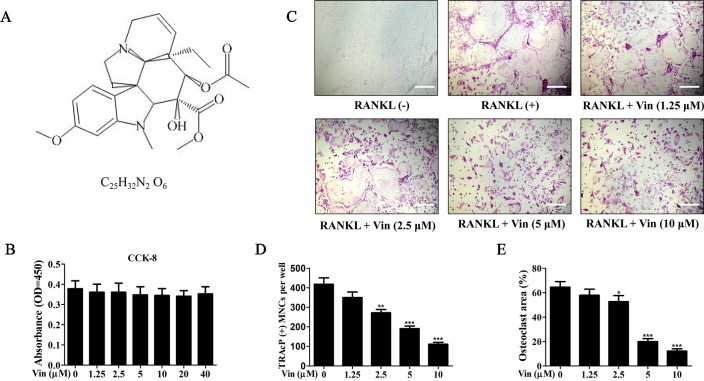
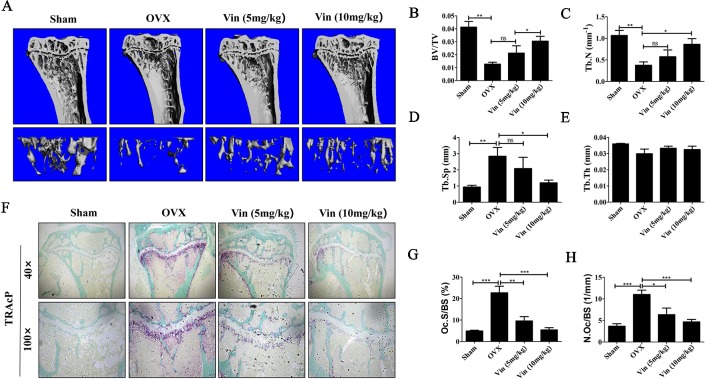
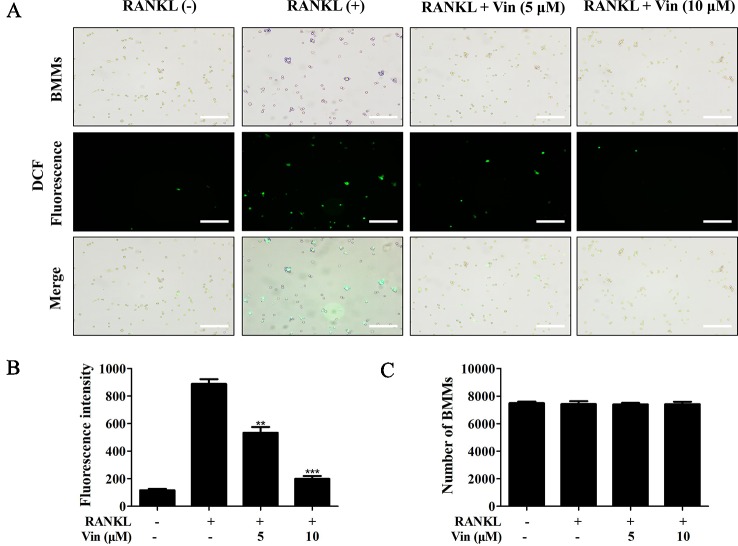
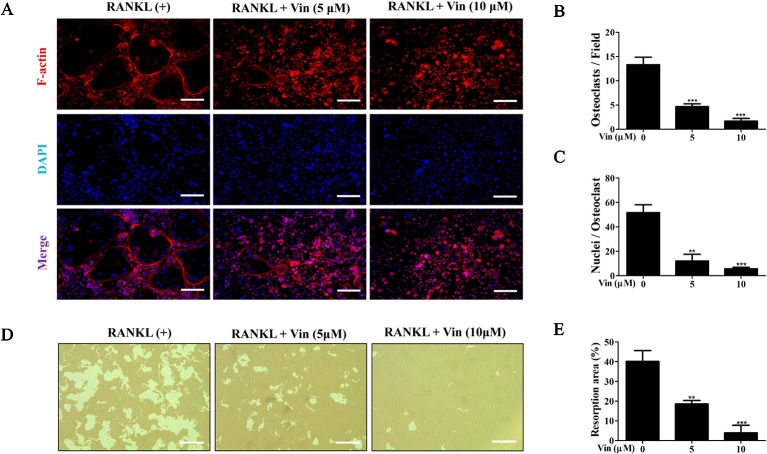
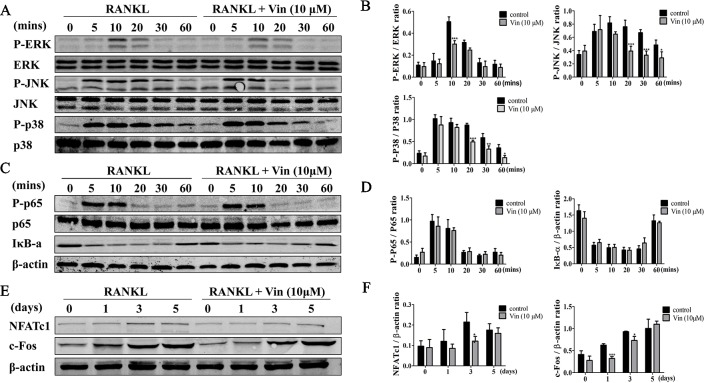
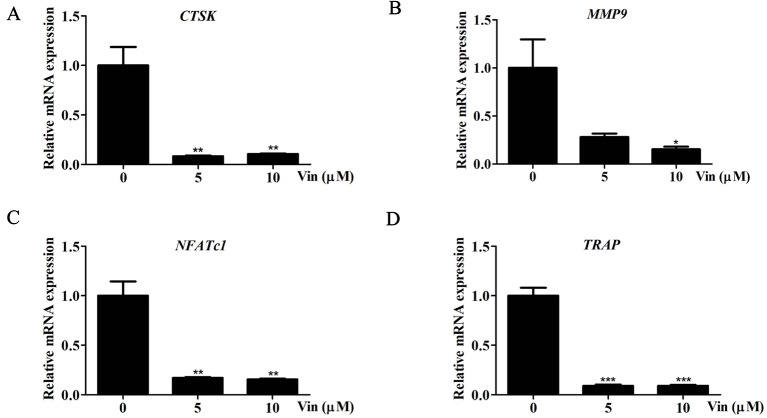
Osteolytic bone diseases, for example postmenopausal osteoporosis, arise from the imbalances between osteoclasts and osteoblasts in the bone remodeling process, whereby osteoclastic bone resorption greatly exceeds osteoblastic bone formation resulting in severe bone loss and deterioration in bone structure and microarchitecture. Therefore, the identification of agents that can inhibit osteoclast formation and/or function for the treatment of osteolytic bone disease has been the focus of bone and orthopedic research. Vindoline (Vin), an indole alkaloid extracted from the medicinal plant , has been shown to possess extensive biological and pharmacological benefits, but its effects on bone metabolism remains to be documented. Our study demonstrated for the first time, that Vin could inhibit osteoclast differentiation from bone marrow macrophages (BMMs) precursor cells as well as mature osteoclastic bone resorption. We further determined that the underlying molecular mechanism of action of Vin is in part due to its inhibitory effect against the activation of MAPK including p38, JNK, and ERK and intracellular reactive oxygen species (ROS) production. This effect ultimately suppressed the induction of c-Fos and NFATc1, which consequently downregulated the expression of the genes required for osteoclast formation and bone resorption. Consistent with our findings, administration of Vin protected mice against ovariectomy (OVX)-induced bone loss and trabecular bone deterioration. These results provided promising evidence for the potential therapeutic application of Vin as a novel treatment option against osteolytic diseases.
溶骨性骨疾病,例如绝经后骨质疏松症,源于骨重塑过程中破骨细胞与成骨细胞之间的失衡,即破骨细胞的骨吸收大大超过成骨细胞的骨形成,导致严重的骨质流失以及骨结构和微结构的恶化。因此,鉴定能够抑制破骨细胞形成和/或功能以治疗溶骨性骨疾病的药物一直是骨科学和矫形外科学研究的重点。长春花碱(Vin)是从药用植物中提取的一种吲哚生物碱,已显示具有广泛的生物学和药理学益处,但其对骨代谢的影响仍有待记录。我们的研究首次证明,Vin能够抑制骨髓巨噬细胞(BMMs)前体细胞向破骨细胞的分化以及成熟破骨细胞的骨吸收。我们进一步确定,Vin的潜在分子作用机制部分归因于其对包括p38、JNK和ERK在内的丝裂原活化蛋白激酶(MAPK)激活以及细胞内活性氧(ROS)产生的抑制作用。这种作用最终抑制了c-Fos和活化T细胞核因子c1(NFATc1)的诱导,从而下调了破骨细胞形成和骨吸收所需基因的表达。与我们的研究结果一致,给予Vin可保护小鼠免受卵巢切除(OVX)诱导的骨质流失和小梁骨恶化。这些结果为Vin作为一种治疗溶骨性疾病的新型治疗选择的潜在治疗应用提供了有希望的证据。