Carpagnano Giovanna Elisiana, Sessa Francesco, Scioscia Giulia, Lacedonia Donato, Foschino Maria Pia, Venuti Maria Pia, Triggiani Antonio Ivano, Valenzano Anna, Resta Onofrio, Cibelli Giuseppe, Messina Giovanni
Department of Medical and Surgical Sciences, Institute of Respiratory Diseases, University of Foggia, Foggia, Italy.
Department of Clinical and Experimental Medicine, University of Foggia, Foggia, Italy.
Front Pharmacol. 2020 Jan 24;10:1630. doi: 10.3389/fphar.2019.01630. eCollection 2019.
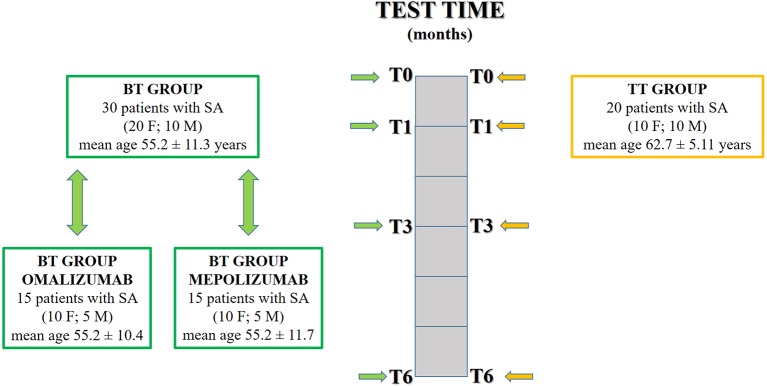
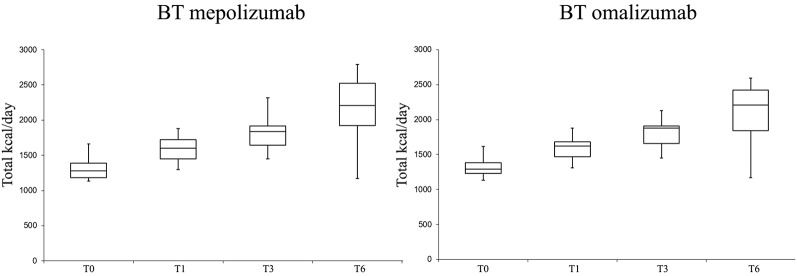
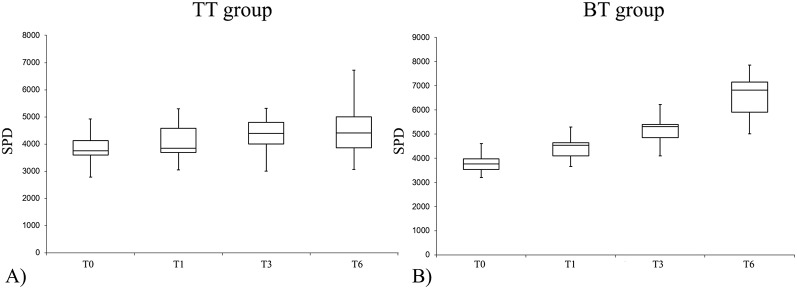
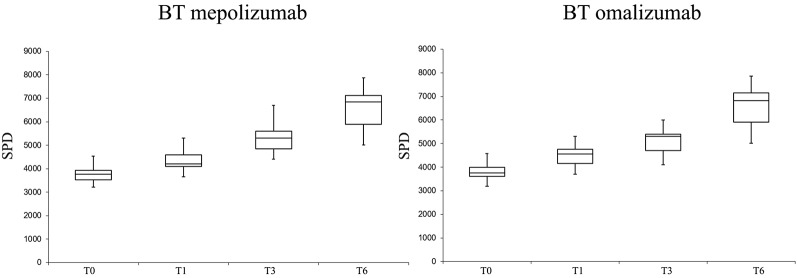
Asthma is a chronic inflammatory airway disease, representing one of the most severe pathologies in developed countries. Based on a report of the World Health Organization (WHO), it affects about 300 million people worldwide. Few studies have analyzed the effects of daily life physical activity (PA) levels in patients with asthma: moreover, little research has been carried out on PA levels in patients suffering from severe asthma (SA). This study aimed to investigate the PA levels in two groups of patients suffering from SA; in particular, this study analyzed the changes that occur in patients treated with biologic therapy (BT group) and patients who underwent traditional treatment (TT group) over 6 months. Moreover, this study represents a pilot study because, to the best of our knowledge, it is the first investigation that analyzed if the kind of biologic drug (omalizumab or mepolizumab) can produce differences in the PA levels of SA patients. Fifty SA patients were enrolled and PA parameters were monitored for 6 months. Subjects were divided into two treatment groups: TT (20 patients) and BT (30 patients), the BT group was further subdivided according to the drugs used (15, omalizumab; 15, mepolizumab). During drug treatment, all subjects improved their PA levels: indeed, considering the intragroup variation, the PA levels were significantly higher comparing the T6 levels to baseline (T0, p < 0.01). Considering the intragroup variation, it is very interesting to note that biologic therapy improved PA levels compared to the effects of traditional therapy; while at T0 there were no significant differences in the steps per day (SPD) values between the two groups (T0, p = 0.85), the differences become statistically significant at T1, T3, and T6 (T1, p = 0.019; T3, p = 3.48x10; T6, p = 4.78x10). As expected, the same differences were reported analyzing the energy expenditure data. In conclusion, this pilot study reports a positive relationship between biologic drug therapy and PA patterns, even if further studies are needed.
哮喘是一种慢性炎症性气道疾病,是发达国家最严重的病症之一。根据世界卫生组织(WHO)的一份报告,全球约有3亿人受其影响。很少有研究分析日常生活身体活动(PA)水平对哮喘患者的影响:此外,针对重度哮喘(SA)患者的PA水平的研究也很少。本研究旨在调查两组SA患者的PA水平;具体而言,本研究分析了接受生物治疗的患者(BT组)和接受传统治疗的患者(TT组)在6个月内发生的变化。此外,本研究是一项试点研究,因为据我们所知,它是第一项分析生物药物(奥马珠单抗或美泊利单抗)是否会使SA患者的PA水平产生差异的调查。招募了50名SA患者,并对PA参数进行了6个月的监测。受试者分为两个治疗组:TT组(20名患者)和BT组(30名患者),BT组根据使用的药物进一步细分(15名使用奥马珠单抗;15名使用美泊利单抗)。在药物治疗期间,所有受试者的PA水平均有所改善:实际上,考虑到组内差异,将T6水平与基线(T0)相比,PA水平显著更高(p < 0.01)。考虑到组内差异,非常有趣的是,与传统治疗效果相比,生物治疗改善了PA水平;虽然在T0时两组之间的每日步数(SPD)值没有显著差异(T0,p = 0.85),但在T1、T3和T6时差异具有统计学意义(T1,p = 0.019;T3,p = 3.48x10;T6,p = 4.78x10)。正如预期的那样,分析能量消耗数据时也报告了相同的差异。总之,本试点研究报告了生物药物治疗与PA模式之间的积极关系,尽管还需要进一步研究。