Hatton Olivia, Smith Madeline M, Alexander Madison, Mandell Melanie, Sherman Carissa, Stesney Madeline W, Hui Sin Ting, Dohrn Gillian, Medrano Joselinne, Ringwalt Kurt, Harris-Arnold Aleishia, Maloney Eden M, Krams Sheri M, Martinez Olivia M
Department of Molecular Biology, Colorado College, Colorado Springs, CO, United States.
Division of Abdominal Transplantation, Department of Surgery, Stanford University School of Medicine, Stanford, CA, United States.
Front Microbiol. 2019 Nov 26;10:2692. doi: 10.3389/fmicb.2019.02692. eCollection 2019.
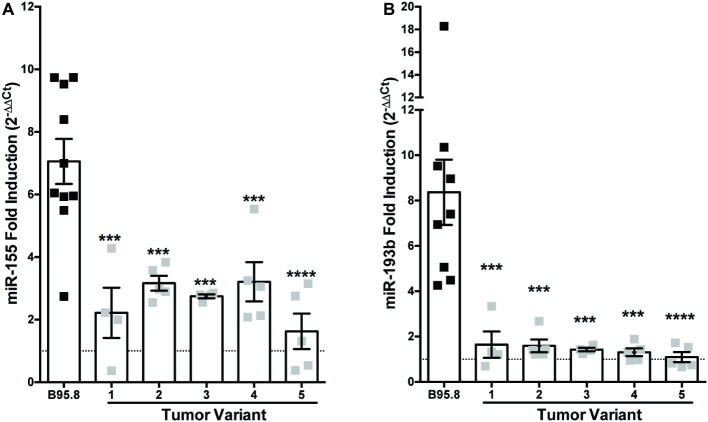
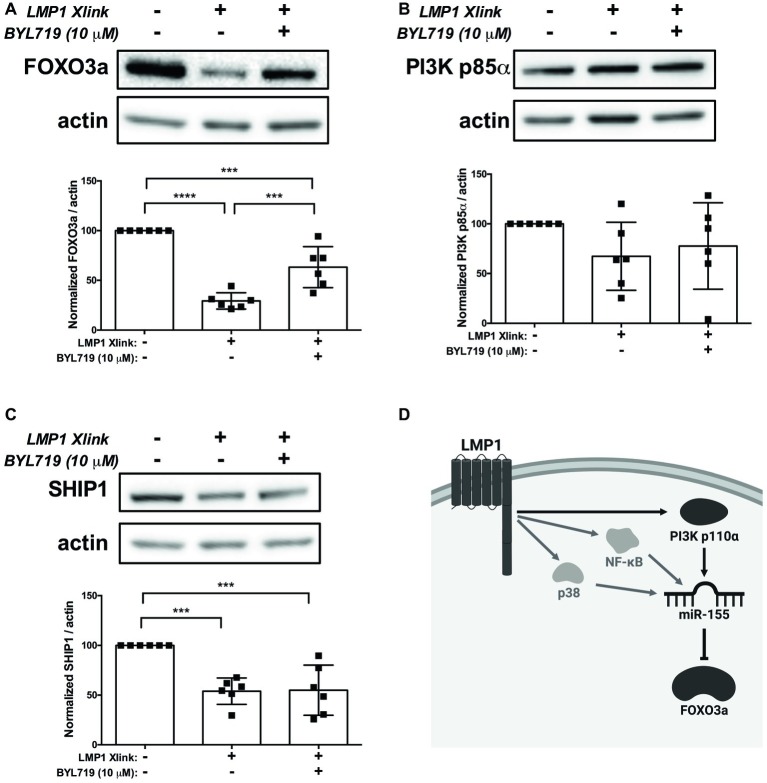
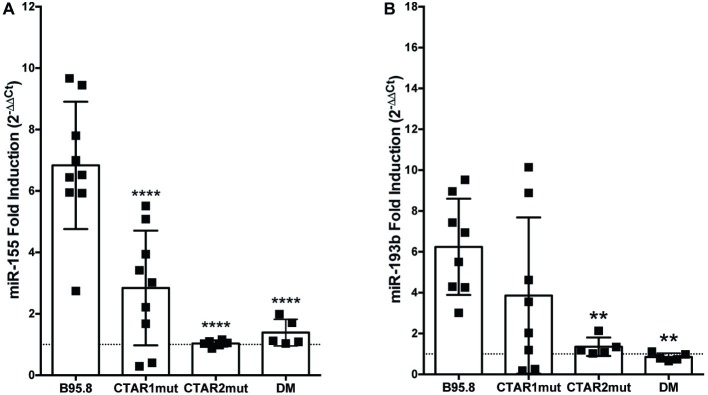
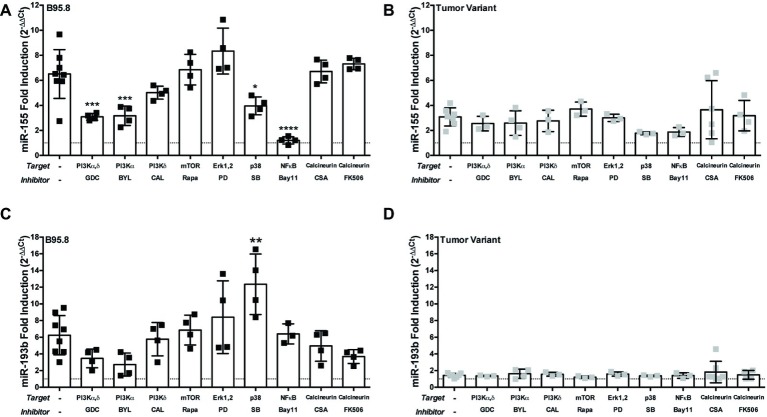
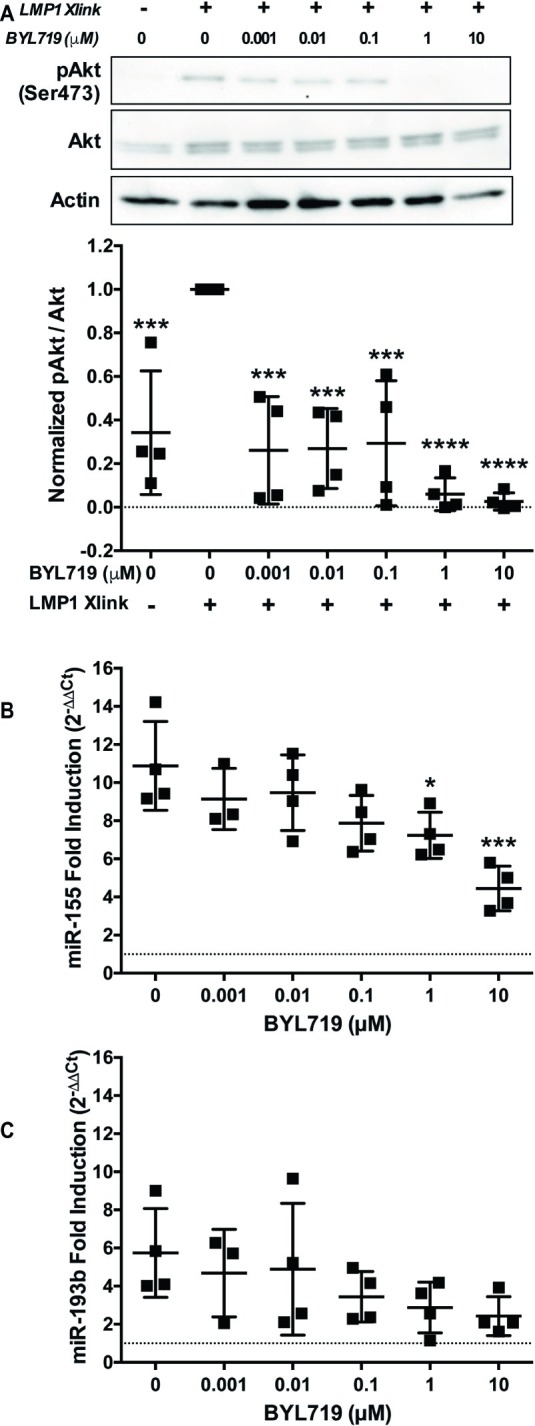
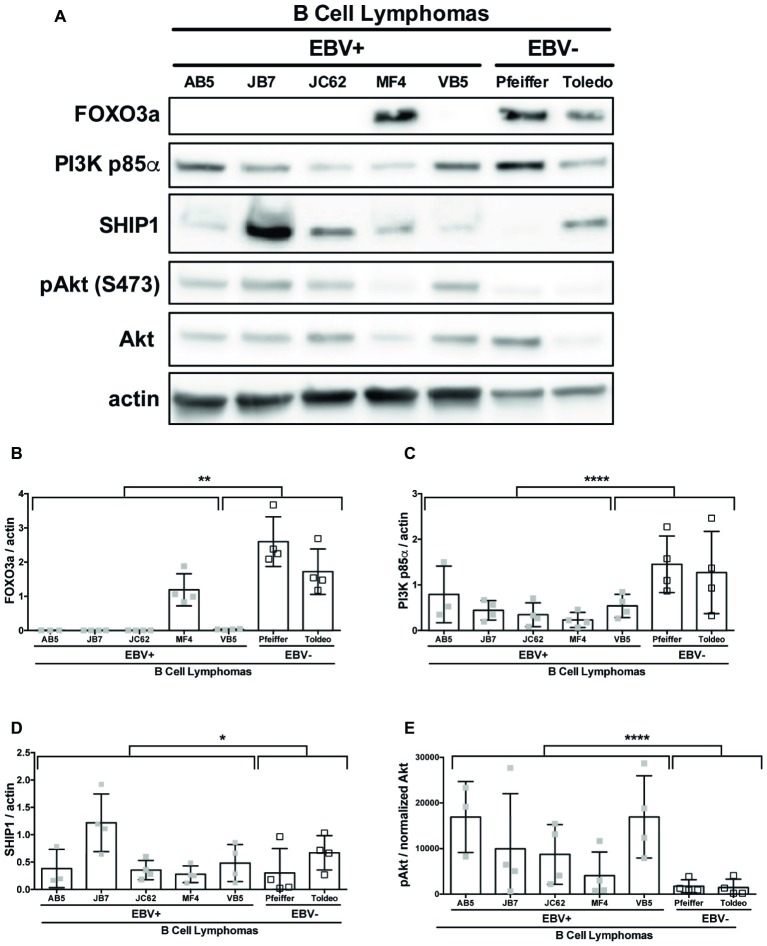
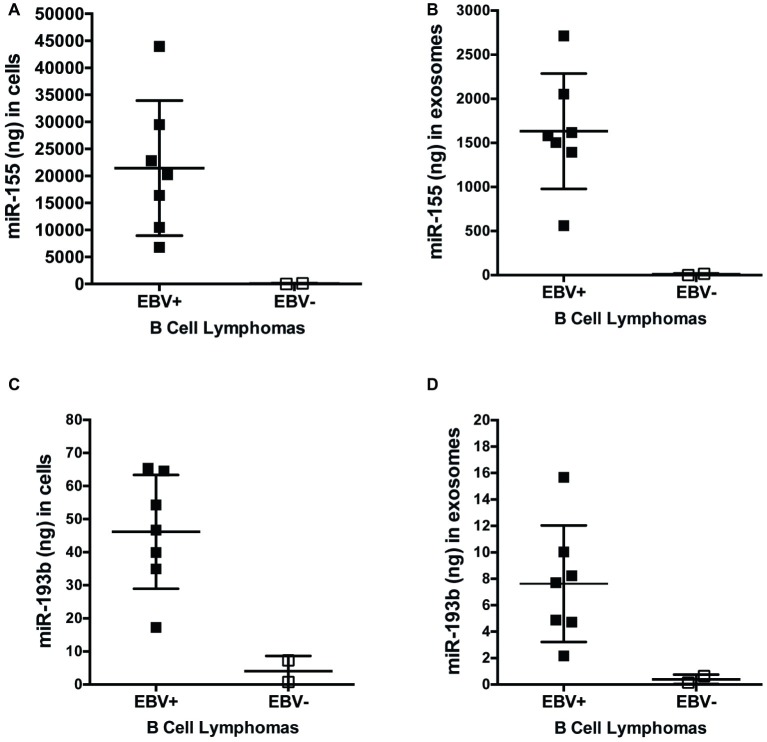
Epstein-Barr Virus (EBV) is associated with potentially fatal lymphoproliferations such as post-transplant lymphoproliferative disorder (PTLD), a serious complication of transplantation. The viral mechanisms underlying the development and maintenance of EBV+ B cell lymphomas remain elusive but represent attractive therapeutic targets. EBV modulates the expression of host microRNAs (miRs), non-coding RNAs that regulate gene expression, to promote survival of EBV+ B cell lymphomas. Here, we examined how the primary oncogene of EBV, latent membrane protein 1 (LMP1), regulates host miRs using an established model of inducible LMP1 signaling. LMP1 derived from the B95.8 lab strain or PTLD induced expression of the oncogene miR-155. However, PTLD variant LMP1 lost the ability to upregulate the tumor suppressor miR-193. Small molecule inhibitors (SMI) of p38 MAPK, NF-κB, and PI3K p110α inhibited upregulation of miR-155 by B95.8 LMP1; no individual SMI significantly reduced upregulation of miR-155 by PTLD variant LMP1. miR-155 was significantly elevated in EBV+ B cell lymphoma cell lines and associated exosomes and inversely correlated with expression of the miR-155 target FOXO3a in cell lines. Finally, LMP1 reduced expression of FOXO3a, which was rescued by a PI3K p110α SMI. Our data indicate that tumor variant LMP1 differentially regulates host B cell miR expression, suggesting viral genotype as an important consideration for the treatment of EBV+ B cell lymphomas. Notably, we demonstrate a novel mechanism in which LMP1 supports the regulation of miR-155 and its target FOXO3a in B cells through activation of PI3K p110α. This mechanism expands on the previously established mechanisms by which LMP1 regulates miR-155 and FOXO3a and may represent both rational therapeutic targets and biomarkers for EBV+ B cell lymphomas.
爱泼斯坦-巴尔病毒(EBV)与潜在致命的淋巴细胞增殖有关,如移植后淋巴细胞增殖性疾病(PTLD),这是移植的一种严重并发症。EBV+B细胞淋巴瘤发生和维持的病毒机制仍不清楚,但却是有吸引力的治疗靶点。EBV调节宿主微小RNA(miR)的表达,微小RNA是调节基因表达的非编码RNA,以促进EBV+B细胞淋巴瘤的存活。在这里,我们使用已建立的可诱导LMP1信号模型,研究了EBV的主要癌基因潜伏膜蛋白1(LMP1)如何调节宿主miR。源自B95.8实验室菌株或PTLD的LMP1诱导癌基因miR-155的表达。然而,PTLD变异型LMP1失去了上调肿瘤抑制因子miR-193的能力。p38丝裂原活化蛋白激酶(MAPK)、核因子κB(NF-κB)和磷脂酰肌醇-3激酶(PI3K)p110α的小分子抑制剂(SMI)抑制了B95.8 LMP1对miR-155的上调;没有单个SMI能显著降低PTLD变异型LMP1对miR-155的上调。miR-155在EBV+B细胞淋巴瘤细胞系和相关外泌体中显著升高,并且与细胞系中miR-155靶标FOXO3a的表达呈负相关。最后,LMP1降低了FOXO3a的表达,而PI3K p110α SMI可挽救这种降低。我们的数据表明,肿瘤变异型LMP1对宿主B细胞miR表达有不同的调节作用,提示病毒基因型是治疗EBV+B细胞淋巴瘤的重要考虑因素。值得注意的是,我们证明了一种新机制,即LMP1通过激活PI3K p110α来支持对B细胞中miR-155及其靶标FOXO3a的调节。这种机制扩展了先前已确立的LMP1调节miR-155和FOXO3a的机制,可能代表了EBV+B细胞淋巴瘤合理的治疗靶点和生物标志物。