Song Qiaobo, Liu Yifei, Pang Jiayin, Yong Jean Wan Hong, Chen Yinglong, Bai Chunming, Gille Clément, Shi Qingwen, Wu Di, Han Xiaori, Li Tianlai, Siddique Kadambot H M, Lambers Hans
College of Land and Environment, National Key Engineering Laboratory for Efficient Utilization of Soil and Fertilizer Resources, Northeast China Plant Nutrition and Fertilization Scientific Observation and Research Station for Ministry of Agriculture and Rural Affairs, Key Laboratory of Protected Horticulture of Education Ministry and Liaoning Province, Shenyang Agricultural University, Shenyang, China.
The UWA Institute of Agriculture, The University of Western Australia, Perth, WA, Australia.
Front Plant Sci. 2020 Jan 21;10:1637. doi: 10.3389/fpls.2019.01637. eCollection 2019.
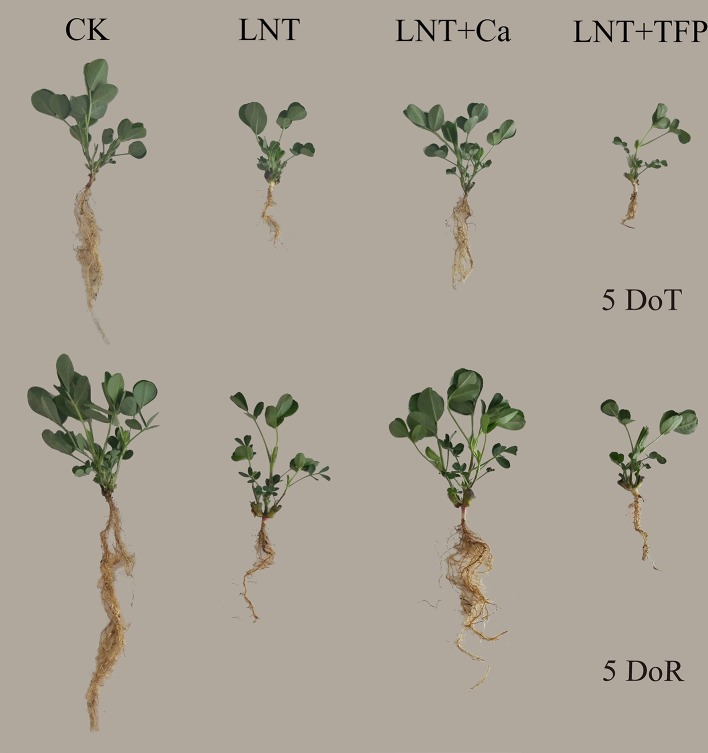
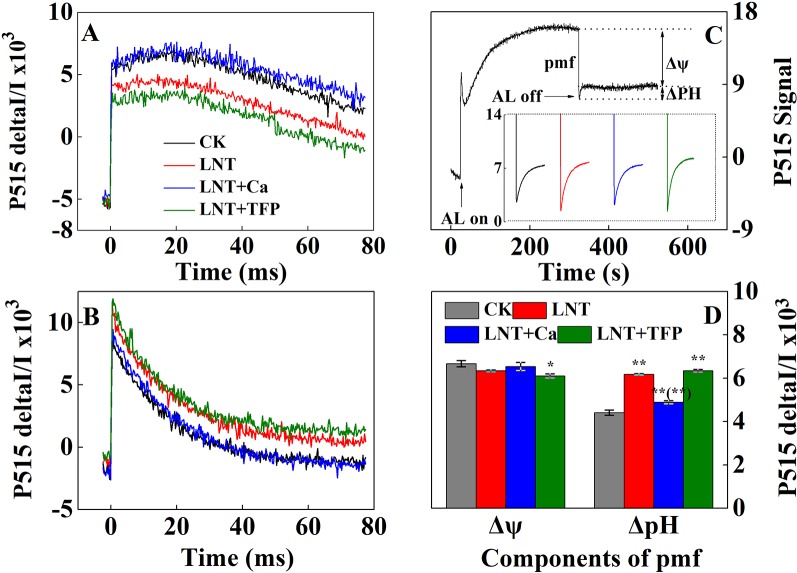
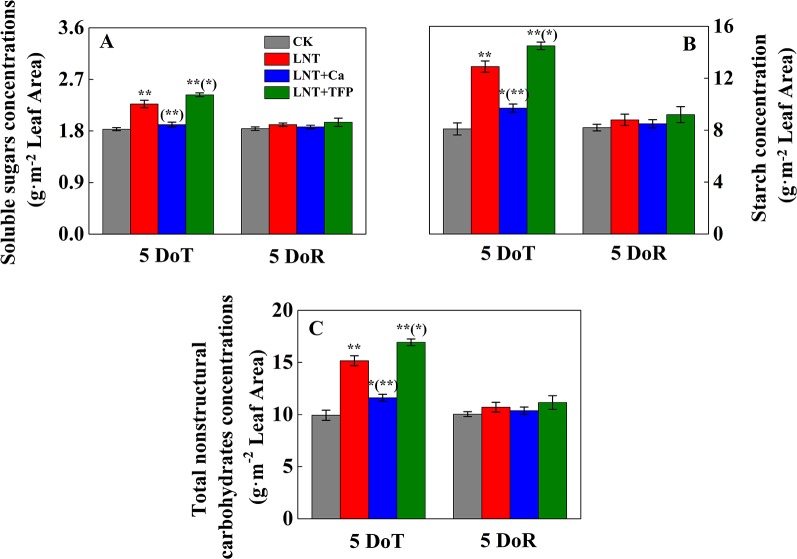
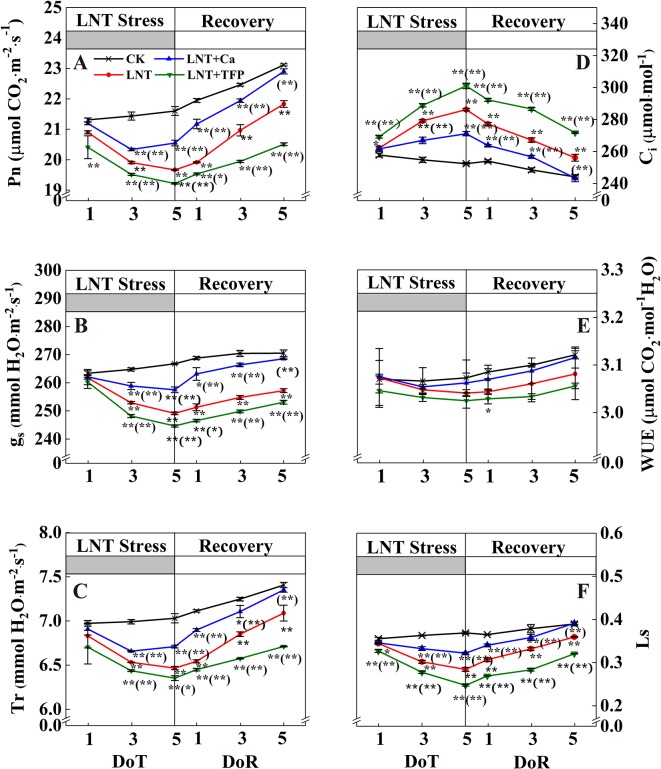
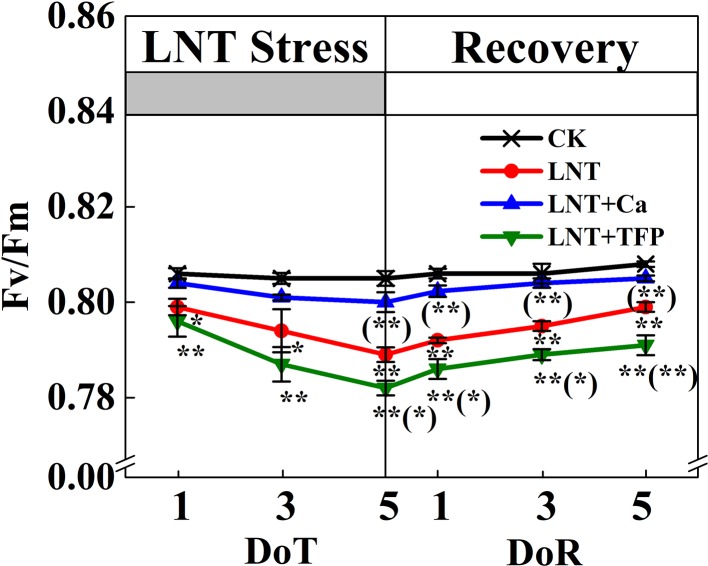
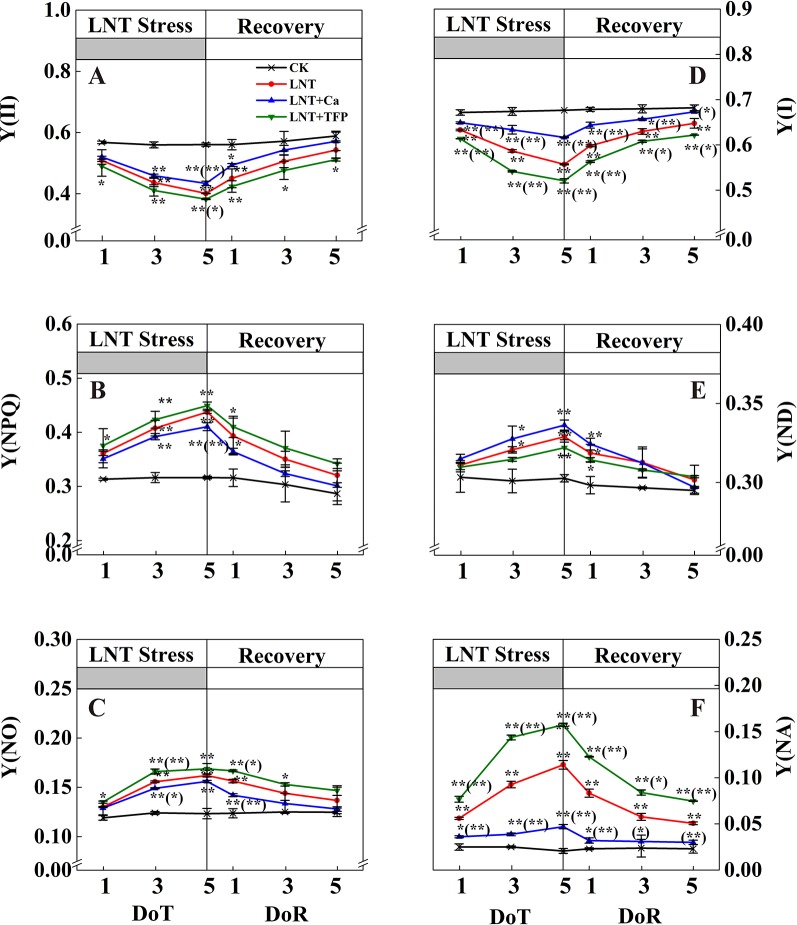
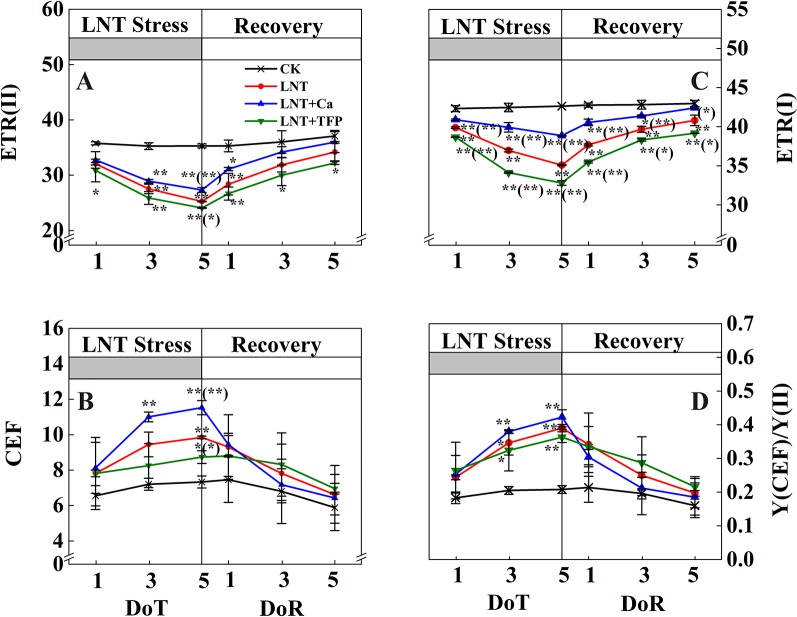
Peanut ( L.) is a globally important oil crop, which often experiences poor growth and seedling necrosis under low nocturnal temperatures (LNT). This study assessed the effects of supplementary calcium (Ca) and a calmodulin inhibitor on peanut growth and photosynthetic characteristics of plants exposed to LNT, followed by recovery at a higher temperature. We monitored key growth and photosynthetic parameters in a climate-controlled chamber in pots containing soil. LNT reduced peanut growth and dry matter accumulation, enhanced leaf nonstructural carbohydrates concentrations and non-photochemical quenching, decreased the electron transport rate, increased the transmembrane proton gradient, and decreased gas exchange rates. In peanuts subjected to LNT, foliar application of Ca restored growth, dry matter production and leaf photosynthetic capacity. In particular, the foliar Ca application restored temperature-dependent photosynthesis feedback inhibition due to improved growth/sink demand. Foliar sprays of a calmodulin inhibitor further deteriorated the effects of LNT which validated the protective role of Ca in facilitating LNT tolerance of peanuts.
花生(Arachis hypogaea L.)是一种全球重要的油料作物,在夜间低温(LNT)条件下,其生长往往不佳,幼苗易坏死。本研究评估了补充钙(Ca)和钙调蛋白抑制剂对遭受LNT处理后再在较高温度下恢复的花生植株生长和光合特性的影响。我们在装有土壤的花盆中,于气候控制室内监测关键生长和光合参数。LNT降低了花生的生长和干物质积累,提高了叶片中非结构性碳水化合物浓度和非光化学猝灭,降低了电子传递速率,增加了跨膜质子梯度,并降低了气体交换速率。在遭受LNT处理的花生中,叶面喷施Ca恢复了生长、干物质生产和叶片光合能力。特别是,叶面喷施Ca由于改善了生长/库需求,恢复了温度依赖性光合作用反馈抑制。叶面喷施钙调蛋白抑制剂进一步恶化了LNT的影响,这证实了Ca在促进花生耐LNT方面的保护作用。