Montso Peter Kotsoana, Mlambo Victor, Ateba Collins Njie
Bacteriophage Therapy and Phage Bio-Control Laboratory, Department of Microbiology, Faculty of Natural and Agricultural Sciences, North-West University, Mmabatho, South Africa.
Food Security and Safety Niche Area, North-West University, Mmabatho, South Africa.
Front Public Health. 2019 Nov 26;7:355. doi: 10.3389/fpubh.2019.00355. eCollection 2019.
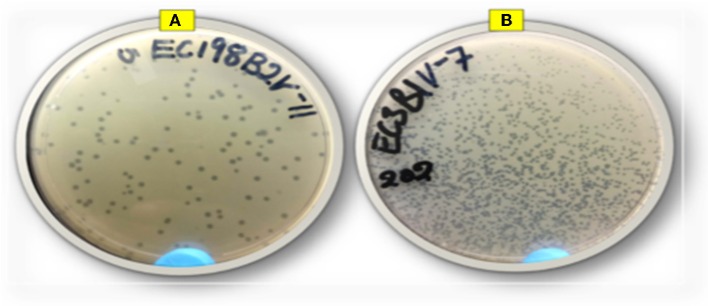
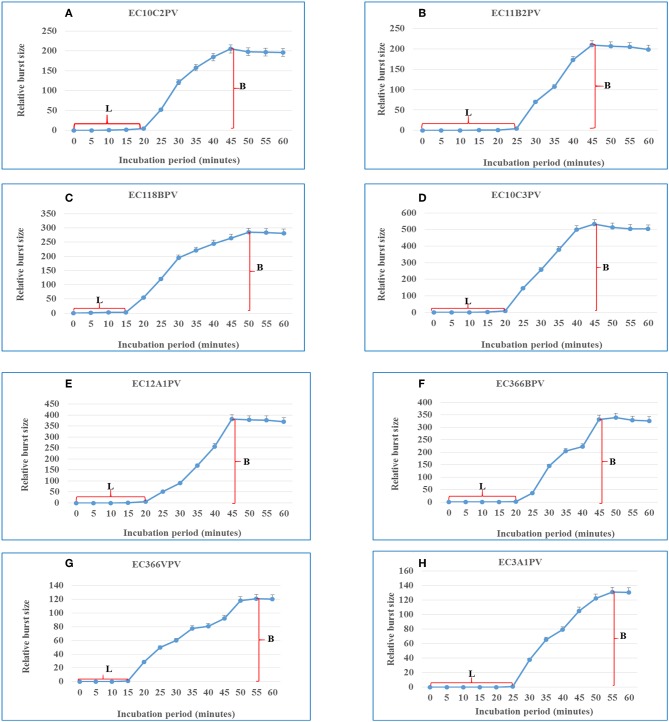
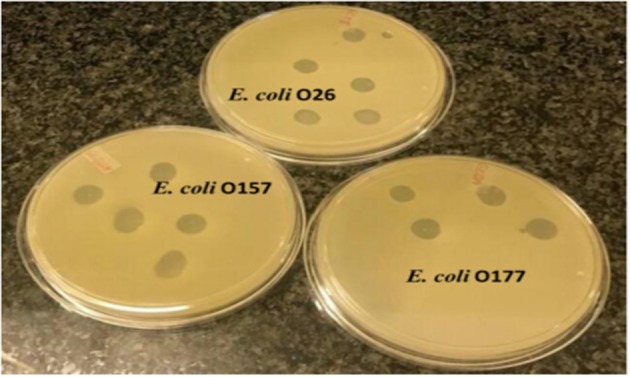
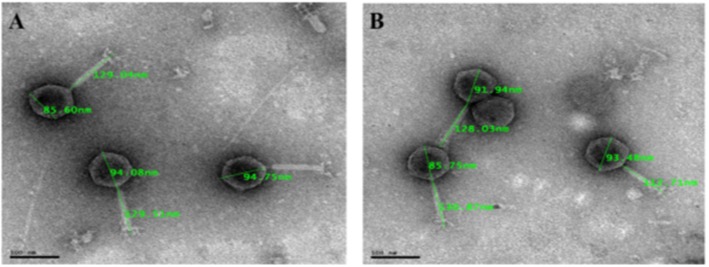
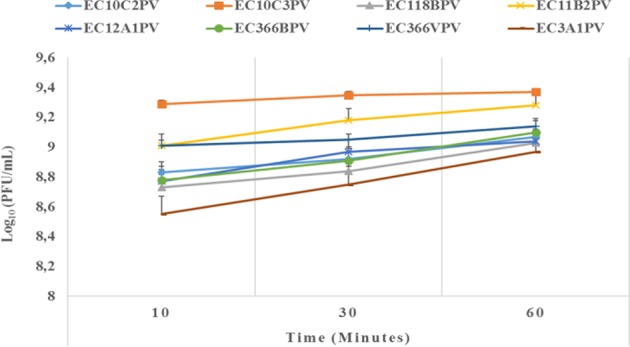
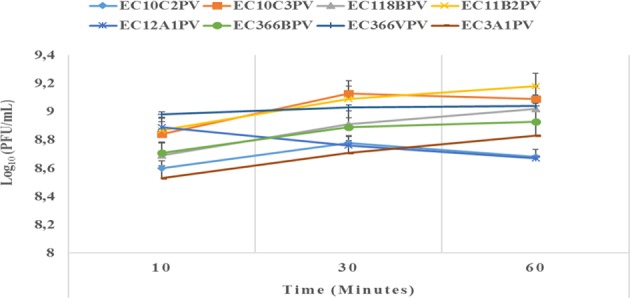
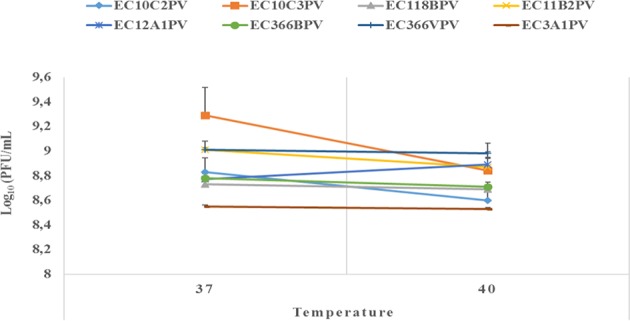
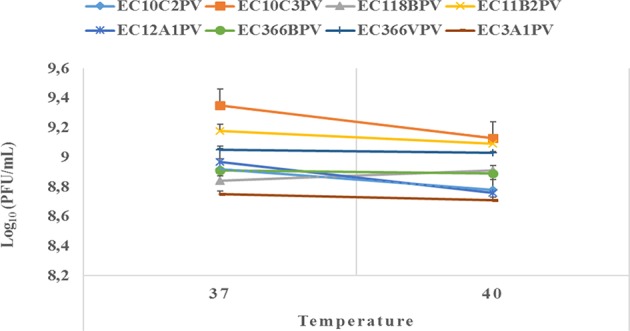
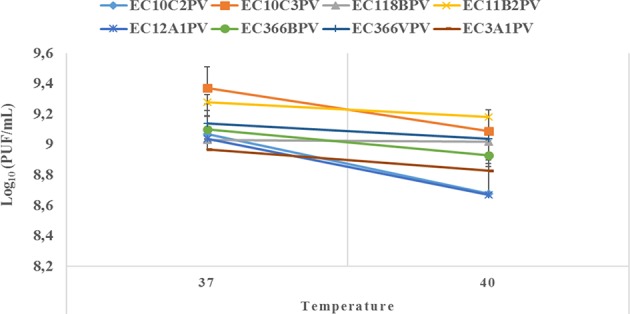
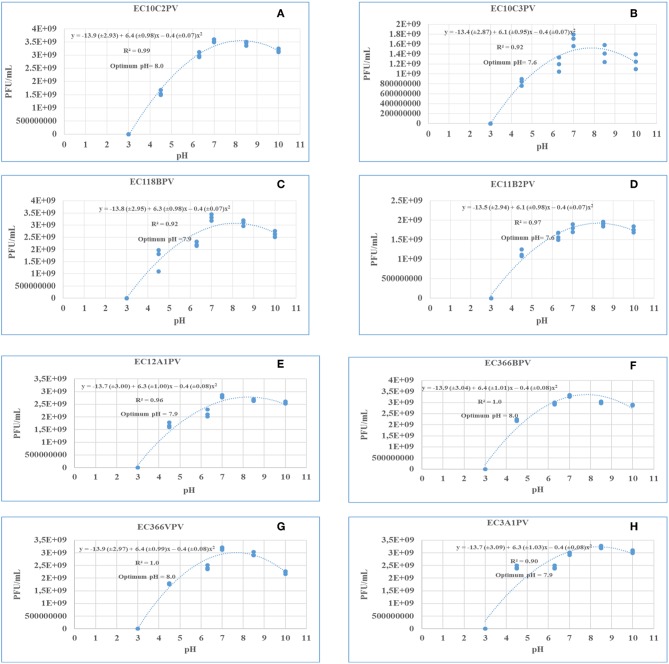
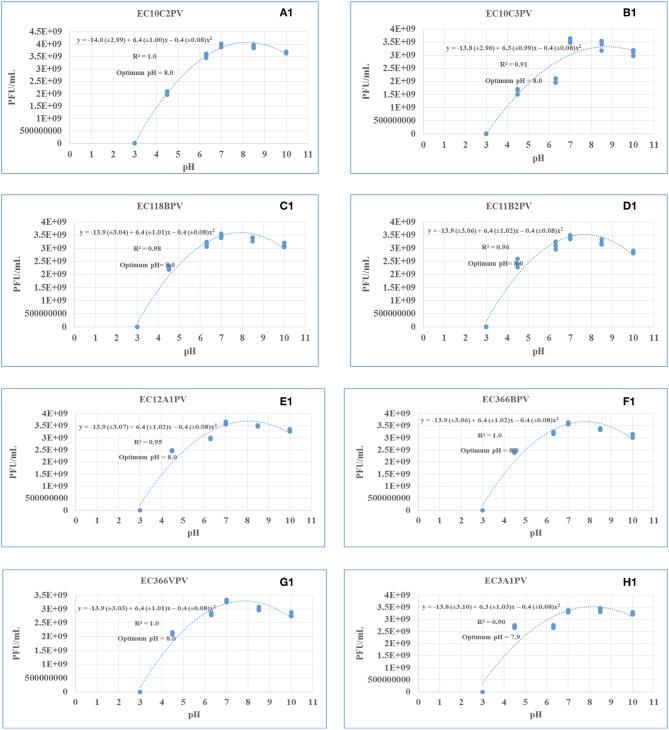
The increasing incidence of antibiotic resistance and emergence of virulent bacterial pathogens, coupled with a lack of new effective antibiotics, has reignited interest in the use of lytic bacteriophage therapy. The aim of this study was to characterize lytic O177-specific bacteriophages isolated from cattle feces to determine their potential application as biocontrol agents. A total of 31 lytic O177-specific bacteriophages were isolated. A large proportion (71%) of these phage isolates produced large plaques while 29% produced small plaques on 0.3% soft agar. Based on different plaque morphologies and clarity and size of plaques, eight phages were selected for further analyses. Spot test and efficiency of plating (EOP) analyses were performed to determine the host range for selected phages. Phage morphotype and growth were analyzed using transmission electron microscopy and the one-step growth curve method. Phages were also assessed for thermal and pH stability. The spot test revealed that all selected phages were capable of infecting different environmental strains. However, none of the phages infected American Type Culture Collection (ATCC) and environmental strains. Furthermore, EOP analysis (range: 0.1-1.0) showed that phages were capable of infecting a wide range of isolates. Selected phage isolates had a similar morphotype (an icosahedral head and a contractile tail) and were classified under the order Caudovirales, family. The icosahedral heads ranged from 81.2 to 110.77 nm, while the contractile tails ranged from 115.55 to 132.57 nm in size. The phages were found to be still active after 60 min of incubation at 37 and 40°C. Incremental levels of pH induced a quadratic response on stability of all phages. The pH optima for all eight phages ranged between 7.6 and 8.0, while at pH 3.0 all phages were inactive. Phage latent period ranged between 15 and 25 min while burst size ranged from 91 to 522 virion particles [plaque-forming unit (PFU)] per infected cell. These results demonstrate that lytic O177-specific bacteriophages isolated from cattle feces are highly stable and have the capacity to infect different strains, traits that make them potential biocontrol agents.
抗生素耐药性的日益增加以及毒性细菌病原体的出现,再加上缺乏新的有效抗生素,重新引发了人们对使用裂解性噬菌体疗法的兴趣。本研究的目的是对从牛粪中分离出的裂解性O177特异性噬菌体进行表征,以确定它们作为生物防治剂的潜在应用。总共分离出31种裂解性O177特异性噬菌体。在0.3%软琼脂上,这些噬菌体分离株中很大一部分(71%)产生大噬菌斑,而29%产生小噬菌斑。基于不同的噬菌斑形态以及噬菌斑的清晰度和大小,选择了8种噬菌体进行进一步分析。进行点滴试验和平板接种效率(EOP)分析以确定所选噬菌体的宿主范围。使用透射电子显微镜和一步生长曲线法分析噬菌体的形态类型和生长情况。还评估了噬菌体的热稳定性和pH稳定性。点滴试验表明,所有所选噬菌体都能够感染不同的环境菌株。然而,没有一种噬菌体能够感染美国典型培养物保藏中心(ATCC)菌株和环境菌株。此外,EOP分析(范围:0.1 - 1.0)表明,噬菌体能够感染多种分离株。所选噬菌体分离株具有相似的形态类型(二十面体头部和收缩尾部),并被归类为有尾噬菌体目。二十面体头部大小在81.2至110.77 nm之间,而收缩尾部大小在115.55至132.57 nm之间。发现这些噬菌体在37°C和40°C孵育60分钟后仍具有活性。pH值的逐步升高对所有噬菌体的稳定性产生二次响应。所有8种噬菌体的最适pH值在7.6至8.0之间,而在pH 3.0时所有噬菌体均无活性。噬菌体潜伏期在15至25分钟之间,而裂解量在每个感染细胞91至522个病毒粒子[噬菌斑形成单位(PFU)]之间。这些结果表明,从牛粪中分离出的裂解性O177特异性噬菌体具有高度稳定性,并且有能力感染不同的菌株,这些特性使其成为潜在的生物防治剂。