• 文献检索
  • 文档翻译
  • 深度研究
  • 学术资讯
  • Suppr Zotero 插件Zotero 插件
  • 邀请有礼
  • 套餐&价格
  • 历史记录
应用&插件
Suppr Zotero 插件Zotero 插件浏览器插件Mac 客户端Windows 客户端微信小程序
定价
高级版会员购买积分包购买API积分包
服务
文献检索文档翻译深度研究API 文档MCP 服务
关于我们
关于 Suppr公司介绍联系我们用户协议隐私条款
关注我们

Suppr 超能文献

核心技术专利:CN118964589B侵权必究
粤ICP备2023148730 号-1Suppr @ 2026

文献检索

告别复杂PubMed语法,用中文像聊天一样搜索,搜遍4000万医学文献。AI智能推荐,让科研检索更轻松。

立即免费搜索

文件翻译

保留排版,准确专业,支持PDF/Word/PPT等文件格式,支持 12+语言互译。

免费翻译文档

深度研究

AI帮你快速写综述,25分钟生成高质量综述,智能提取关键信息,辅助科研写作。

立即免费体验

多重耐药性大肠杆菌O157:H7噬菌体的分子特征及安全性特性

Molecular characterization and safety properties of multi drug-resistant Escherichia coli O157:H7 bacteriophages.

作者信息

Oluwarinde Bukola Opeyemi, Ajose Daniel Jesuwenu, Abolarinwa Tesleem Olatunde, Montso Peter Kotsoana, Njom Henry Akum, Ateba Collins Njie

机构信息

Antimicrobial Resistance and Phage Biocontrol Research Group (AREPHABREG), Department of Microbiology, School of Biological Sciences, Faculty of Natural and Agricultural Sciences, North‒West University, Private Mail Bag X2046, Mmabatho, 2735, South Africa.

Food Security and Safety Focus Area, Faculty of Natural and Agricultural Sciences, North‒West University, Private Mail Bag X2046, Mmabatho, 2735, South Africa.

出版信息

BMC Microbiol. 2024 Dec 19;24(1):528. doi: 10.1186/s12866-024-03691-w.

DOI:10.1186/s12866-024-03691-w
PMID:39695941
原文链接:https://pmc.ncbi.nlm.nih.gov/articles/PMC11657129/
Abstract

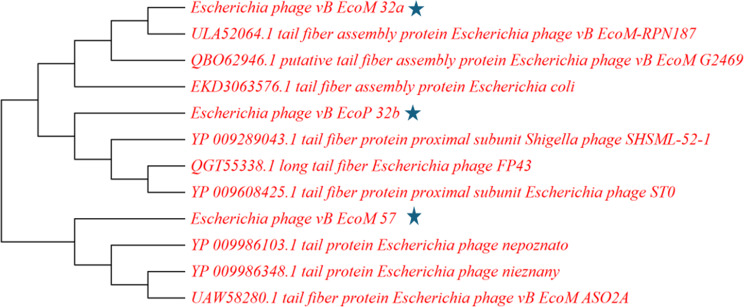
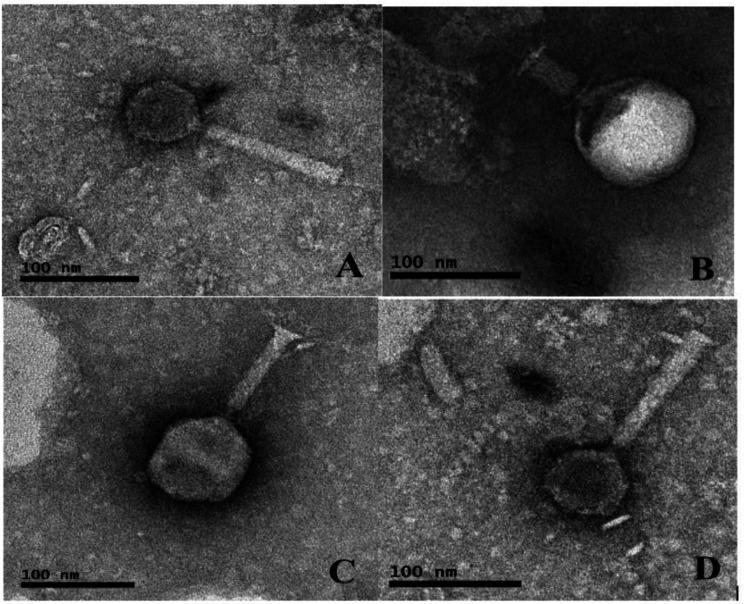
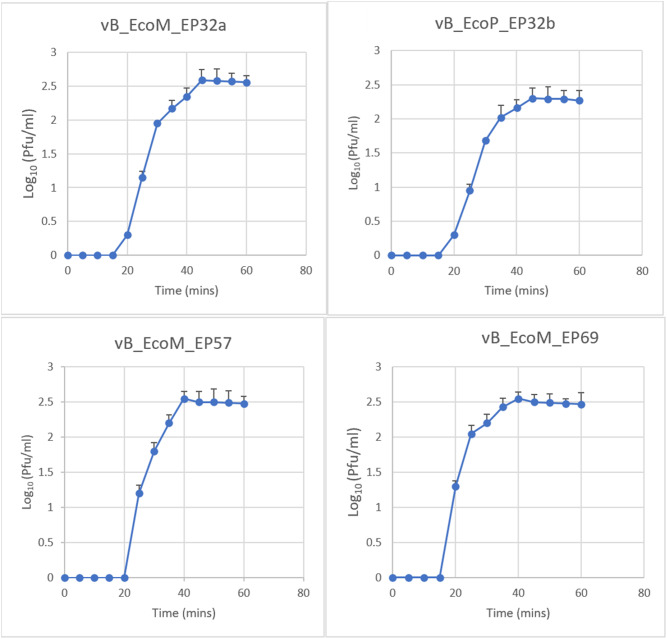
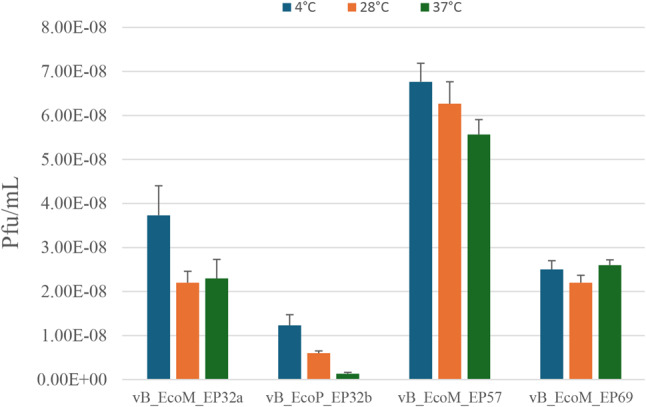
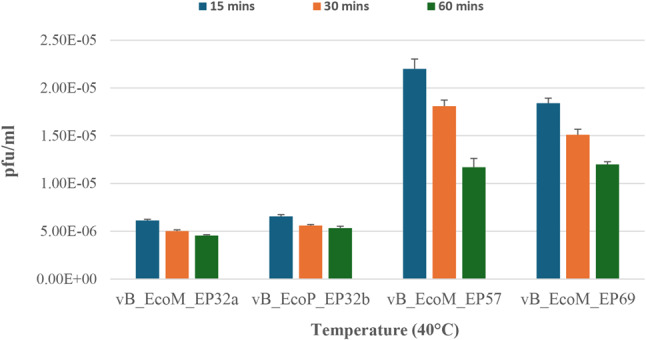
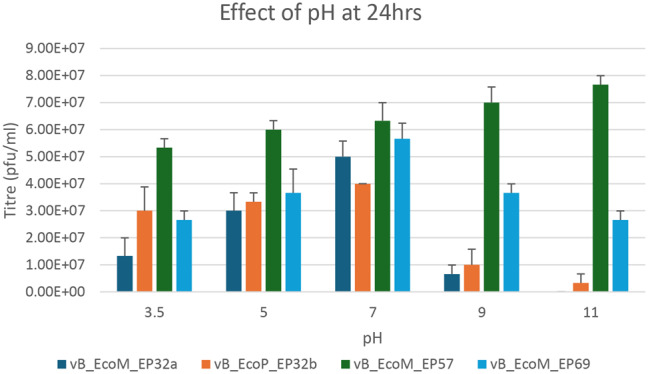
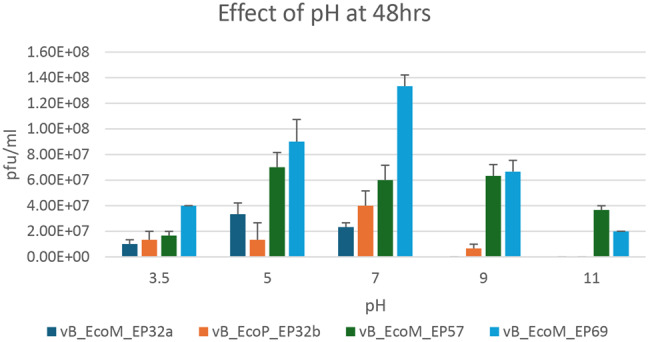
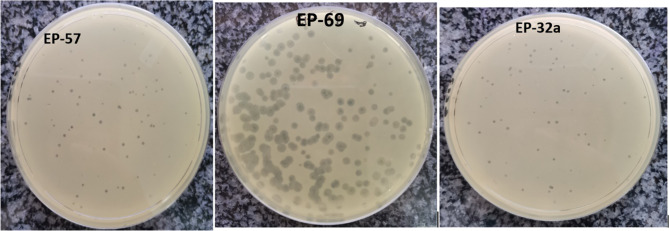
The increase in multi drug resistance (MDR) amongst food-borne pathogens such as Escherichia coli O157:H7, coupled with the upsurge of food-borne infections caused by these pathogens is a major public health concern. Lytic phages have been employed as an alternative to antibiotics for use against food-borne pathogens. However, for effective application, phages should be selectively toxic. Therefore, the objective of this study was to characterise lytic E. coli O157:H7 phages isolated from wastewater as possible biocontrol agents and access their genomes for the absence of genes that denotes virulence, resistance, toxins, and lysogeny using whole genome sequencing. E. coli O157:H7 bacteriophages showed clear plaques ranging in size from 1.0 mm to 2.0 mm. Spot test and Efficiency of plating (EOP) analysis demonstrated that isolated phages could infect various environmental E. coli strains. Four phages; vB_EcoM_EP32a, vB_EcoP_EP32b, vB_EcoM_EP57, and vB_EcoM_EP69 demonstrated broad lytic spectra against E. coli O157:H7 strains. Transmission Electron Microscopy (TEM) showed that all phages have tails and were classified as Caudoviricetes. Growth parameters showed an average latent period of 15 ± 3.8 min, with a maximum burst size of 392 PFU/cell. The phages were stable at three distinct temperatures (4 °C, 28 °C, and 37 °C) and at pH values of 3.5, 5.0, 7.0, 9.0, and 11.0. Based on their morphological distinctiveness, three phages were included in the Whole Genome Sequencing (WGS) analysis. WGS results revealed that E. coli O157:H7 phages (vB_EcoM_EP32a, vB_EcoP_EP32b, and vB_EcoM_EP57) were composed of linear double-stranded DNA (dsDNA) with genome sizes 163,906, 156,698, and 130,723 bp and GC contents of 37.61, 37, and 39% respectively. Phages vB_EcoM_EP32a and vB_EcoP_EP32b genomes were classified under the class Caudoviricetes, Straboviridae family, and the new genus "Phapecoctavirus", while vB_EcoM_EP57 was classified under the class Caudoviricetes, Autographiviridae family. Genome analysis revealed no lysogenic (integrase), virulence, or antimicrobial resistance sequences in all three Escherichia phage genomes. The overall results provided evidence that lytic E. coli O157:H7 bacteriophages in this study, are relatively stable, can infect diverse E. coli strains, and does not contain genes responsible for virulence, resistance, toxins, and lysogeny. Thus, they can be considered as biocontrol candidates against MDR pathogenic E. coli O157:H7 strains in the food industry.

摘要

食源性病原体(如大肠杆菌O157:H7)中多重耐药性(MDR)的增加,以及由这些病原体引起的食源性感染的激增,是一个重大的公共卫生问题。裂解性噬菌体已被用作对抗食源性病原体的抗生素替代品。然而,为了有效应用,噬菌体应具有选择性毒性。因此,本研究的目的是对从废水中分离出的裂解性大肠杆菌O157:H7噬菌体进行表征,将其作为可能的生物防治剂,并通过全基因组测序分析其基因组中是否存在表示毒力、抗性、毒素和溶原性的基因。大肠杆菌O157:H7噬菌体表现出清晰的噬菌斑,大小在1.0毫米至2.0毫米之间。点滴试验和平板接种效率(EOP)分析表明,分离出的噬菌体可以感染各种环境中的大肠杆菌菌株。四种噬菌体;vB_EcoM_EP32a、vB_EcoP_EP32b、vB_EcoM_EP57和vB_EcoM_EP69对大肠杆菌O157:H7菌株表现出广泛的裂解谱。透射电子显微镜(TEM)显示,所有噬菌体都有尾部,被归类为有尾噬菌体目。生长参数显示平均潜伏期为15±3.8分钟,最大裂解量为392个噬菌斑形成单位/细胞。这些噬菌体在三个不同温度(4°C、28°C和37°C)以及pH值为3.5、5.0、7.0、9.0和11.0时都很稳定。基于它们的形态独特性,三种噬菌体被纳入全基因组测序(WGS)分析。WGS结果显示,大肠杆菌O157:H7噬菌体(vB_EcoM_EP32a、vB_EcoP_EP32b和vB_EcoM_EP57)由线性双链DNA(dsDNA)组成,基因组大小分别为163,906、156,698和130,723碱基对,GC含量分别为37.61%、37%和39%。噬菌体vB_EcoM_EP32a和vB_EcoP_EP32b的基因组被归类为有尾噬菌体目、长尾噬菌体科和新属“Phapecoctavirus”,而vB_EcoM_EP57被归类为有尾噬菌体目、肌尾噬菌体科。基因组分析显示,所有三种大肠杆菌噬菌体基因组中均不存在溶原性(整合酶)、毒力或抗菌抗性序列。总体结果表明,本研究中的裂解性大肠杆菌O157:H7噬菌体相对稳定,可以感染多种大肠杆菌菌株。并且不包含负责毒力、抗性、毒素和溶原性的基因。因此,它们可以被视为食品工业中对抗多重耐药性致病性大肠杆菌O157:H7菌株的生物防治候选物。
https://cdn.ncbi.nlm.nih.gov/pmc/blobs/d89c/11657129/62de8696c29f/12866_2024_3691_Fig17_HTML.jpg
https://cdn.ncbi.nlm.nih.gov/pmc/blobs/d89c/11657129/bdd9796e0c2f/12866_2024_3691_Fig1_HTML.jpg
https://cdn.ncbi.nlm.nih.gov/pmc/blobs/d89c/11657129/865ba44938dd/12866_2024_3691_Fig2_HTML.jpg
https://cdn.ncbi.nlm.nih.gov/pmc/blobs/d89c/11657129/44b6c9820ee9/12866_2024_3691_Fig3_HTML.jpg
https://cdn.ncbi.nlm.nih.gov/pmc/blobs/d89c/11657129/4726b85de2a6/12866_2024_3691_Fig4_HTML.jpg
https://cdn.ncbi.nlm.nih.gov/pmc/blobs/d89c/11657129/4861aa61e2cd/12866_2024_3691_Fig5_HTML.jpg
https://cdn.ncbi.nlm.nih.gov/pmc/blobs/d89c/11657129/d7a29b28cc19/12866_2024_3691_Fig6_HTML.jpg
https://cdn.ncbi.nlm.nih.gov/pmc/blobs/d89c/11657129/6f4f25184c1b/12866_2024_3691_Fig7_HTML.jpg
https://cdn.ncbi.nlm.nih.gov/pmc/blobs/d89c/11657129/a596a8bd8557/12866_2024_3691_Fig8_HTML.jpg
https://cdn.ncbi.nlm.nih.gov/pmc/blobs/d89c/11657129/a3a041d7bbf6/12866_2024_3691_Fig9_HTML.jpg
https://cdn.ncbi.nlm.nih.gov/pmc/blobs/d89c/11657129/14170ef11ee5/12866_2024_3691_Fig10_HTML.jpg
https://cdn.ncbi.nlm.nih.gov/pmc/blobs/d89c/11657129/767efe4f946d/12866_2024_3691_Fig11_HTML.jpg
https://cdn.ncbi.nlm.nih.gov/pmc/blobs/d89c/11657129/439b33db2afd/12866_2024_3691_Fig12_HTML.jpg
https://cdn.ncbi.nlm.nih.gov/pmc/blobs/d89c/11657129/c7929efb62f1/12866_2024_3691_Fig13_HTML.jpg
https://cdn.ncbi.nlm.nih.gov/pmc/blobs/d89c/11657129/165915dc2b37/12866_2024_3691_Fig14_HTML.jpg
https://cdn.ncbi.nlm.nih.gov/pmc/blobs/d89c/11657129/d74760408c23/12866_2024_3691_Fig15_HTML.jpg
https://cdn.ncbi.nlm.nih.gov/pmc/blobs/d89c/11657129/3264e24c9ae9/12866_2024_3691_Fig16_HTML.jpg
https://cdn.ncbi.nlm.nih.gov/pmc/blobs/d89c/11657129/62de8696c29f/12866_2024_3691_Fig17_HTML.jpg
https://cdn.ncbi.nlm.nih.gov/pmc/blobs/d89c/11657129/bdd9796e0c2f/12866_2024_3691_Fig1_HTML.jpg
https://cdn.ncbi.nlm.nih.gov/pmc/blobs/d89c/11657129/865ba44938dd/12866_2024_3691_Fig2_HTML.jpg
https://cdn.ncbi.nlm.nih.gov/pmc/blobs/d89c/11657129/44b6c9820ee9/12866_2024_3691_Fig3_HTML.jpg
https://cdn.ncbi.nlm.nih.gov/pmc/blobs/d89c/11657129/4726b85de2a6/12866_2024_3691_Fig4_HTML.jpg
https://cdn.ncbi.nlm.nih.gov/pmc/blobs/d89c/11657129/4861aa61e2cd/12866_2024_3691_Fig5_HTML.jpg
https://cdn.ncbi.nlm.nih.gov/pmc/blobs/d89c/11657129/d7a29b28cc19/12866_2024_3691_Fig6_HTML.jpg
https://cdn.ncbi.nlm.nih.gov/pmc/blobs/d89c/11657129/6f4f25184c1b/12866_2024_3691_Fig7_HTML.jpg
https://cdn.ncbi.nlm.nih.gov/pmc/blobs/d89c/11657129/a596a8bd8557/12866_2024_3691_Fig8_HTML.jpg
https://cdn.ncbi.nlm.nih.gov/pmc/blobs/d89c/11657129/a3a041d7bbf6/12866_2024_3691_Fig9_HTML.jpg
https://cdn.ncbi.nlm.nih.gov/pmc/blobs/d89c/11657129/14170ef11ee5/12866_2024_3691_Fig10_HTML.jpg
https://cdn.ncbi.nlm.nih.gov/pmc/blobs/d89c/11657129/767efe4f946d/12866_2024_3691_Fig11_HTML.jpg
https://cdn.ncbi.nlm.nih.gov/pmc/blobs/d89c/11657129/439b33db2afd/12866_2024_3691_Fig12_HTML.jpg
https://cdn.ncbi.nlm.nih.gov/pmc/blobs/d89c/11657129/c7929efb62f1/12866_2024_3691_Fig13_HTML.jpg
https://cdn.ncbi.nlm.nih.gov/pmc/blobs/d89c/11657129/165915dc2b37/12866_2024_3691_Fig14_HTML.jpg
https://cdn.ncbi.nlm.nih.gov/pmc/blobs/d89c/11657129/d74760408c23/12866_2024_3691_Fig15_HTML.jpg
https://cdn.ncbi.nlm.nih.gov/pmc/blobs/d89c/11657129/3264e24c9ae9/12866_2024_3691_Fig16_HTML.jpg
https://cdn.ncbi.nlm.nih.gov/pmc/blobs/d89c/11657129/62de8696c29f/12866_2024_3691_Fig17_HTML.jpg

相似文献

1
Molecular characterization and safety properties of multi drug-resistant Escherichia coli O157:H7 bacteriophages.多重耐药性大肠杆菌O157:H7噬菌体的分子特征及安全性特性
BMC Microbiol. 2024 Dec 19;24(1):528. doi: 10.1186/s12866-024-03691-w.
2
Identification and characterization of lytic bacteriophages specific to foodborne pathogenic O157:H7.鉴定和表征针对食源性病原体 O157:H7 的溶菌噬菌体。
Food Sci Technol Int. 2021 Jan;27(1):56-72. doi: 10.1177/1082013220929836. Epub 2020 Jun 14.
3
Application of a novel lytic phage vB_EcoM_SQ17 for the biocontrol of Enterohemorrhagic O157:H7 and Enterotoxigenic in food matrices.新型裂解性噬菌体vB_EcoM_SQ17在食品基质中对肠出血性O157:H7和产肠毒素菌的生物防治应用。
Front Microbiol. 2022 Aug 5;13:929005. doi: 10.3389/fmicb.2022.929005. eCollection 2022.
4
Isolation and characterization of Salmonella enterica- and Escherichia coli-specific bacteriophages of the genus Epseptimavirus from wastewater in Minnesota.从明尼苏达州废水中分离和鉴定属于肠球菌噬菌体科的肠炎沙门氏菌和大肠埃希菌特异性噬菌体。
Arch Virol. 2024 Nov 27;169(12):255. doi: 10.1007/s00705-024-06190-5.
5
Characterization of a T4-like Bacteriophage vB_EcoM-Sa45lw as a Potential Biocontrol Agent for Shiga Toxin-Producing Escherichia coli O45 Contaminated on Mung Bean Seeds. characterization of a t4-like bacteriophage vB_EcoM-Sa45lw as a potential biocontrol agent for Shiga Toxin-Producing Escherichia coli O45 Contaminated on Mung Bean Seeds.
Microbiol Spectr. 2022 Feb 23;10(1):e0222021. doi: 10.1128/spectrum.02220-21. Epub 2022 Feb 2.
6
Therapeutics and prophylactic efficacy of novel lytic Escherichia phage vB_EcoS_PJ16 against multidrug-resistant avian pathogenic E. coli using in vivo study.新型裂解埃希氏噬菌体 vB_EcoS_PJ16 对多药耐药禽致病性大肠杆菌的治疗和预防效果的体内研究。
Int Microbiol. 2024 Jun;27(3):673-687. doi: 10.1007/s10123-023-00420-7. Epub 2023 Aug 26.
7
A new Rogue-like phage UDF157lw to control O157:H7.一种新型类Rogue噬菌体UDF157lw用于控制O157:H7。
Front Microbiol. 2024 Jan 22;14:1302032. doi: 10.3389/fmicb.2023.1302032. eCollection 2023.
8
Biological characterization of novel O157:H7 phages and their bacteriostatic effects in milk and pork.新型O157:H7噬菌体的生物学特性及其在牛奶和猪肉中的抑菌作用
Front Microbiol. 2025 Feb 6;16:1516223. doi: 10.3389/fmicb.2025.1516223. eCollection 2025.
9
CAM-21, a novel lytic phage with high specificity towards Escherichia coli O157:H7 in food products.CAM-21,一种对食品中的大肠杆菌O157:H7具有高特异性的新型裂解性噬菌体。
Int J Food Microbiol. 2023 Feb 2;386:110026. doi: 10.1016/j.ijfoodmicro.2022.110026. Epub 2022 Nov 23.
10
Genomic and proteomic characterization of four novel Schitoviridae family phages targeting uropathogenic Escherichia coli strain.针对尿路致病性大肠杆菌菌株的四种新型裂谷病毒科噬菌体的基因组和蛋白质组特征分析
Virol J. 2025 Mar 21;22(1):83. doi: 10.1186/s12985-025-02691-0.

引用本文的文献

1
Biological characterization of novel O157:H7 phages and their bacteriostatic effects in milk and pork.新型O157:H7噬菌体的生物学特性及其在牛奶和猪肉中的抑菌作用
Front Microbiol. 2025 Feb 6;16:1516223. doi: 10.3389/fmicb.2025.1516223. eCollection 2025.

本文引用的文献

1
Safety Properties of O157:H7 Specific Bacteriophages: Recent Advances for Food Safety.O157:H7特异性噬菌体的安全特性:食品安全的最新进展
Foods. 2023 Oct 31;12(21):3989. doi: 10.3390/foods12213989.
2
Bacteriophages and food safety: An updated overview.噬菌体与食品安全:最新综述
Food Sci Nutr. 2023 May 4;11(7):3621-3630. doi: 10.1002/fsn3.3360. eCollection 2023 Jul.
3
Characterization of two novel lytic bacteriophages having lysis potential against MDR avian pathogenic Escherichia coli strains of zoonotic potential.
鉴定两种新型裂解噬菌体,其对具有动物源性潜在致病性的多药耐药性禽致病性大肠杆菌菌株具有裂解作用。
Sci Rep. 2023 Jun 20;13(1):10043. doi: 10.1038/s41598-023-37176-z.
4
Characterization and Comparative Genomic Analysis of Three Virulent Bacteriophages with the Potential to Reduce Antibiotic-Resistant Bacteria in the Environment.三种具有潜在环境中减少抗生素抗性细菌能力的烈性噬菌体的特性和比较基因组分析。
Int J Mol Sci. 2023 Mar 16;24(6):5696. doi: 10.3390/ijms24065696.
5
Characterization of a lytic phage CE1 and its potential use in therapy against avian pathogenic infections.一种裂解性噬菌体CE1的特性及其在治疗禽致病性感染中的潜在用途。
Front Microbiol. 2023 Feb 16;14:1091442. doi: 10.3389/fmicb.2023.1091442. eCollection 2023.
6
Phage therapy: From biological mechanisms to future directions.噬菌体疗法:从生物学机制到未来方向。
Cell. 2023 Jan 5;186(1):17-31. doi: 10.1016/j.cell.2022.11.017.
7
Phage family classification under : A review of current tools using the latest ICTV classification framework.噬菌体家族分类如下:使用最新国际病毒分类委员会(ICTV)分类框架的当前工具综述。
Front Microbiol. 2022 Dec 16;13:1032186. doi: 10.3389/fmicb.2022.1032186. eCollection 2022.
8
Isolation, Characterization and Whole Genome Analysis of an Avian Pathogenic Phage vB_EcoS_GN06.禽致病性噬菌体vB_EcoS_GN06的分离、鉴定及全基因组分析
Vet Sci. 2022 Dec 5;9(12):675. doi: 10.3390/vetsci9120675.
9
Diverse infective and lytic machineries identified in genome analysis of tailed coliphages against broad spectrum multidrug-resistant Escherichia coli.在对长尾噬菌体针对广谱多药耐药大肠杆菌的基因组分析中,发现了多种不同的感染和裂解机制。
Int Microbiol. 2023 Aug;26(3):459-469. doi: 10.1007/s10123-022-00310-4. Epub 2022 Dec 12.
10
Characterization and Genomic Analysis of O157:H7 Phage UAE_MI-01 Isolated from Birds.从鸟类中分离出的 O157:H7 噬菌体 UAE_MI-01 的特性描述和基因组分析。
Int J Mol Sci. 2022 Nov 27;23(23):14846. doi: 10.3390/ijms232314846.