Song Xiaohui, Xu Weichang, Su Dongmeng, Tang Jing, Liu Xiaotao
The Molecular Foundry, Lawrence Berkeley National Laboratory, 1 Cyclotron Road, Berkeley, California 94720, United States.
Division of Chemistry and Biological Chemistry, Nanyang Technological University, 637371 Singapore.
ACS Omega. 2020 Jan 23;5(4):1879-1886. doi: 10.1021/acsomega.9b03380. eCollection 2020 Feb 4.
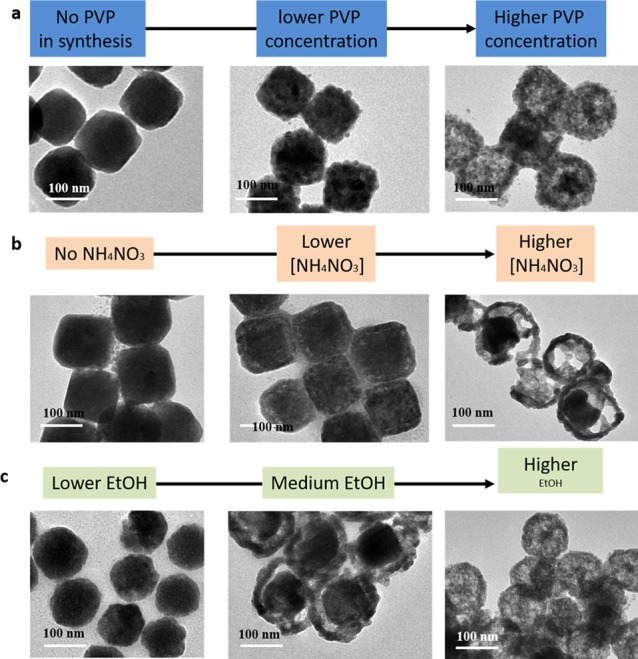
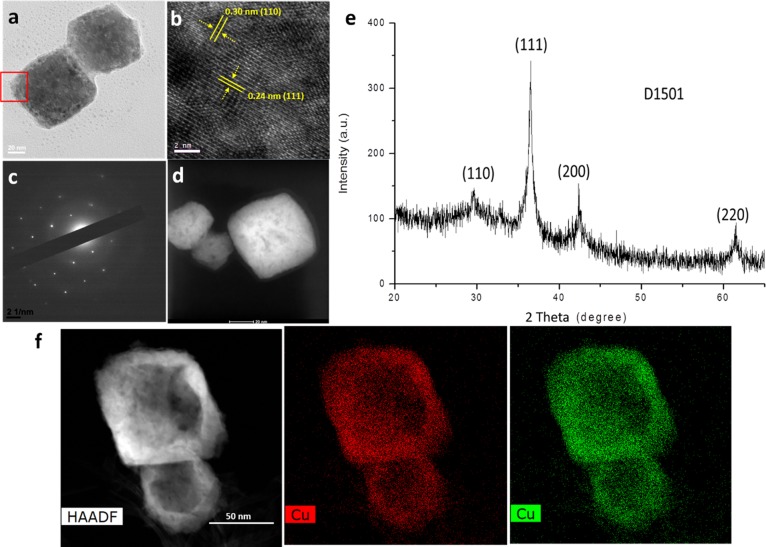
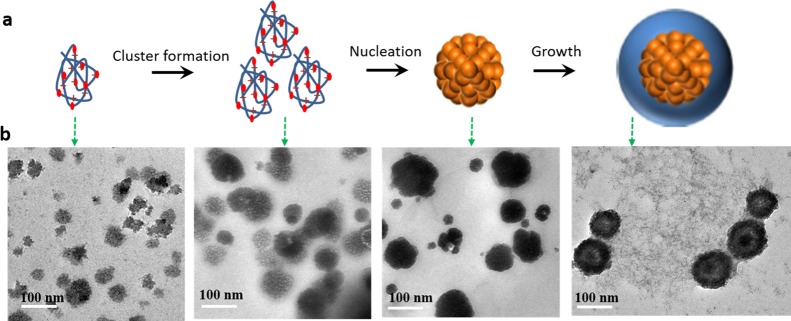
Owing to the properties of low density, large surface areas, excellent loading capacity, high permeability, and interstitial hollow spaces, hollow nanostructures have been widely applied in many important research fields, such as catalysis, drug-controlled release, confined synthesis, optics and electronics, and energy storage. This work provided a simple platform for hollow CuO nanostructure synthesis based on the surfactant controlling methodology, which is under the supposed mechanism of ion-pairing behavior at the initial nucleation stage. Thus here, we explore our system in two different directions: (1) we get different types of hollow CuO nanoparticles by controlling the surfactant concentration during the synthesis step in colloids, which is critical to the novel structure design and potential application in many different areas and (2) we explore the method to CuO hollow particle synthesis to test the hypothesis of the ion-pairing behavior during the initial nucleation by tuning the solvent ratio, cation concentration (such as NHNO addition amount difference in the synthetic step), and selective etching. By tuning the synthetic conditions as well as designing control experiments, we hope to provide a solid understanding of the crystal growth mechanism. Our improved understanding in similar systems (both CuO and ZnO systems) will make it easier for interpreting nanostructure formation in new discoveries and, more importantly, in rationally designing various complex nanostructures based on a bottom-up strategy.
由于具有低密度、大表面积、优异的负载能力、高渗透性和间隙中空空间等特性,中空纳米结构已广泛应用于许多重要研究领域,如催化、药物控释、受限合成、光学与电子以及能量存储。这项工作基于表面活性剂控制方法,为中空CuO纳米结构的合成提供了一个简单平台,该方法基于初始成核阶段的离子配对行为假设机制。因此,在这里我们从两个不同方向探索我们的体系:(1)通过在胶体合成步骤中控制表面活性剂浓度来获得不同类型的中空CuO纳米颗粒,这对于新颖结构设计和在许多不同领域的潜在应用至关重要;(2)我们探索CuO中空颗粒的合成方法,通过调整溶剂比例、阳离子浓度(如合成步骤中NHNO添加量的差异)和选择性蚀刻来检验初始成核过程中离子配对行为的假设。通过调整合成条件以及设计对照实验,我们希望能深入理解晶体生长机制。我们对类似体系(CuO和ZnO体系)的深入理解将使我们更容易解释新发现中的纳米结构形成,更重要的是,基于自下而上的策略合理设计各种复杂的纳米结构。