Department of Cardiology, Pulmonology, and Nephrology, Yamagata University School of Medicine, Yamagata, Japan.
Department of Cardiology, Internal Medicine III, Hamamatsu University School of Medicine, Hamamatsu, Japan.
PLoS One. 2020 Feb 10;15(2):e0226053. doi: 10.1371/journal.pone.0226053. eCollection 2020.
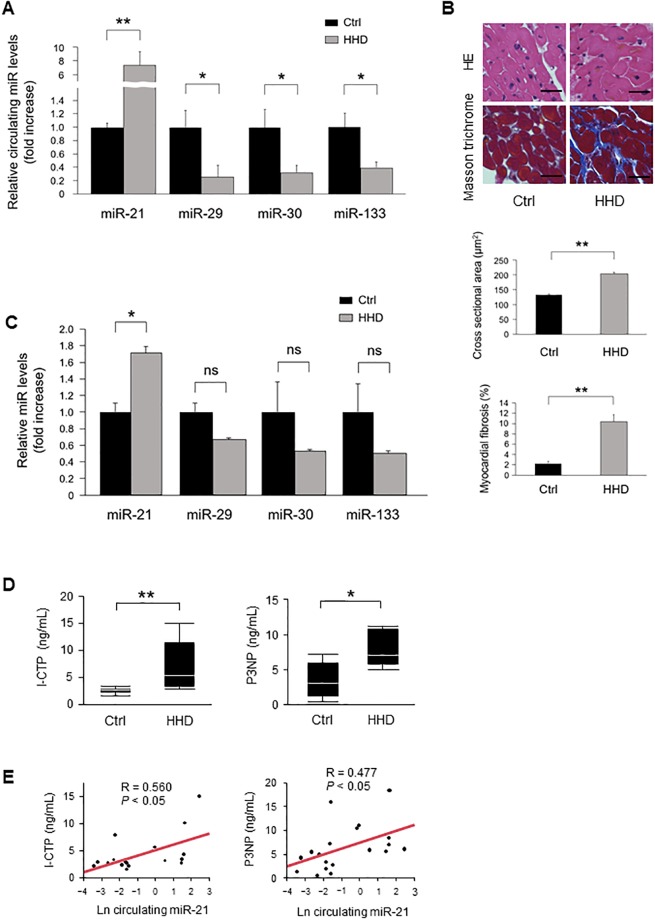
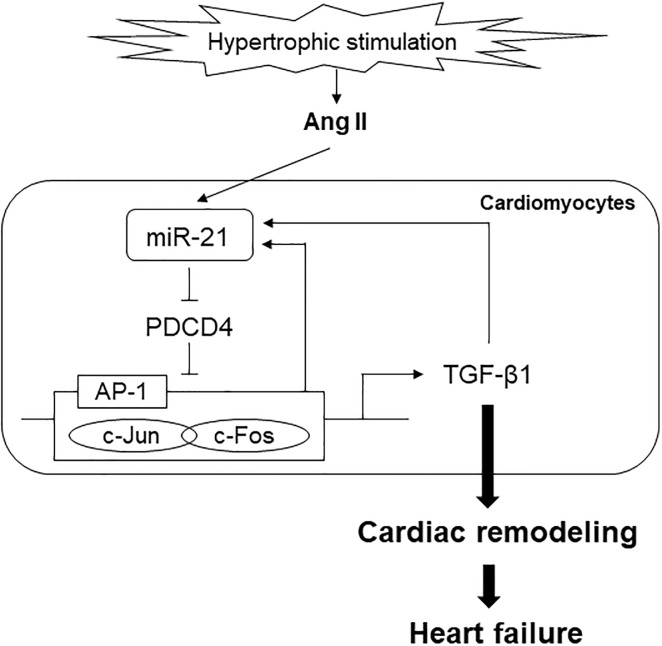
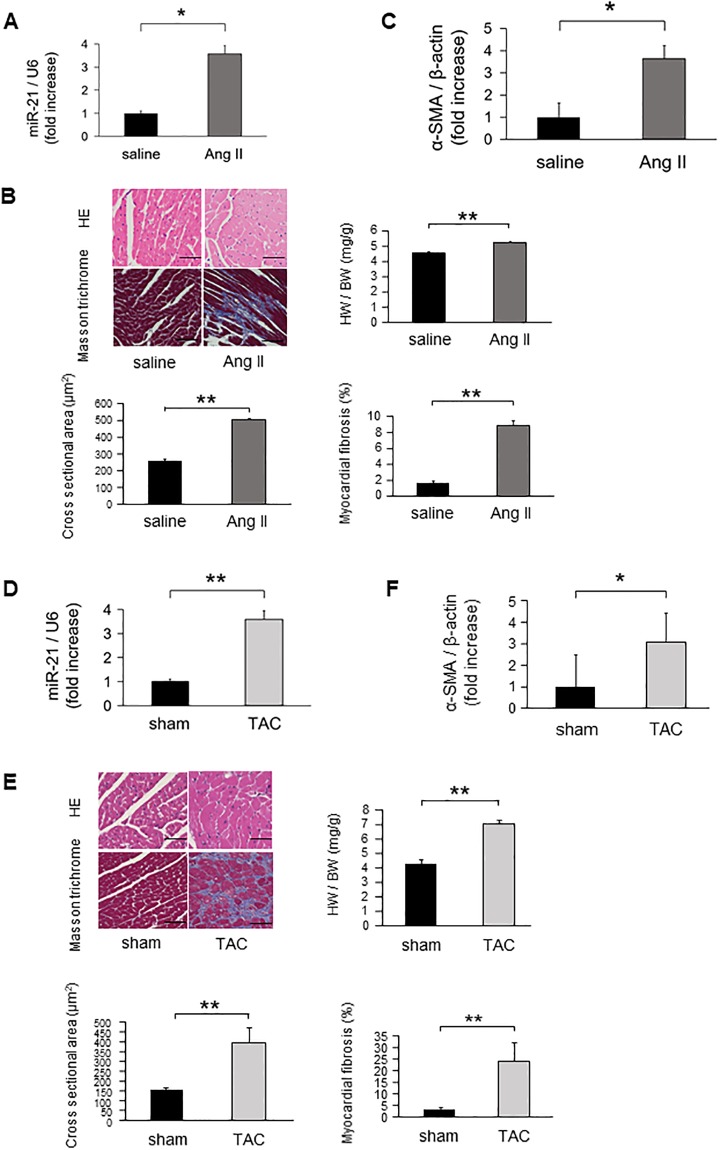
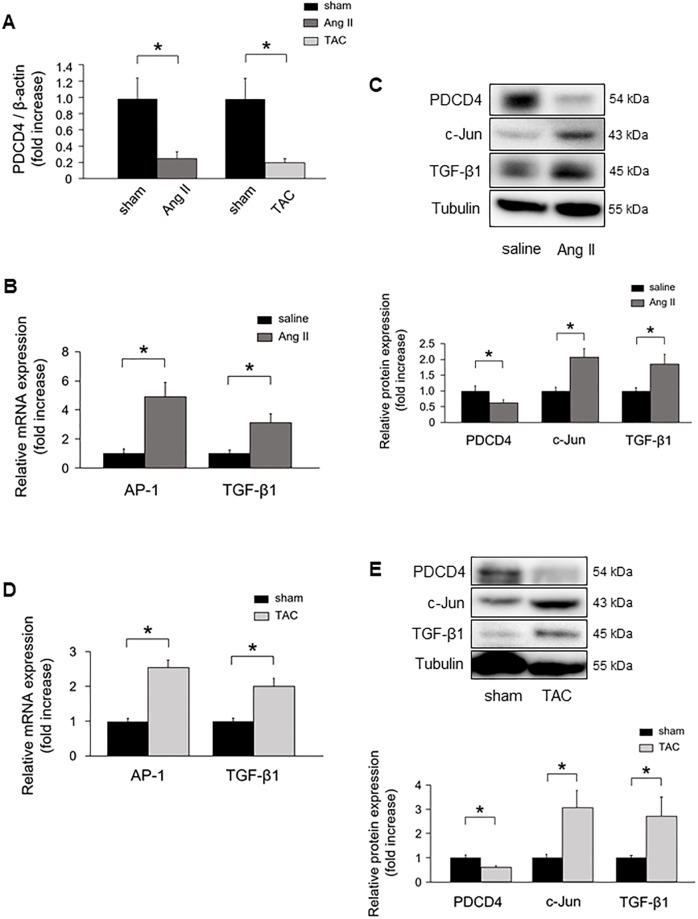
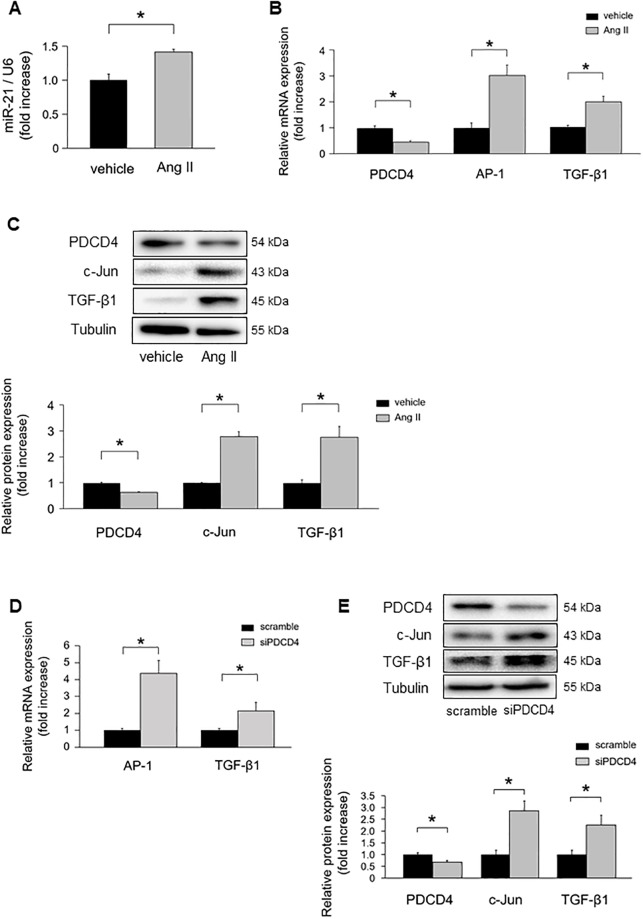
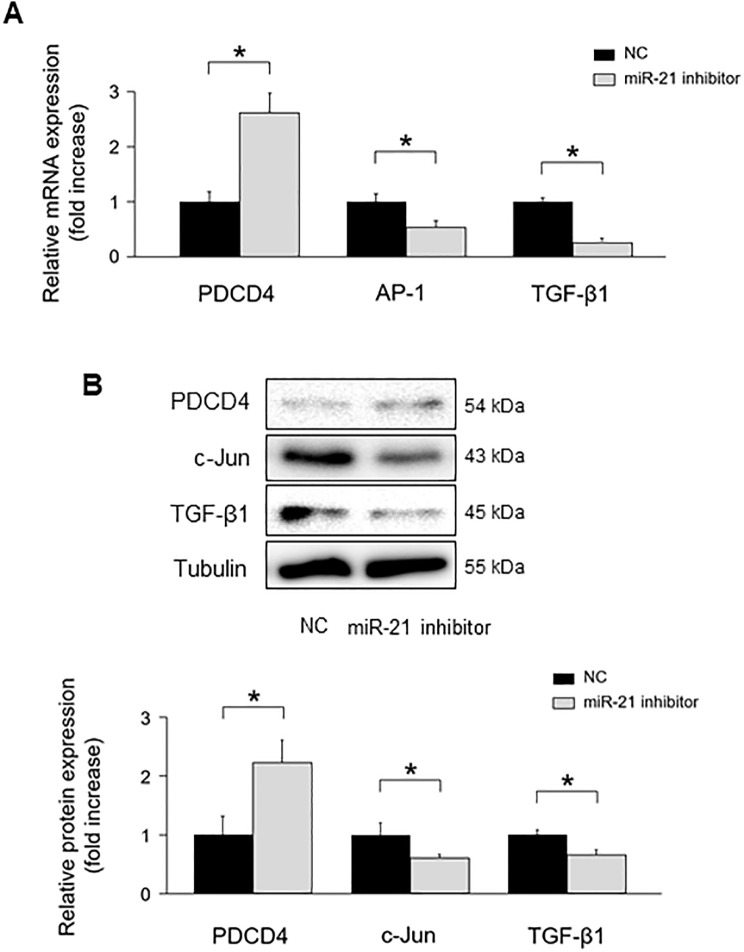
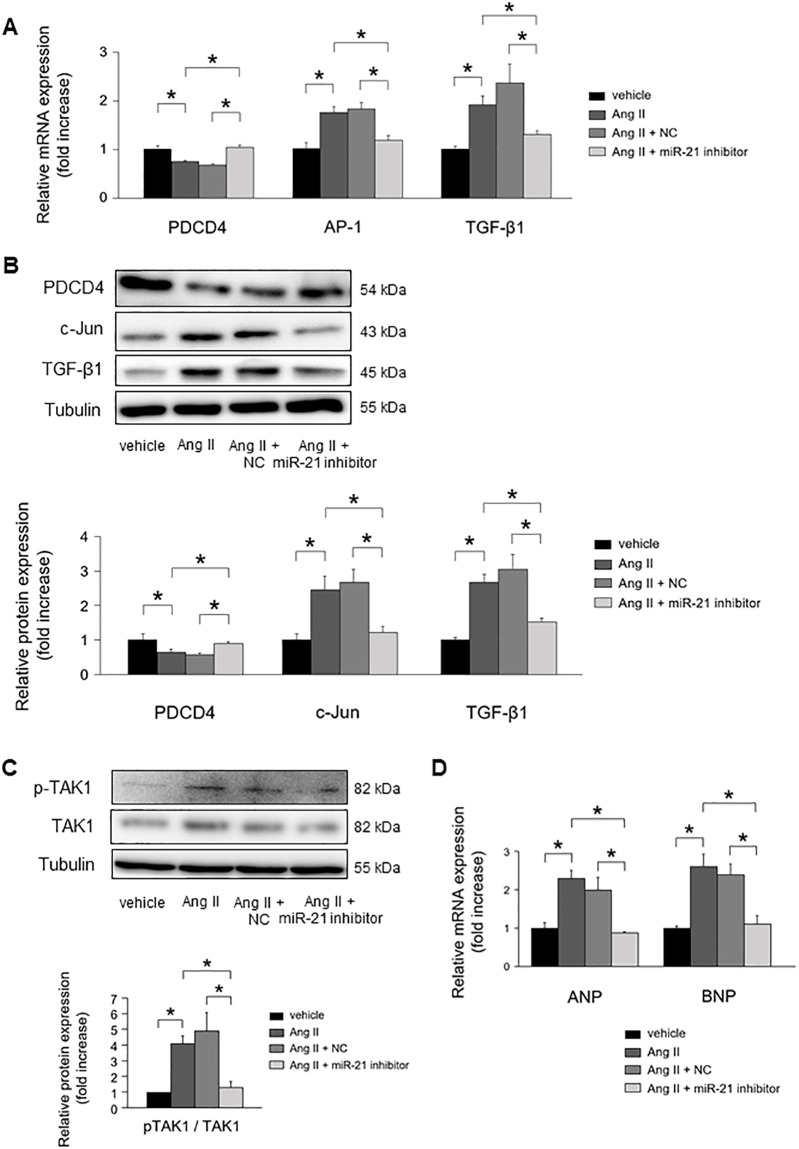
Hypertension is a major public health problem among the aging population worldwide. It causes cardiac remodeling, including hypertrophy and interstitial fibrosis, which leads to development of hypertensive heart disease (HHD). Although microRNA-21 (miR-21) is associated with fibrogenesis in multiple organs, its contribution to cardiac remodeling in hypertension is poorly understood. Circulating miR-21 level was higher in patients with HHD than that in the control subjects. It also positively correlated with serum myocardial fibrotic markers. MiR-21 expression levels were significantly upregulated in the mice hearts after angiotensin II (Ang II) infusion or transverse aortic constriction (TAC) compared with control mice. Expression level of programmed cell death 4 (PDCD4), a main target of miR-21, was significantly decreased in Ang II infused mice and TAC mice compared with control mice. Expression levels of transcriptional activator protein 1 (AP-1) and transforming growth factor-β1 (TGF-β1), which were downstream targets of PDCD4, were increased in Ang II infused mice and TAC mice compared with control mice. In vitro, mirVana-miR-21-specific inhibitor attenuated Ang II-induced PDCD4 downregulation and contributed to subsequent deactivation of AP-1/TGF-β1 signaling pathway in neonatal rat cardiomyocytes. Thus, suppression of miR-21 prevents hypertrophic stimulation-induced cardiac remodeling by regulating PDCD4, AP-1, and TGF-β1 signaling pathway.
高血压是全球老龄化人口中的一个主要公共卫生问题。它会导致心脏重构,包括心肌肥大和间质纤维化,从而导致高血压性心脏病(HHD)的发生。尽管 microRNA-21(miR-21)与多个器官的纤维化有关,但它对高血压中心脏重构的贡献尚不清楚。HHD 患者的循环 miR-21 水平高于对照组。它还与血清心肌纤维化标志物呈正相关。与对照组相比,血管紧张素 II(Ang II)输注或横主动脉缩窄(TAC)后,小鼠心脏中的 miR-21 表达水平显著上调。与对照组相比,Ang II 输注小鼠和 TAC 小鼠中 miR-21 的主要靶基因程序性细胞死亡因子 4(PDCD4)的表达水平显著降低。转录激活蛋白 1(AP-1)和转化生长因子-β1(TGF-β1)的表达水平,它们是 PDCD4 的下游靶基因,在 Ang II 输注小鼠和 TAC 小鼠中均高于对照组。在体外,mirVana-miR-21 特异性抑制剂减弱了 Ang II 诱导的 PDCD4 下调,并有助于随后在新生大鼠心肌细胞中失活 AP-1/TGF-β1 信号通路。因此,抑制 miR-21 通过调节 PDCD4、AP-1 和 TGF-β1 信号通路来预防肥厚刺激诱导的心脏重构。