Ecole Polytechnique Federale, Lausanne, Switzerland; Department of Psychology, University of Roehampton, Whitelands College, Hollybourne Avenue, London SW15 4JD, UK.
CIMeC, Center for Mind/Brain Sciences, University of Trento, Rovereto (Trento), Italy.
Neuroimage Clin. 2020;25:102191. doi: 10.1016/j.nicl.2020.102191. Epub 2020 Jan 23.
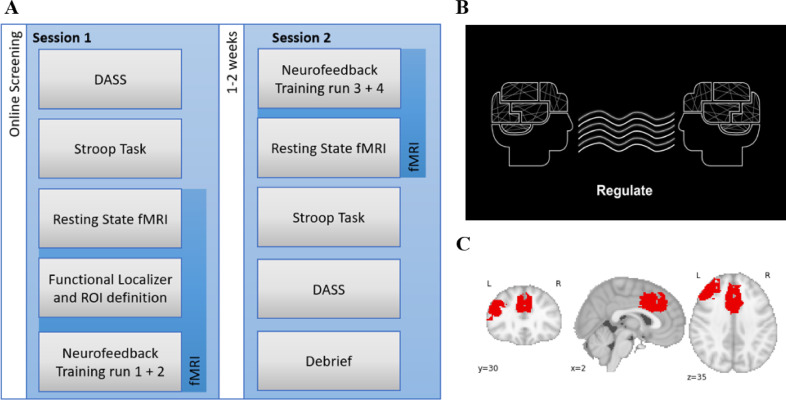
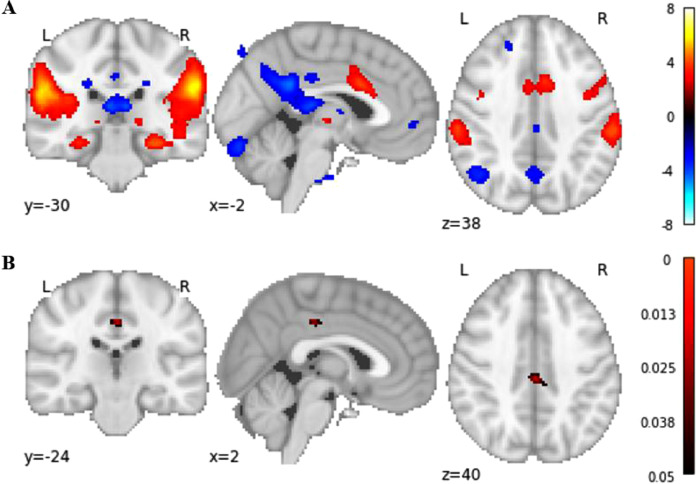
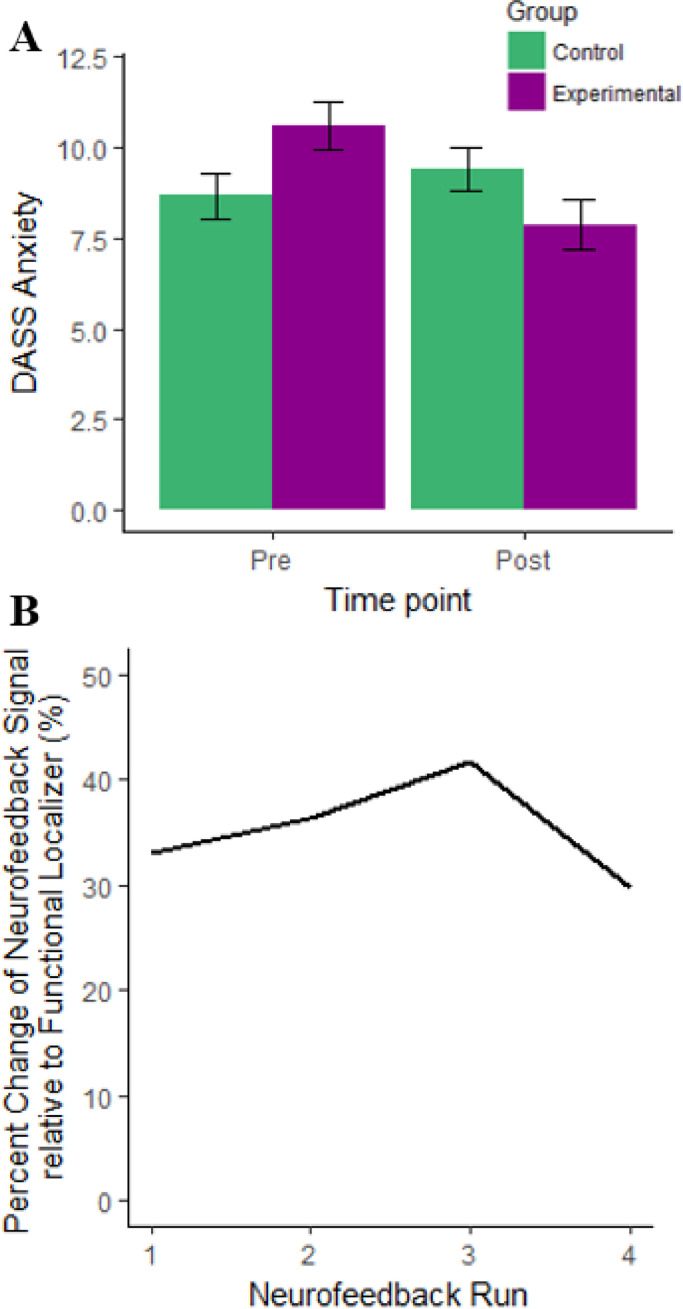
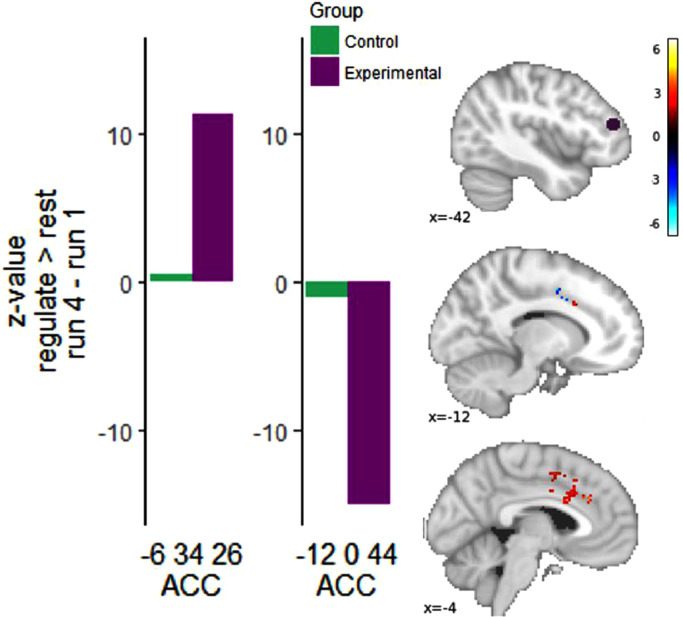
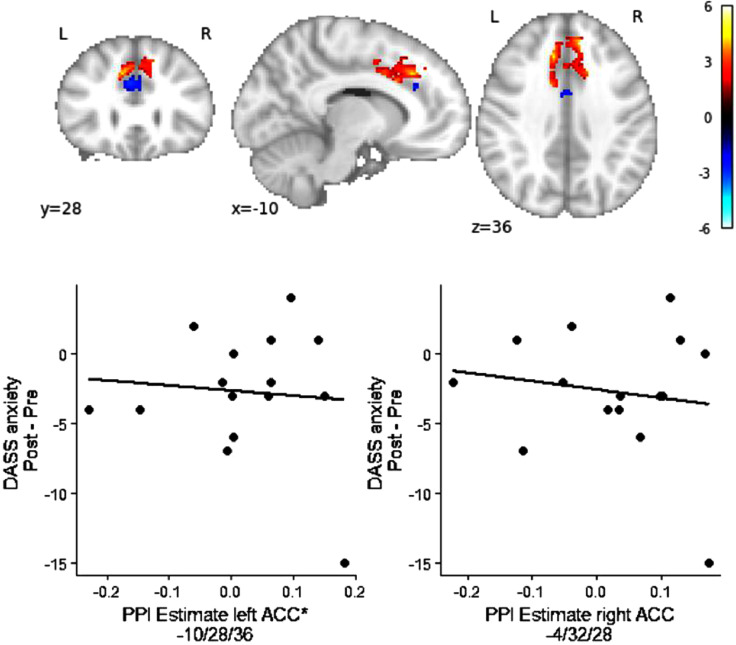
High levels of trait anxiety are associated with impaired attentional control, changes in brain activity during attentional control tasks and altered network resting state functional connectivity (RSFC). Specifically, dorsolateral prefrontal cortex to anterior cingulate cortex (DLPFC - ACC) functional connectivity, thought to be crucial for effective and efficient attentional control, is reduced in high trait anxious individuals. The current study examined the potential of connectivity-based real-time functional magnetic imaging neurofeedback (rt-fMRI-nf) for enhancing DLPFC - ACC functional connectivity in trait anxious individuals. We specifically tested if changes in DLPFC - ACC connectivity were associated with reduced anxiety levels and improved attentional control. Thirty-two high trait anxious participants were assigned to either an experimental group (EG), undergoing veridical rt-fMRI-nf, or a control group (CG) that received sham (yoked) feedback. RSFC (using resting state fMRI), anxiety levels and Stroop task performance were assessed pre- and post-rt-fMRI-nf training. Post-rt-fMRI-nf training, relative to the CG, the EG showed reduced anxiety levels and increased DLPFC-ACC functional connectivity as well as increased RSFC in the posterior default mode network. Moreover, in the EG, changes in DLPFC - ACC functional connectivity during rt-fMRI-nf training were associated with reduced anxiety levels. However, there were no group differences in Stroop task performance. We conclude that rt-fMRI-nf targeting DLPFC - ACC functional connectivity can alter network connectivity and interactions and is a feasible method for reducing trait anxiety.
高水平特质焦虑与注意力控制受损、注意力控制任务期间大脑活动变化以及网络静息状态功能连接(RSFC)改变有关。具体来说,背外侧前额叶皮层到前扣带皮层(DLPFC-ACC)的功能连接,被认为对有效和高效的注意力控制至关重要,在高特质焦虑个体中减少。本研究探讨了基于连接的实时功能磁共振成像神经反馈(rt-fMRI-nf)在增强特质焦虑个体 DLPFC-ACC 功能连接中的潜力。我们特别测试了 DLPFC-ACC 连接的变化是否与焦虑水平降低和注意力控制改善相关。32 名高特质焦虑参与者被分配到实验组(EG)或对照组(CG)。实验组接受真实的 rt-fMRI-nf,对照组接受假反馈(同步)。在 rt-fMRI-nf 训练前后评估了 RSFC(使用静息态 fMRI)、焦虑水平和 Stroop 任务表现。与 CG 相比,EG 在 rt-fMRI-nf 训练后表现出焦虑水平降低、DLPFC-ACC 功能连接增加以及后默认模式网络 RSFC 增加。此外,在 EG 中,rt-fMRI-nf 训练期间 DLPFC-ACC 功能连接的变化与焦虑水平降低有关。然而,Stroop 任务表现没有组间差异。我们得出结论,针对 DLPFC-ACC 功能连接的 rt-fMRI-nf 可以改变网络连接和相互作用,是一种降低特质焦虑的可行方法。