RNA Viruses Section, Laboratory of Infectious Diseases, National Institute of Allergy and Infectious Diseases, National Institutes of Health, Bethesda, Maryland, United States of America.
Vaccine Research Center, National Institute of Allergy and Infectious Diseases, National Institutes of Health, Bethesda, Maryland, United States of America.
PLoS One. 2020 Feb 11;15(2):e0228572. doi: 10.1371/journal.pone.0228572. eCollection 2020.
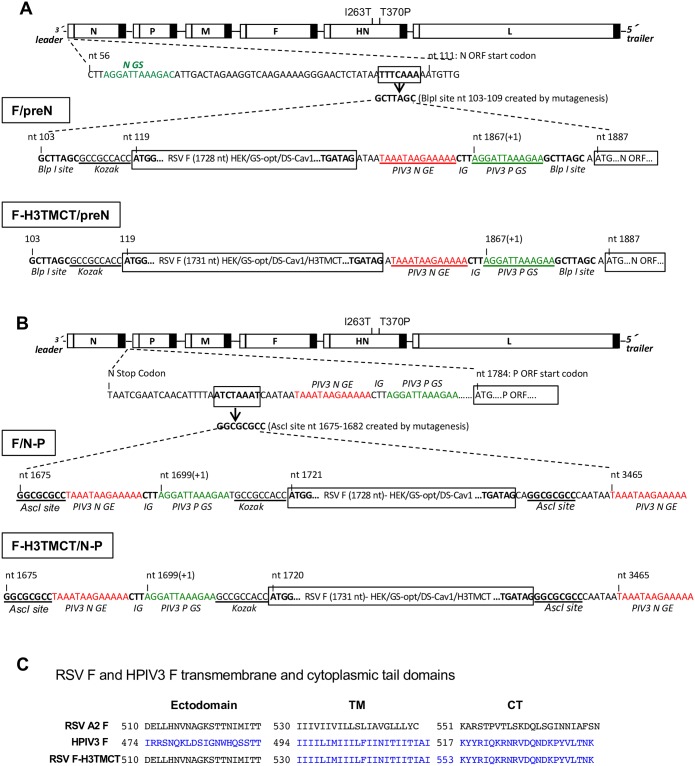
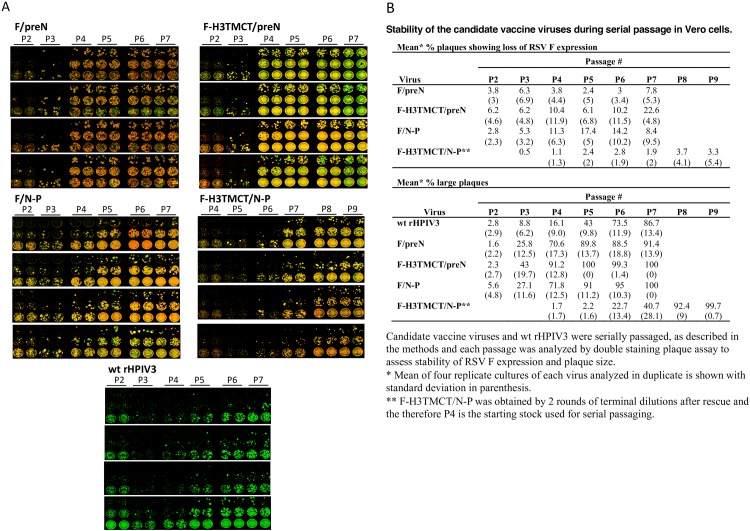
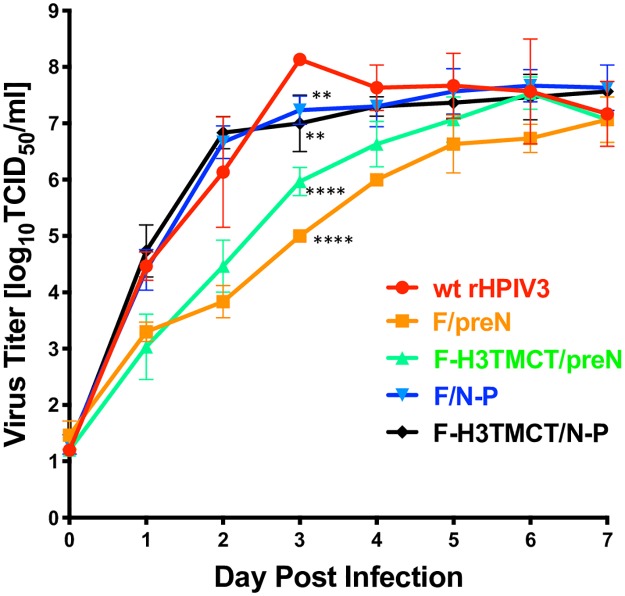
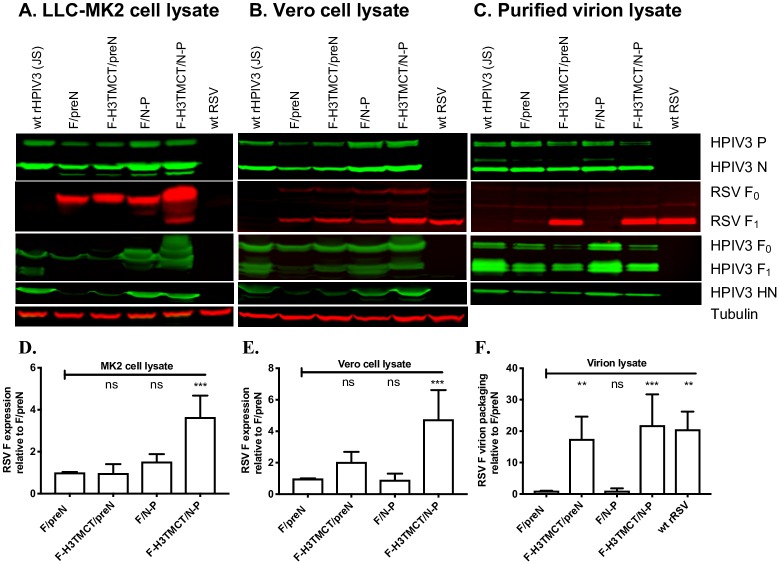
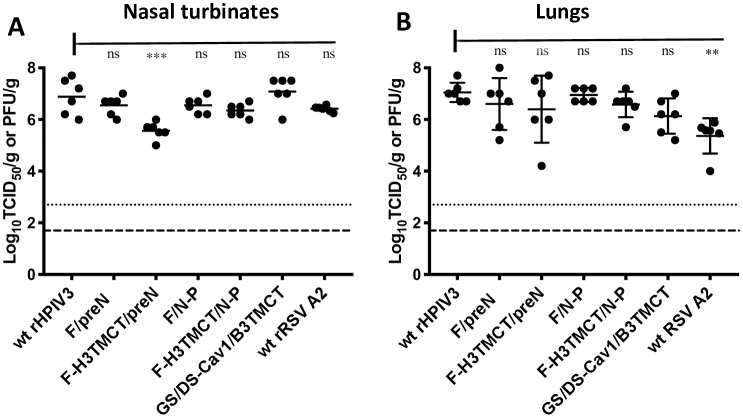
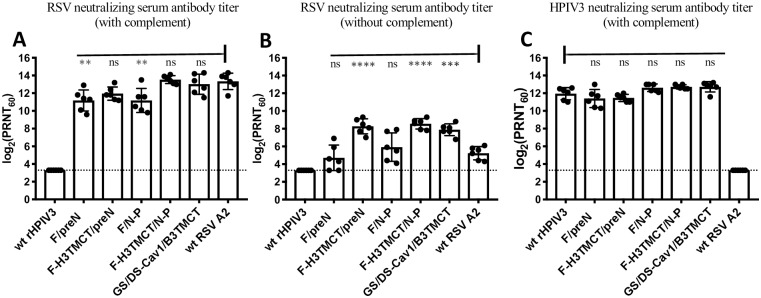
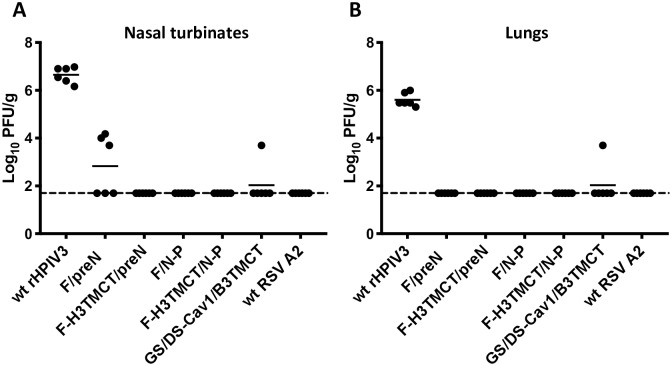
Human respiratory syncytial virus (RSV) and parainfluenza virus type 3 (HPIV3) are among the most common viral causes of childhood bronchiolitis and pneumonia worldwide, and lack effective antiviral drugs or vaccines. Recombinant (r) HPIV3 was modified to express the RSV fusion (F) glycoprotein, the major RSV neutralization and protective antigen, providing a live intranasal bivalent HPIV3/RSV vaccine candidate. This extends previous studies using a chimeric bovine-human PIV3 vector (rB/HPIV3). One advantage is that rHPIV3 expresses all of the HPIV3 antigens compared to only two for rB/HPIV3. In addition, the use of rHPIV3 as vector should avoid excessive attenuation following addition of the modified RSV F gene, which may occur with rB/HPIV3. To enhance its immunogenicity, RSV F was modified (i) to increase the stability of the prefusion (pre-F) conformation and (ii) by replacement of its transmembrane (TM) and cytoplasmic tail (CT) domains with those of HPIV3 F (H3TMCT) to increase incorporation in the vector virion. RSV F (+/- H3TMCT) was expressed from the first (F/preN) or the second (F/N-P) gene position of rHPIV3. The H3TMCT modification dramatically increased packaging of RSV F into the vector virion and, in hamsters, resulted in significant increases in the titer of high-quality serum RSV-neutralizing antibodies, in addition to the increase conferred by pre-F stabilization. Only F-H3TMCT/preN replication was significantly attenuated in the nasal turbinates by the RSV F insert. F-H3TMCT/preN, F/N-P, and F-H3TMCT/N-P provided complete protection against wt RSV challenge. F-H3TMCT/N-P exhibited the most stable and highest expression of RSV F, providing impetus for its further development.
人类呼吸道合胞病毒(RSV)和副流感病毒 3 型(HPIV3)是导致全球儿童毛细支气管炎和肺炎的最常见病毒之一,但目前缺乏有效的抗病毒药物或疫苗。本研究对重组(r)HPIV3 进行修饰,使其表达 RSV 融合(F)糖蛋白,这是 RSV 的主要中和和保护性抗原,从而提供了一种活的鼻内二价 HPIV3/RSV 候选疫苗。这一研究延伸了之前使用嵌合牛-人 PIV3 载体(rB/HPIV3)的研究。一个优势是,与仅表达 rB/HPIV3 中的两种抗原相比,rHPIV3 表达了所有的 HPIV3 抗原。此外,使用 rHPIV3 作为载体应该可以避免由于修饰的 RSV F 基因的加入而导致的过度衰减,这种情况可能会发生在 rB/HPIV3 中。为了提高其免疫原性,对 RSV F 进行了修饰(i)以增加其预融合(pre-F)构象的稳定性,(ii)用 HPIV3 F(H3TMCT)取代其跨膜(TM)和胞质尾(CT)结构域,以增加其在载体病毒粒子中的掺入。RSV F(+/ - H3TMCT)分别从 rHPIV3 的第一个(F/preN)或第二个(F/N-P)基因位置表达。H3TMCT 修饰极大地增加了 RSV F 包装到载体病毒粒子中,并且在仓鼠中,除了 pre-F 稳定化所赋予的增加外,还显著增加了高质量血清 RSV 中和抗体的滴度。只有 RSV F 插入物显著降低了鼻腔鼻甲中的 RSV F-H3TMCT/preN 复制。F-H3TMCT/preN、F/N-P 和 F-H3TMCT/N-P 完全保护免受 wt RSV 攻击。F-H3TMCT/N-P 表现出最稳定和最高的 RSV F 表达,为其进一步发展提供了动力。