Laboratory of Biology and Biotechnology for Cultural Heritage, Department of Biological, Chemical, and Pharmaceutical Science and Technologies, University of Palermo, Via Archirafi 38, 90123 Palermo, Italy.
Laboratory of Natural Products, Department of Biological, Chemical, and Pharmaceutical Science and Technologies, University of Palermo, V.le delle Scienze Ed. 17, 90128 Palermo, Italy.
Molecules. 2020 Feb 7;25(3):730. doi: 10.3390/molecules25030730.
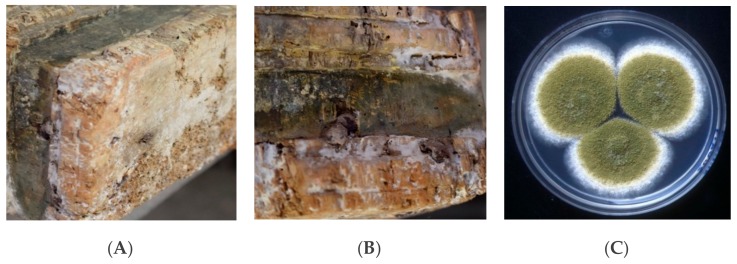
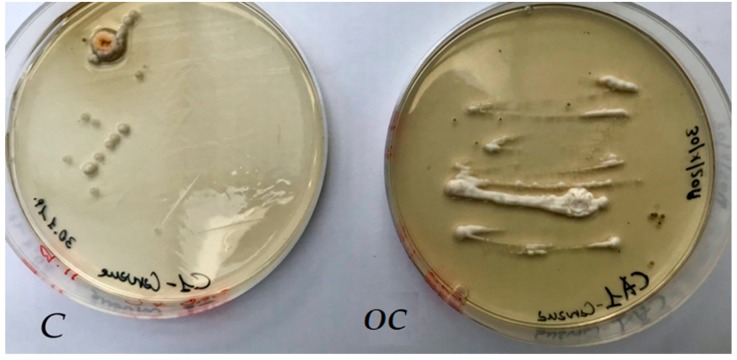
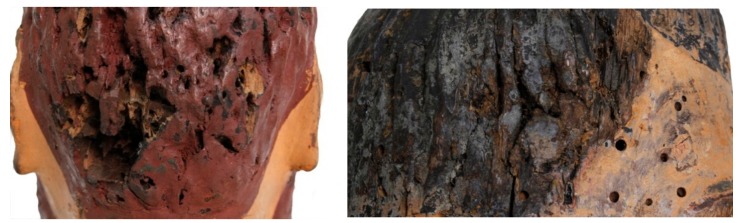
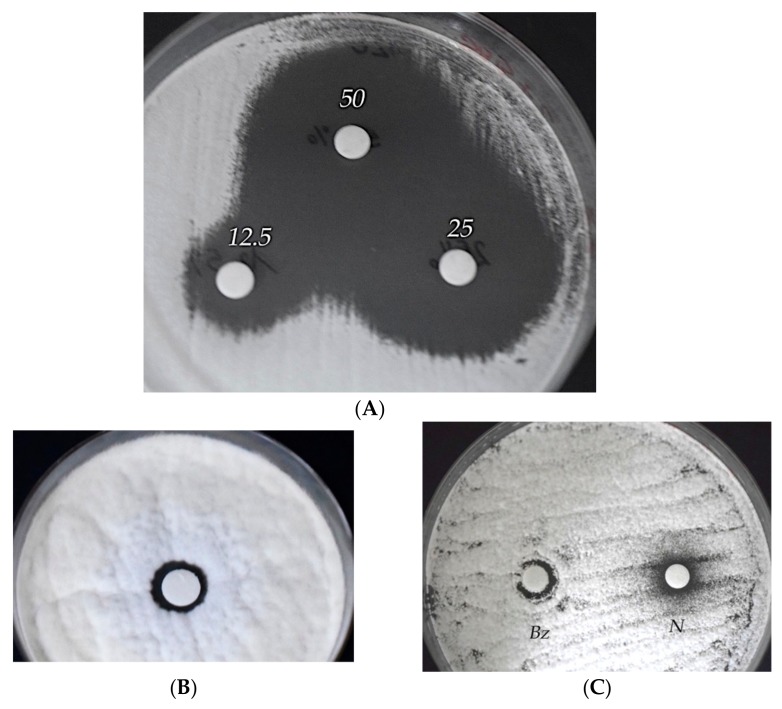
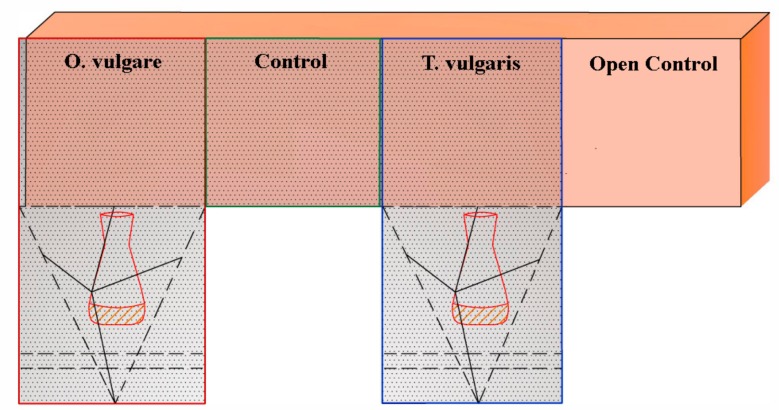
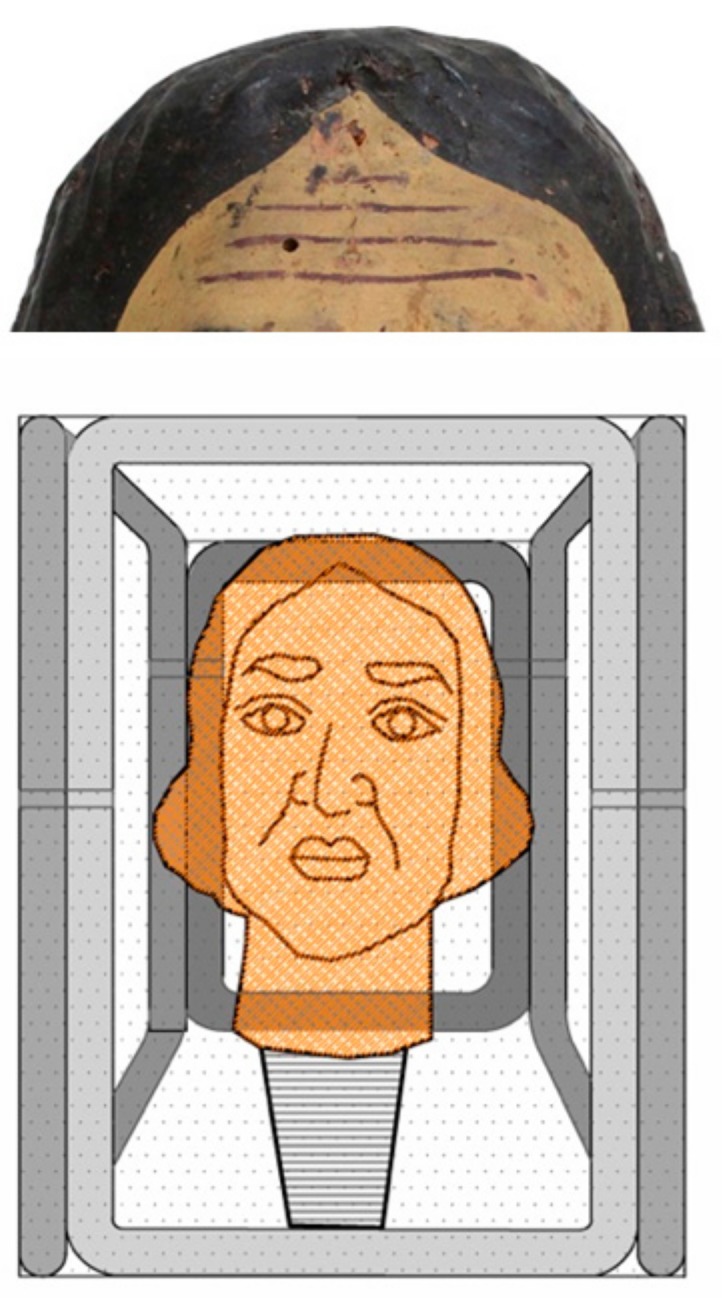
Essential oils (EOs) have been known for a long time, and they are used in several fields such as medicine and aromatherapy, as well as in the food and pharmaceutical industries. In the last decade, EOs have also been applied to contrast the biodeterioration of cultural heritage, representing a powerful resource in green conservation strategies. In this study, an integrated approach based on microscopic observation, in vitro culture, and molecular investigation was preliminarily employed to identify biological systems colonizing wooden artworks. In order to contrast the biodeterioration processes induced by fungal colonization () or insect infestation (), wooden artworks were exposed to the volatile compound of or essential oils (EOs), the chemical composition of which was determined by GC-MS using both polar and apolar columns. Artwork exposure was performed in ad-hoc-assembled "clean chambers." Evaluating the effects on biological systems, the compatibility with artwork constitutive materials, and the lack of negative effects on human health and environmental pollution, the use of EOs as a valid alternative to traditional biocides must be considered.
精油(EOs)早已为人所知,它们被应用于多个领域,如医学和芳香疗法,以及食品和制药行业。在过去的十年中,精油也被应用于对抗文化遗产的生物降解,代表了绿色保护策略中的一种强大资源。在这项研究中,初步采用了一种基于微观观察、体外培养和分子研究的综合方法,以鉴定木质艺术品上的生物系统。为了对比真菌定殖()或昆虫侵害()引起的生物降解过程,木质艺术品被暴露于精油(EOs)的挥发性化合物中,其化学成分通过 GC-MS 使用极性和非极性柱进行了测定。艺术品暴露是在专门组装的“清洁室”中进行的。评估对生物系统的影响、与艺术品组成材料的兼容性以及对人类健康和环境污染的负面影响,必须考虑将精油用作传统杀菌剂的有效替代品。