Université de Paris, Faculté de Santé, Institut de Recherche Saint-Louis, Unité Claude Kellershohn, 75010 Paris, France.
INSERM UMR-S 1144, Therapeutic Optimisation in Neuropsychopharmacology, 75005 Paris, France.
Cells. 2020 Feb 7;9(2):389. doi: 10.3390/cells9020389.
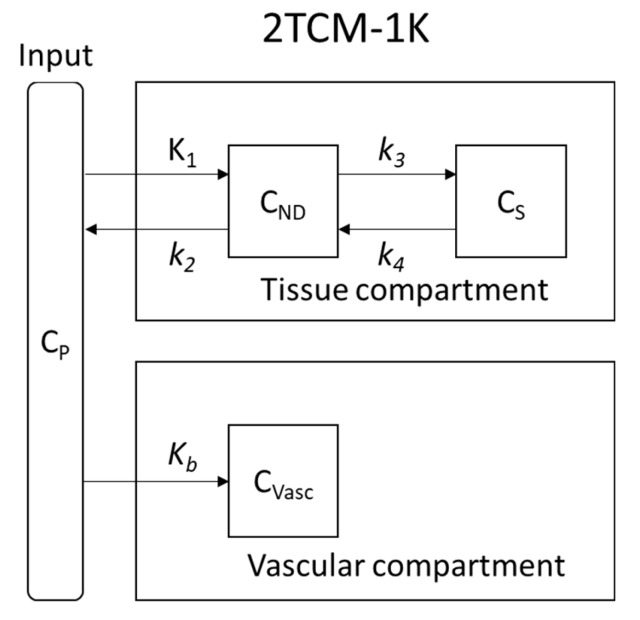
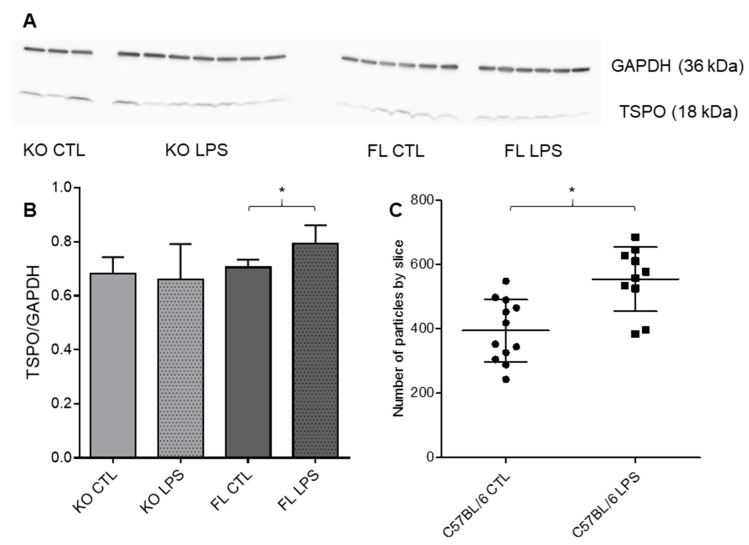
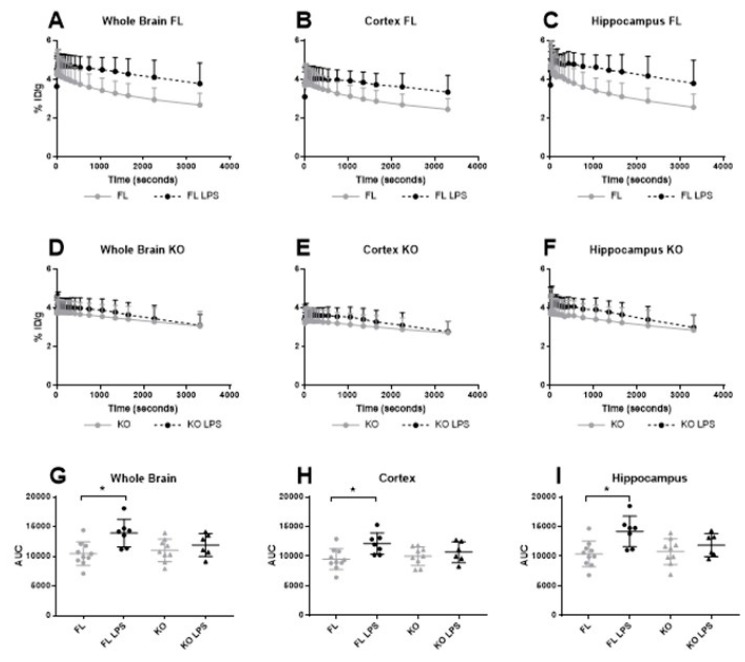
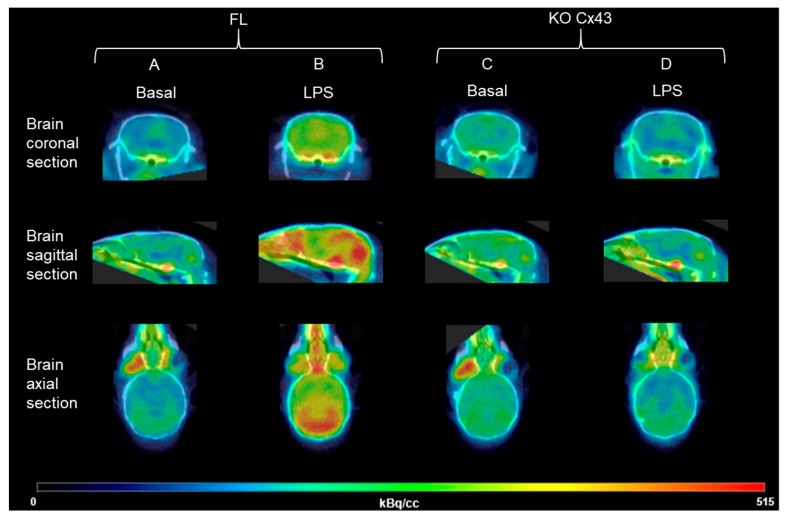
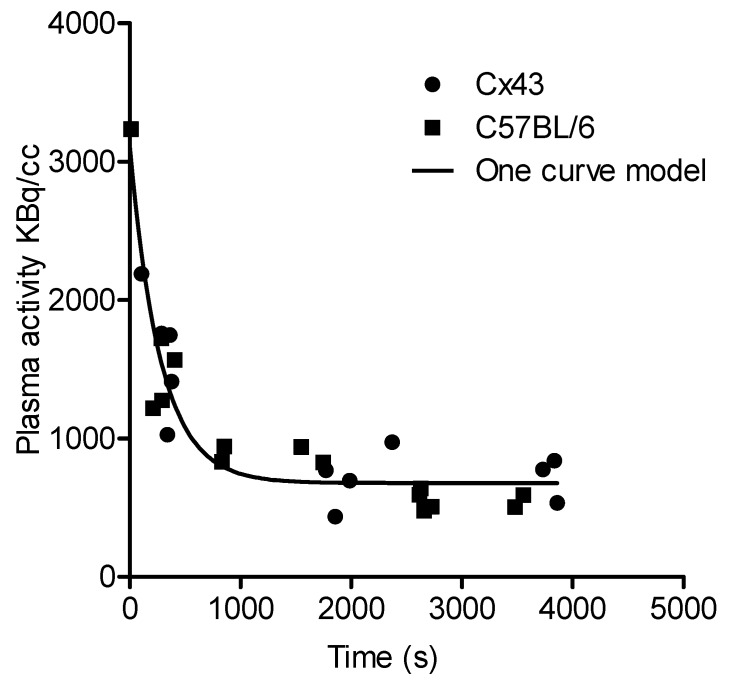
Astroglial connexin 43 (Cx43) has been recognized as a crucial immunoregulating factor in the brain. Its inactivation leads to a continuous immune recruitment, cytokine expression modification and a specific humoral autoimmune response against the astrocytic extracellular matrix but without brain lesions or cell lysis. To assess the impact of Cx43 deletion on the brain's inflammatory response, TSPO expression was studied by positron emission tomography (PET) imaging with a specific radioligand, [F]FEPPA, in basal conditions or upon Lipopolysaccharides (LPS)-induced inflammatory challenge. Astroglial Cx43-deleted mice underwent [F]FEPPA PET/CT dynamic imaging with or without LPS injection (5 mg/kg) 24 h before imaging. Quantification and pharmacokinetic data modelling with a 2TCM-1K compartment model were performed. After collecting the mice brains, TSPO expression was quantified and localized by Western blot and FISH analysis. We found that astroglial Cx43 deficiency does not significantly alter TSPO expression in the basal state as observed with [F]FEPPA PET imaging, FISH and Western blot analysis. However, deletion of astrocyte Cx43 abolishes the LPS-induced TSPO increase. Autoimmune encephalopathy observed in astroglial Cx43-deleted mice does not involve TSPO overexpression. Consistent with previous studies showing a unique inflammatory status in the absence of astrocyte Cx43, we show that a deficient expression of astrocytic Cx43 protects the animals from LPS-induced neuroinflammation as addressed by TSPO expression.
星形胶质细胞连接蛋白 43(Cx43)已被认为是大脑中重要的免疫调节因子。其失活导致持续的免疫募集、细胞因子表达修饰和针对星形胶质细胞细胞外基质的特异性体液自身免疫反应,但没有脑损伤或细胞溶解。为了评估 Cx43 缺失对大脑炎症反应的影响,通过正电子发射断层扫描(PET)成像用特异性放射性配体[F]FEPPA研究 TSPO 表达,在基础条件下或脂多糖(LPS)诱导的炎症挑战下。星形胶质细胞 Cx43 缺失的小鼠在成像前 24 小时接受[F]FEPPA PET/CT 动态成像,或不接受 LPS 注射(5mg/kg)。使用 2TCM-1K 隔室模型进行定量和药代动力学数据分析建模。收集小鼠大脑后,通过 Western blot 和 FISH 分析定量和定位 TSPO 表达。我们发现,星形胶质细胞 Cx43 缺失在基础状态下不会显著改变[F]FEPPA PET 成像、FISH 和 Western blot 分析观察到的 TSPO 表达。然而,星形胶质细胞 Cx43 的缺失消除了 LPS 诱导的 TSPO 增加。在星形胶质细胞 Cx43 缺失的小鼠中观察到的自身免疫性脑炎不涉及 TSPO 过表达。与先前研究表明在没有星形胶质细胞 Cx43 的情况下存在独特的炎症状态一致,我们表明星形胶质细胞 Cx43 的表达缺陷可保护动物免受 LPS 诱导的神经炎症,如 TSPO 表达所示。