Microbiology/Glycobiology, Interfaculty Institute of Microbiology and Infection Medicine Tübingen, University of Tübingen, 72076 Tübingen, Germany.
Section of Molecular Microbiology and Medical Research Council Centre for Molecular Bacteriology and Infection, Imperial College London, London SW7 2AZ, United Kingdom.
J Biol Chem. 2020 Mar 20;295(12):4024-4034. doi: 10.1074/jbc.RA120.012566. Epub 2020 Feb 11.
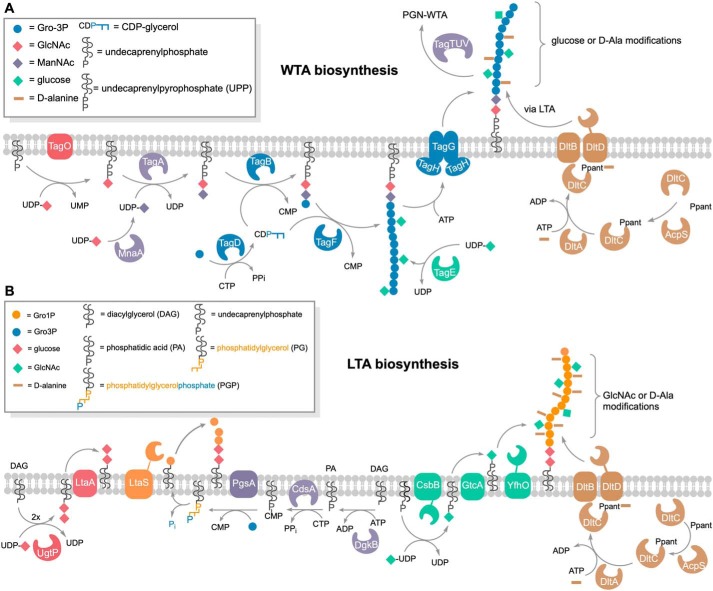
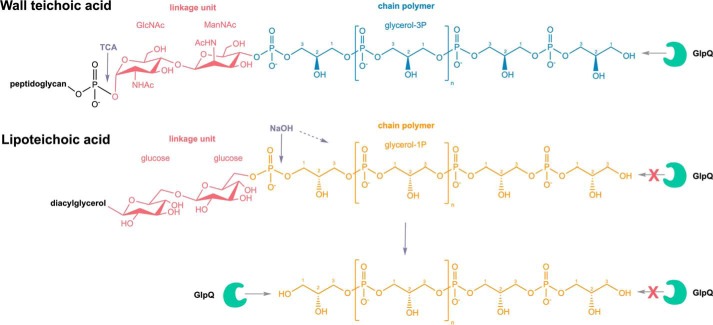
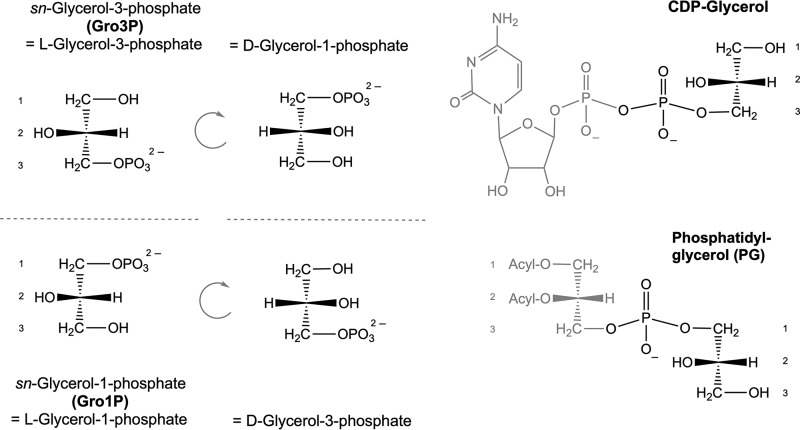
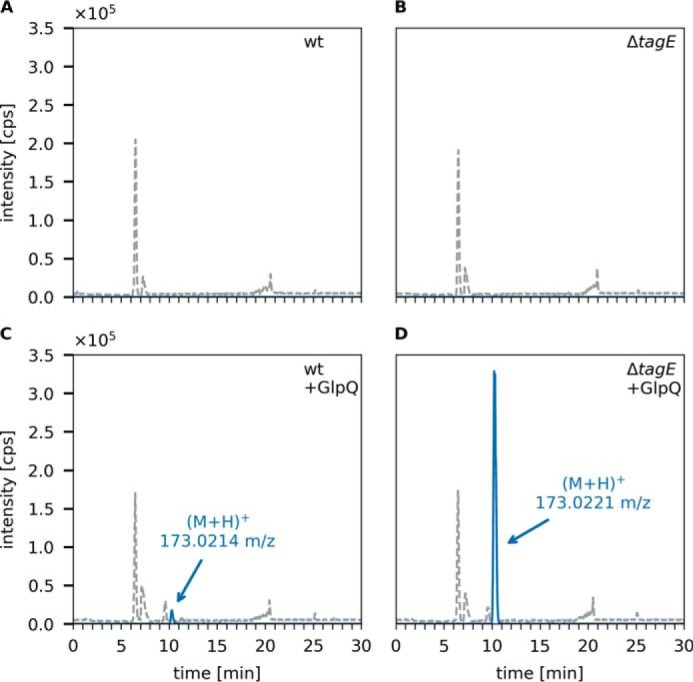
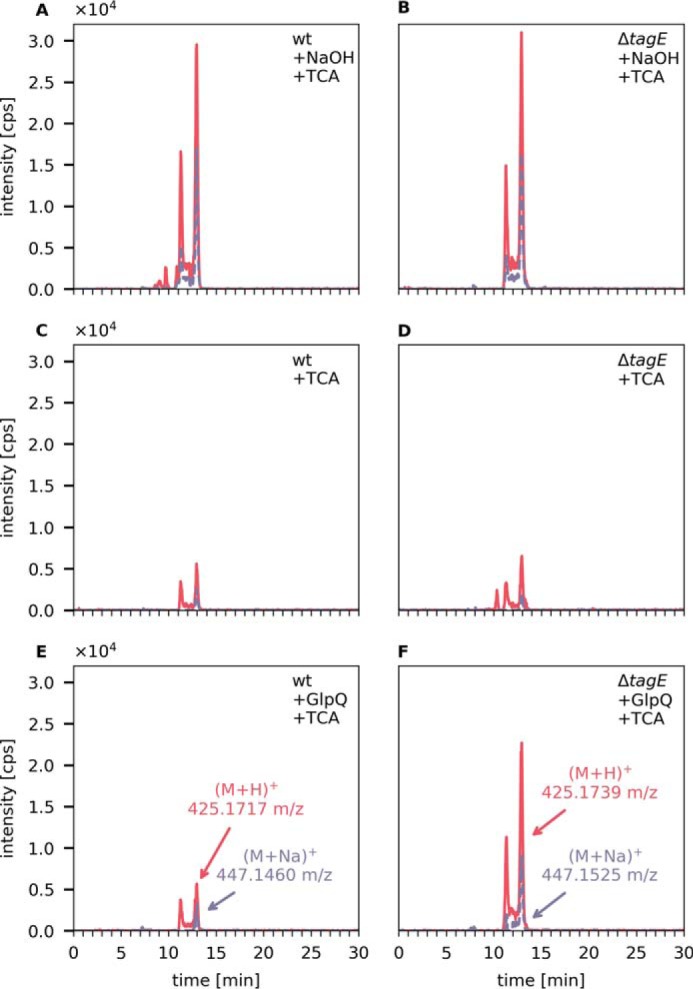
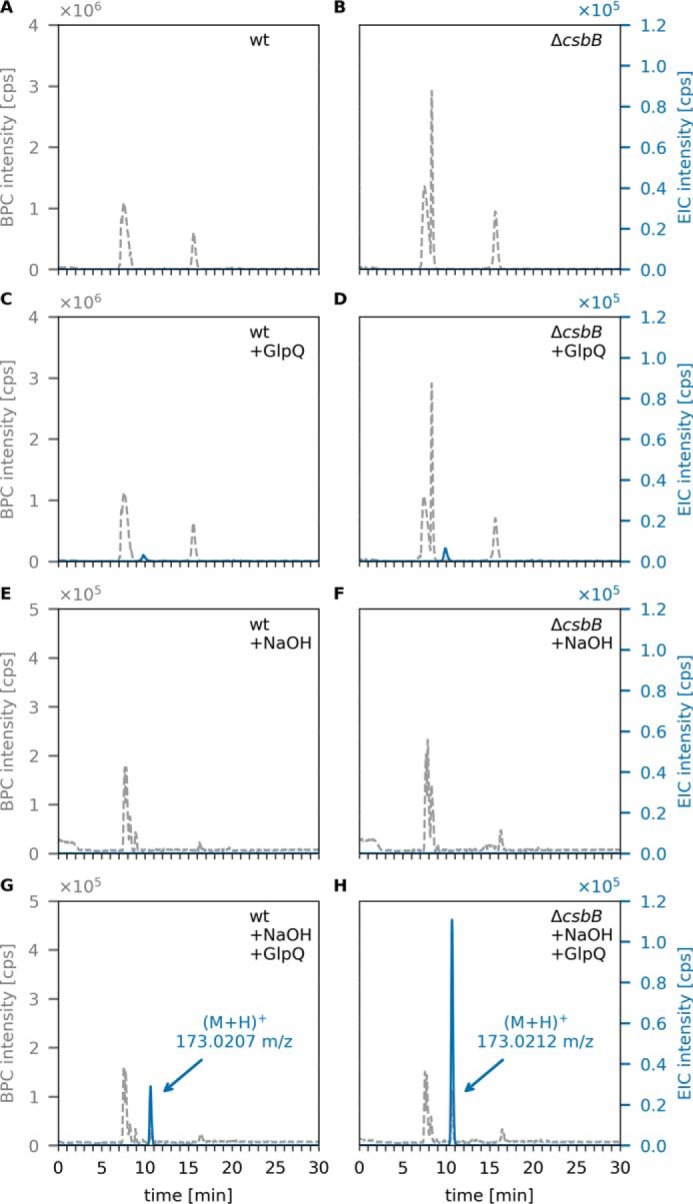
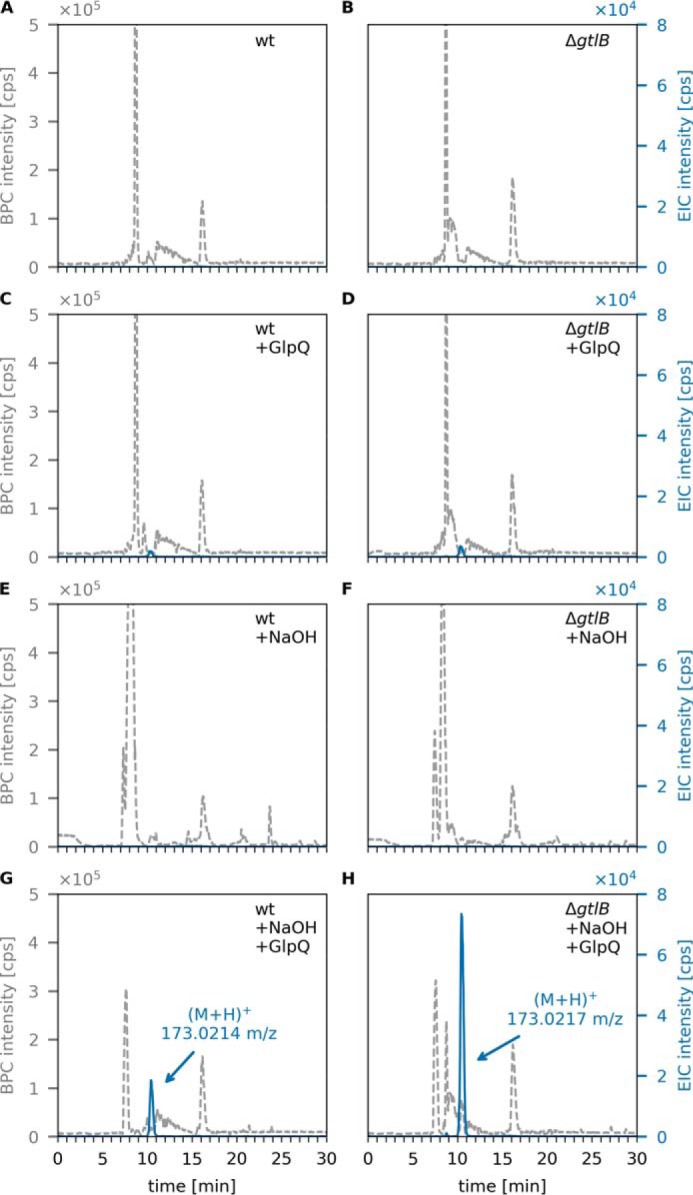
The cell envelope of Gram-positive bacteria generally comprises two types of polyanionic polymers linked to either peptidoglycan (wall teichoic acids; WTA) or to membrane glycolipids (lipoteichoic acids; LTA). In some bacteria, including strain 168, both WTA and LTA are glycerolphosphate polymers yet are synthesized through different pathways and have distinct but incompletely understood morphogenetic functions during cell elongation and division. We show here that the exolytic -glycerol-3-phosphodiesterase GlpQ can discriminate between WTA and LTA. GlpQ completely degraded unsubstituted WTA, which lacks substituents at the glycerol residues, by sequentially removing glycerolphosphates from the free end of the polymer up to the peptidoglycan linker. In contrast, GlpQ could not degrade unsubstituted LTA unless it was partially precleaved, allowing access of GlpQ to the other end of the polymer, which, in the intact molecule, is protected by a connection to the lipid anchor. Differences in stereochemistry between WTA and LTA have been suggested previously on the basis of differences in their biosynthetic precursors and chemical degradation products. The differential cleavage of WTA and LTA by GlpQ reported here represents the first direct evidence that they are enantiomeric polymers: WTA is made of -glycerol-3-phosphate, and LTA is made of -glycerol-1-phosphate. Their distinct stereochemistries reflect the dissimilar physiological and immunogenic properties of WTA and LTA. It also enables differential degradation of the two polymers within the same envelope compartment , particularly under phosphate-limiting conditions, when specifically degrades WTA and replaces it with phosphate-free teichuronic acids.
革兰氏阳性菌的细胞包膜通常包含两种类型的聚阴离子聚合物,分别与肽聚糖(壁磷壁酸;WTA)或膜糖脂(脂磷壁酸;LTA)相连。在某些细菌中,包括 168 株,WTA 和 LTA 都是甘油磷酸聚合物,但它们是通过不同的途径合成的,并且在细胞伸长和分裂过程中有不同但不完全理解的形态发生功能。我们在这里表明,外切-β-甘油-3-磷酸二酯酶 GlpQ 可以区分 WTA 和 LTA。GlpQ 可以完全降解没有取代基的 WTA,因为它缺乏甘油残基上的取代基,通过从聚合物的游离端顺序去除甘油磷酸直到肽聚糖连接物。相比之下,除非 GlpQ 部分预先切割,否则 GlpQ 无法降解未取代的 LTA,这允许 GlpQ 进入聚合物的另一端,在完整的分子中,另一端被与脂质锚的连接所保护。以前基于它们的生物合成前体和化学降解产物的差异,已经提出 WTA 和 LTA 之间的立体化学差异。这里报道的 GlpQ 对 WTA 和 LTA 的差异切割代表了它们是对映体聚合物的第一个直接证据:WTA 由-β-甘油-3-磷酸组成,LTA 由-β-甘油-1-磷酸组成。它们不同的立体化学反映了 WTA 和 LTA 不同的生理和免疫原性特性。它还可以在同一包膜隔室中差异降解两种聚合物,特别是在磷酸盐有限的条件下,当 特异性降解 WTA 并将其替换为无磷酸盐的 teichuronic 酸时。