Institute of Molecular Medicine, Department of Urology, Department of Nuclear Medicine, Renji Hospital, School of Medicine, Shanghai Jiao Tong University, 200127, Shanghai, China.
Frontiers Science Center for Transformative Molecules, School of Chemistry and Chemical Engineering, Shanghai Jiao Tong University, 200240, Shanghai, China.
Nat Commun. 2020 Feb 11;11(1):838. doi: 10.1038/s41467-020-14664-8.
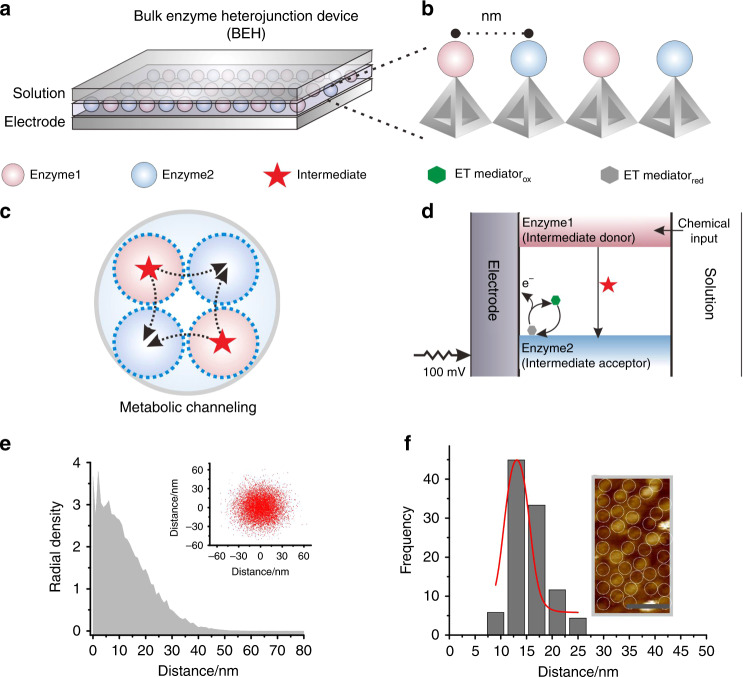
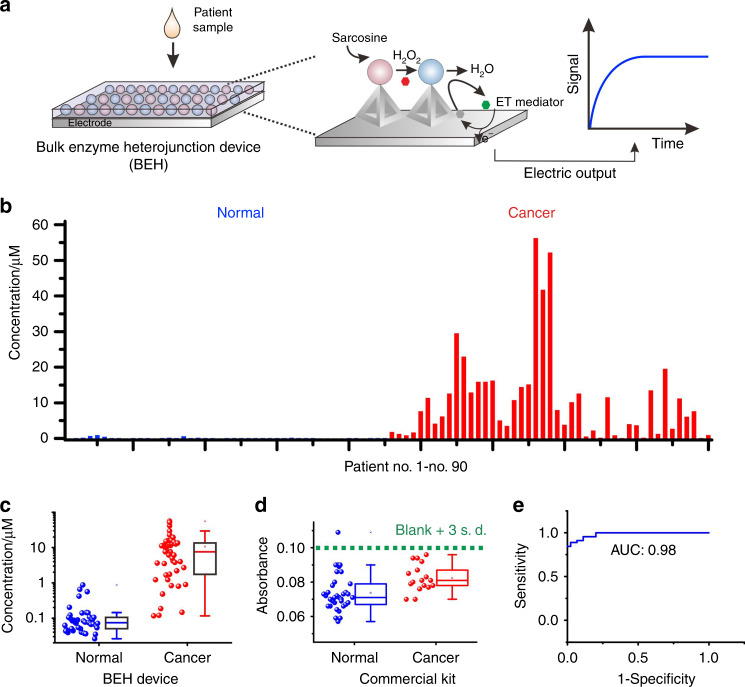
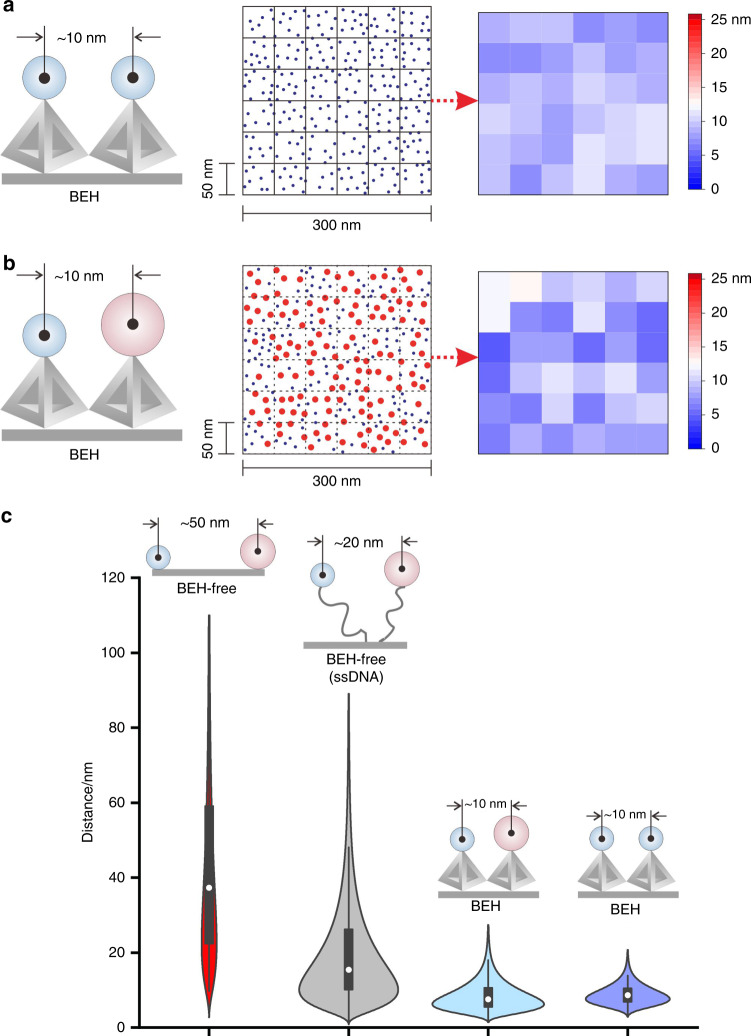
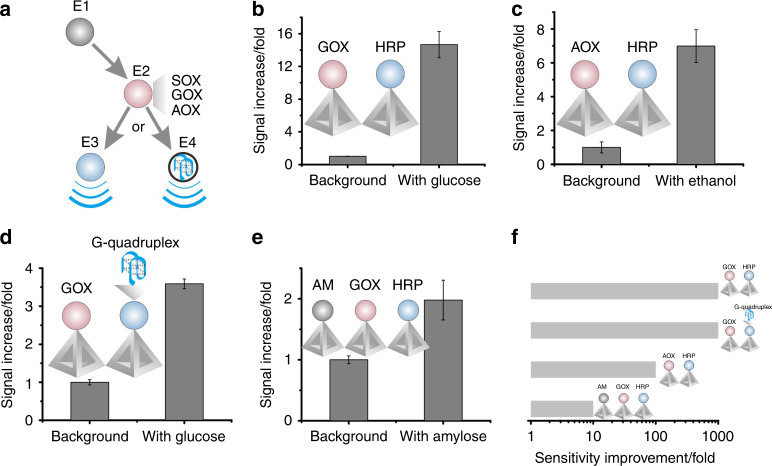
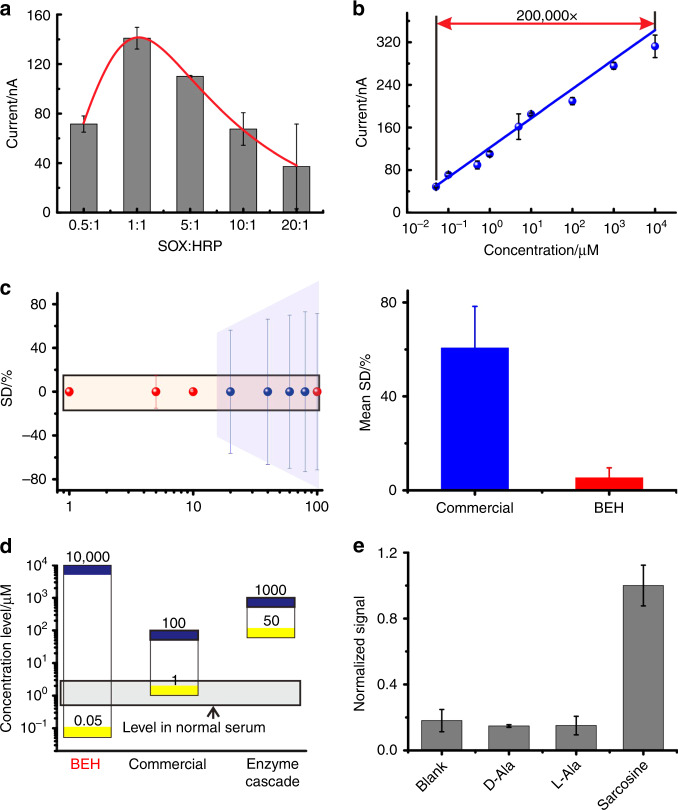
Protein-protein interactions are spatially regulated in living cells to realize high reaction efficiency, as seen in naturally existing electron-transfer chains. Nevertheless, arrangement of chemical/biochemical components at the artificial device interfaces does not possess the same level of control. Here we report a tetrahedral DNA framework-enabled bulk enzyme heterojunction (BEH) strategy to program the multi-enzyme catalytic cascade at the interface of electrochemical biosensors. The construction of interpenetrating network of BEH at the millimeter-scale electrode interface brings enzyme pairs within the critical coupling length (CCL) of ~10 nm, which in turn greatly improve the overall catalytic cascade efficiency by ~10-fold. We demonstrate the BEH generality with a range of enzyme pairs for electrochemically detecting clinically relevant molecular targets. As a proof of concept, a BEH-based sarcosine sensor enables single-step detection of the metabolic biomarker of sarcosine with ultrasensitivity, which hold the potential for precision diagnosis of early-stage prostate cancer.
蛋白质-蛋白质相互作用在活细胞中受到空间调节,以实现高效反应,就像在自然存在的电子转移链中一样。然而,在人工器件界面上的化学/生化组件的排列并不具备相同的控制水平。在这里,我们报告了一种四面体 DNA 框架支持的整体酶杂合体(BEH)策略,用于在电化学生物传感器的界面处对多酶级联催化进行编程。在毫米级电极界面处的 BEH 的互穿网络的构建将酶对带入临界偶联长度(CCL)内约 10nm,这反过来又将整体催化级联效率提高了约 10 倍。我们用一系列用于电化学检测临床相关分子靶标的酶对来证明 BEH 的通用性。作为概念验证,基于 BEH 的肌氨酸传感器能够实现肌氨酸代谢生物标志物的单步超灵敏检测,这为早期前列腺癌的精准诊断提供了潜力。