Balasco Luigi, Provenzano Giovanni, Bozzi Yuri
Center for Mind/Brain Sciences (CIMeC), University of Trento, Rovereto, Italy.
Department of Cellular, Computational and Integrative Biology (CIBIO), University of Trento, Trento, Italy.
Front Psychiatry. 2020 Jan 28;10:1016. doi: 10.3389/fpsyt.2019.01016. eCollection 2019.
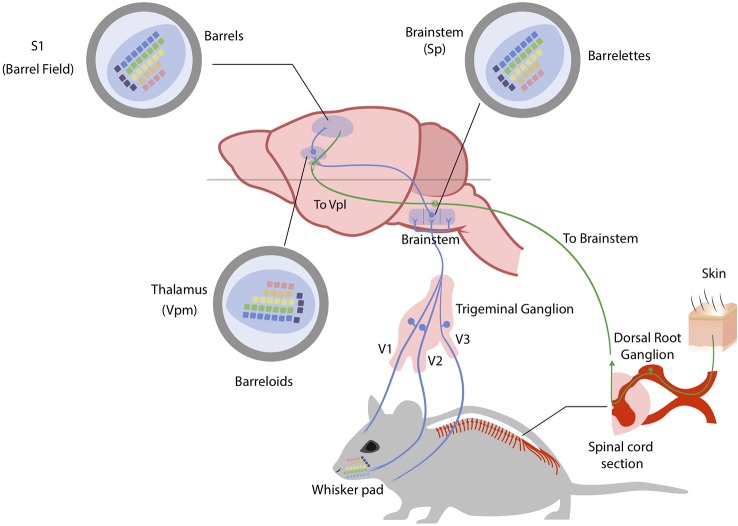
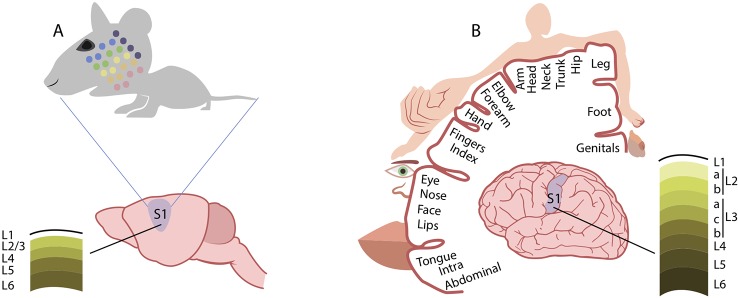
Sensory abnormalities are commonly recognized as diagnostic criteria in autism spectrum disorder (ASD), as reported in the last edition of the Diagnostic and Statistical Manual of Mental Disorder (DSM-V). About 90% of ASD individuals have atypical sensory experiences, described as both hyper- and hypo-reactivity, with abnormal responses to tactile stimulation representing a very frequent finding. In this review, we will address the neurobiological bases of sensory processing in ASD, with a specific focus of tactile sensitivity. In the first part, we will review the most relevant sensory abnormalities detected in ASD, and then focus on tactile processing deficits through the discussion of recent clinical and experimental studies. In the search for the neurobiological bases of ASD, several mouse models have been generated with knockout and humanized knockin mutations in many ASD-associated genes. Here, we will therefore give a brief overview of the anatomical structure of the mouse somatosensory system, and describe the somatosensory abnormalities so far reported in different mouse models of ASD. Understanding the neurobiological bases of sensory processing in ASD mouse models may represent an opportunity for a better comprehension of the mechanisms underlying sensory abnormalities, and for the development of novel effective therapeutic strategies.
如最新版《精神疾病诊断与统计手册》(DSM - V)所报道,感觉异常通常被视为自闭症谱系障碍(ASD)的诊断标准。约90%的ASD个体有非典型的感觉体验,表现为过度敏感和反应不足,对触觉刺激的异常反应是非常常见的发现。在本综述中,我们将探讨ASD中感觉处理的神经生物学基础,特别关注触觉敏感性。在第一部分,我们将回顾在ASD中检测到的最相关的感觉异常,然后通过讨论最近的临床和实验研究,聚焦于触觉处理缺陷。在寻找ASD的神经生物学基础过程中,已经产生了几种在许多与ASD相关基因中具有敲除和人源化敲入突变的小鼠模型。因此,在这里我们将简要概述小鼠体感系统的解剖结构,并描述迄今为止在不同ASD小鼠模型中报道的体感异常。了解ASD小鼠模型中感觉处理的神经生物学基础可能为更好地理解感觉异常背后的机制以及开发新的有效治疗策略提供契机。