Ko Duck Sung, Kim Su Hyun, Park Ji Young, Lee Gyunggyu, Kim Hyo Jin, Kim Gyeongmin, Chi Kyun You, Kim Ilsoo, Lee Jinseok, Won Kyu-Yeoun, Han Jiyou, Son Jeongsang, Woo Dong-Hun, Han Choongseong, Kim Jong-Hoon
Laboratory of Stem Cells and Tissue Regeneration, Department of Biotechnology, College of Life Sciences and Biotechnology, Korea University, Seoul 02841, Korea.
Department of Pathology, Kyung Hee University Hospital at Gangdong, College of Medicine, Kyung Hee University, Seoul 05278, Korea.
Cancers (Basel). 2020 Feb 10;12(2):403. doi: 10.3390/cancers12020403.
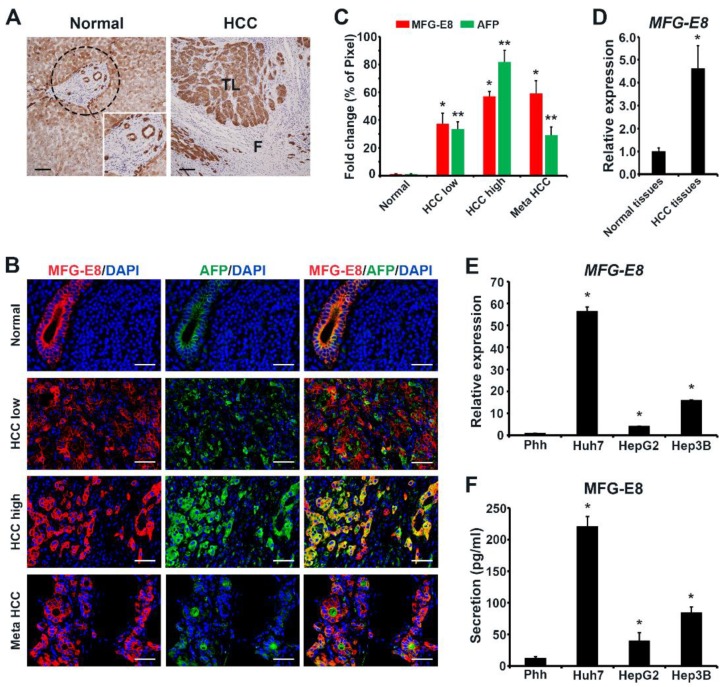
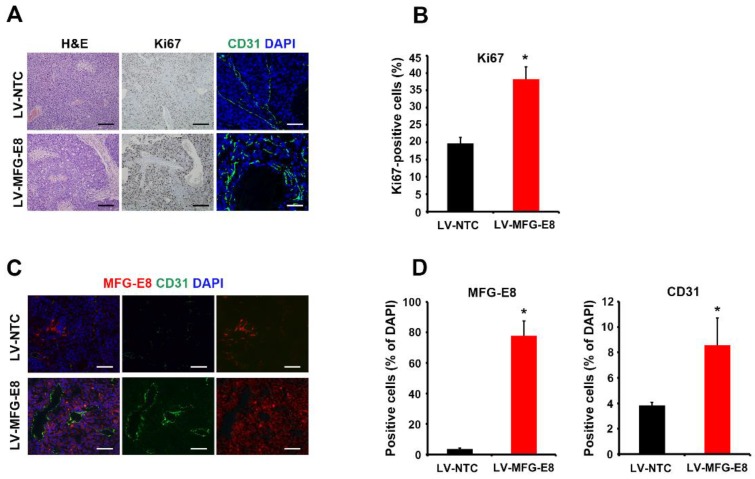
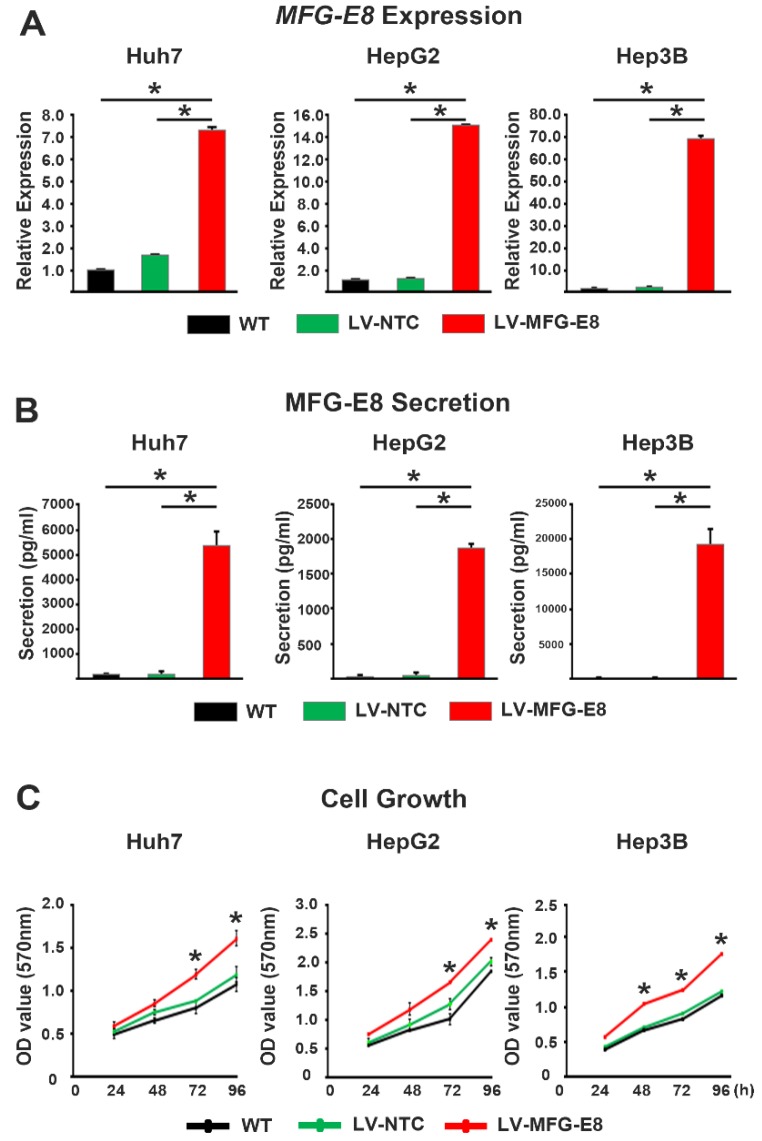
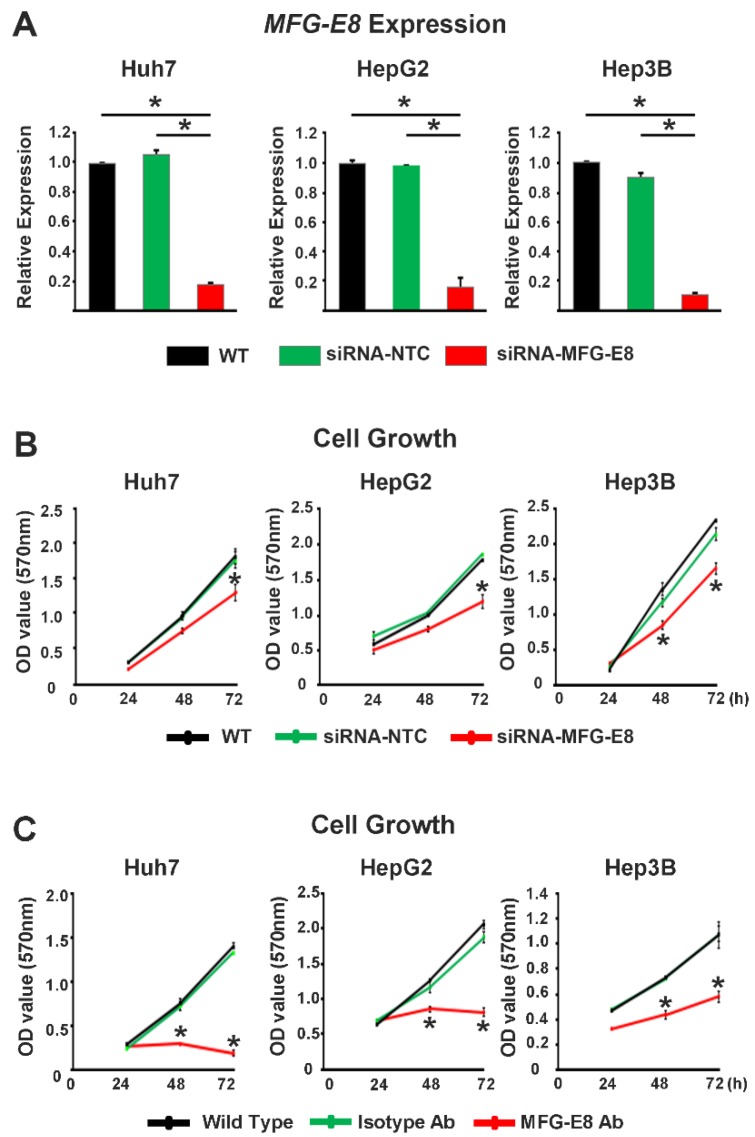
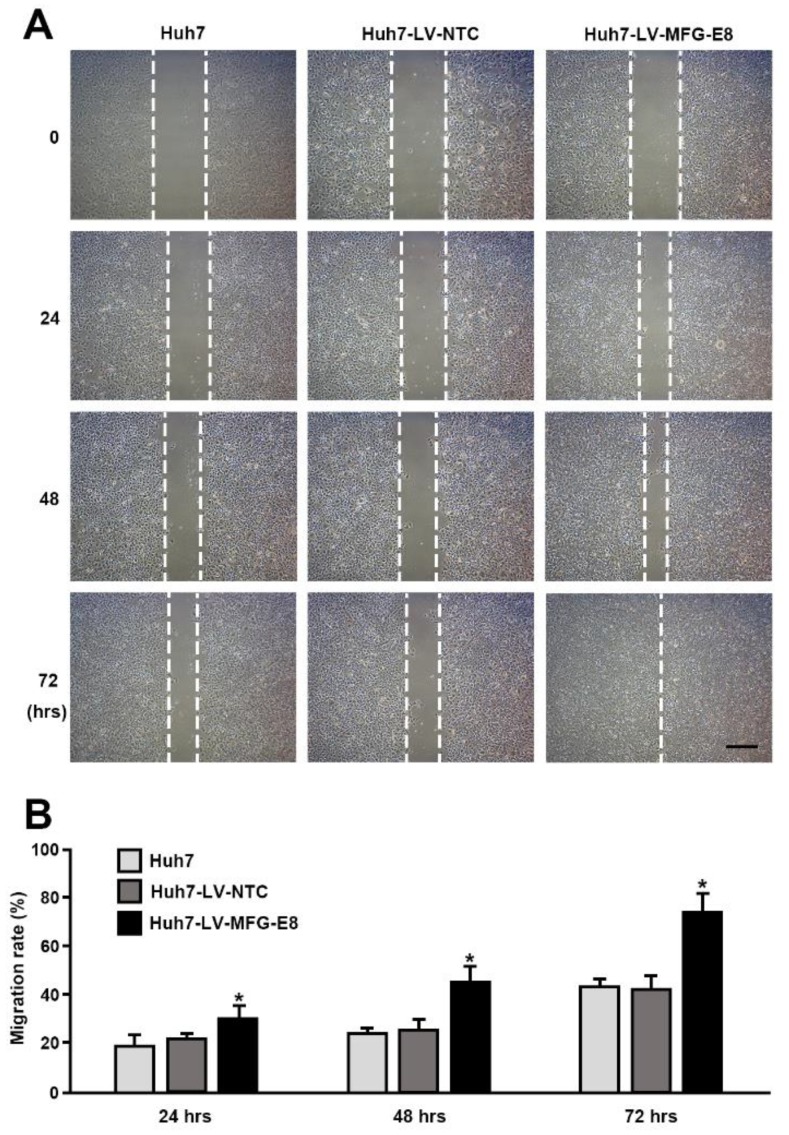
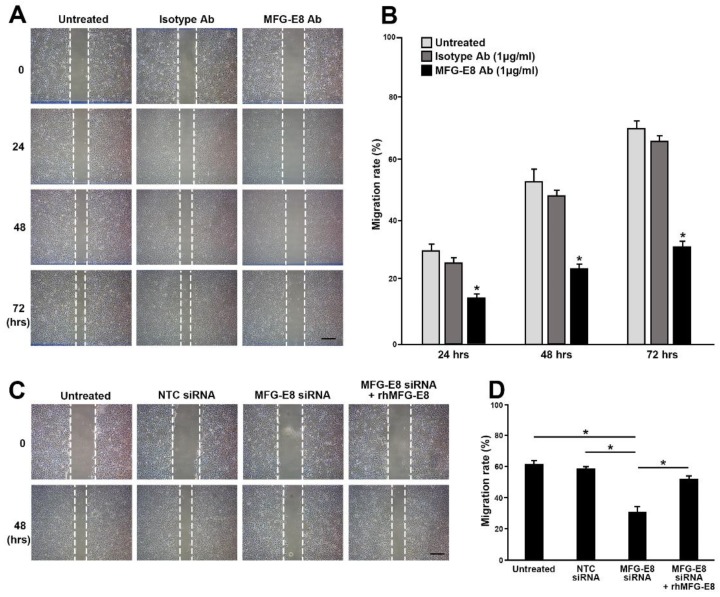
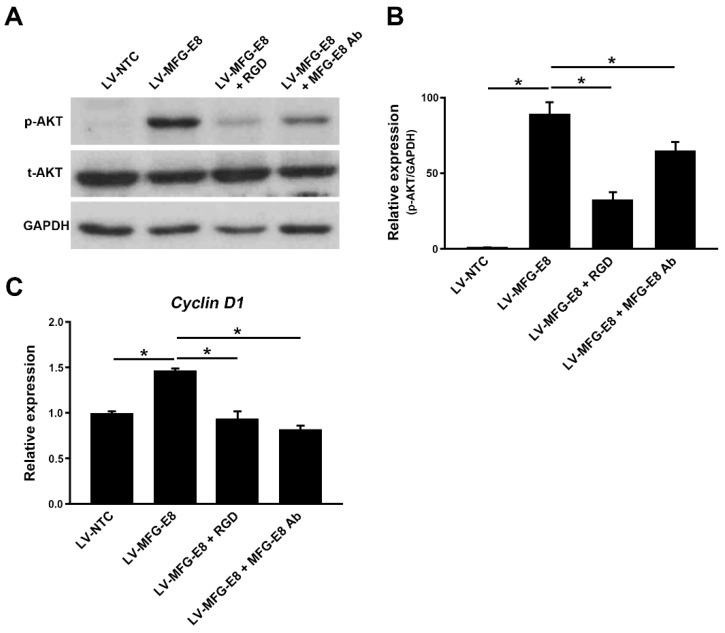
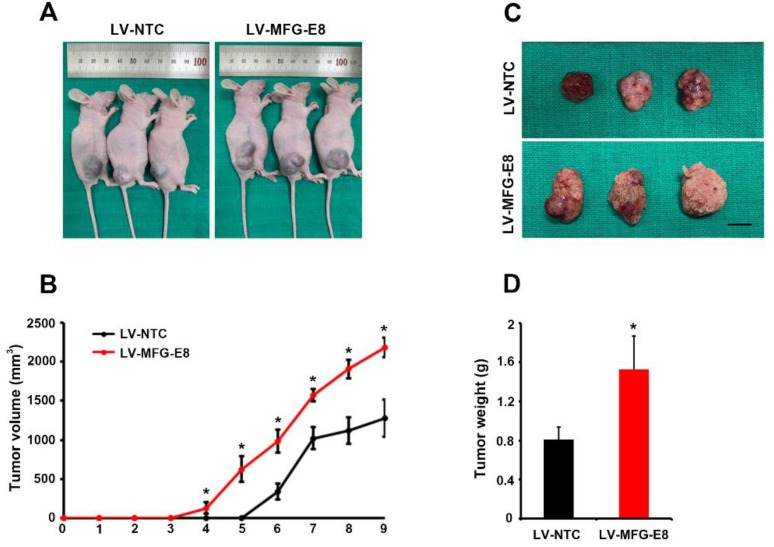
Milk fat globule-EGF factor 8 (MFG-E8) is an anti-inflammatory glycoprotein that mediates a wide spectrum of pathophysiological processes. MFG-E8 has been studied as a key regulator of cancer cell invasion, migration, and proliferation in different tissues and organs. However, potential roles of MFG-E8 in the growth and progression of liver cancer have not been investigated to date. Here, we analyzed 33 human hepatocellular carcinoma (HCC) samples and found that levels of MFG-E8 expression were significantly higher in HCC cells than in normal liver tissues. In addition, our in vitro gain-of-function study in three different HCC cell lines revealed that overexpression of MFG-E8 promoted the proliferation and migration of HCC cells, as determined by RT-qPCR, MTT assays, and wound healing analyses. Conversely, an MFG-E8 loss-of function study showed that proliferation capacity was significantly reduced by MFG-E8 knockdown in HCC cells. Additionally, MFG-E8 activity-neutralizing antibodies profoundly inhibited both migration and proliferation of HCC cells, attenuating their tumorigenic properties. These reductions in migration and proliferation were rescued by treatment of HCC cells with recombinant MFG-E8 protein. Furthermore, an in vivo HCC xenograft study showed that the number of proliferating HCC cells and tumor volume/weight were all significantly increased by MFG-E8 overexpression, compared to control mice. These results clearly show that MFG-E8 plays an important role in HCC progression and may provide a basis for future mechanistic studies and new strategies for the treatment of liver cancer.
乳脂肪球表皮生长因子8(MFG-E8)是一种抗炎糖蛋白,介导多种病理生理过程。MFG-E8已被作为不同组织和器官中癌细胞侵袭、迁移和增殖的关键调节因子进行研究。然而,MFG-E8在肝癌生长和进展中的潜在作用迄今尚未得到研究。在此,我们分析了33例人类肝细胞癌(HCC)样本,发现HCC细胞中MFG-E8的表达水平显著高于正常肝组织。此外,我们在三种不同的HCC细胞系中进行的体外功能获得性研究表明,通过RT-qPCR、MTT分析和伤口愈合分析确定,MFG-E8的过表达促进了HCC细胞的增殖和迁移。相反,一项MFG-E8功能丧失性研究表明,HCC细胞中MFG-E8的敲低显著降低了其增殖能力。此外,MFG-E8活性中和抗体显著抑制了HCC细胞的迁移和增殖,减弱了它们的致瘤特性。用重组MFG-E8蛋白处理HCC细胞可挽救这些迁移和增殖的减少。此外,一项体内HCC异种移植研究表明,与对照小鼠相比,MFG-E8的过表达显著增加了增殖的HCC细胞数量以及肿瘤体积/重量。这些结果清楚地表明,MFG-E8在HCC进展中起重要作用,并可能为未来的机制研究和肝癌治疗新策略提供基础。