Bao Minwei, Huang Yuxia, Lang Zhongping, Zhao Hui, Saito Yuichi, Nagano Tatsuya, Kawagoe Izumi, Divisi Duilio, Hu Xiaoyi, Jiang Gening
Department of Thoracic Surgery, Shanghai Pulmonary Hospital, Tongji University School of Medicine, Shanghai, China.
Department of Cardio-Pulmonary Circulation, Shanghai Pulmonary Hospital, School of Medicine, Tongji University, Shanghai, China.
Transl Lung Cancer Res. 2022 Jul;11(7):1434-1452. doi: 10.21037/tlcr-22-467.
Currently, the prognosis of patients with non-small cell lung cancer (NSCLC) remains unsatisfactory. This current study evaluated the relationship between histology of NSCLC and protein expression of exosomes in the plasma from NSCLC patients, and furthermore investigate the impact of the exosome profile on the tumor, node, metastasis (TNM) classification.
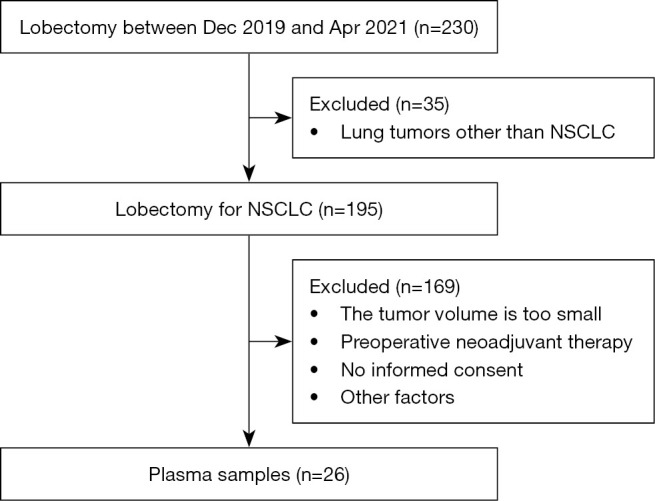
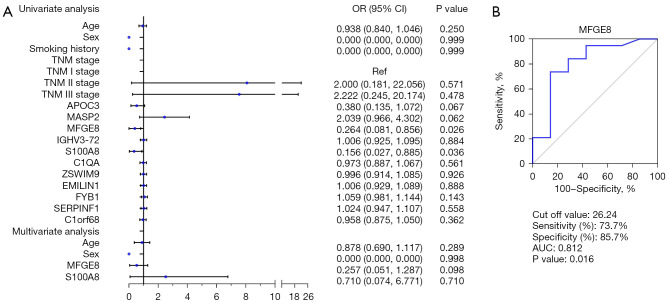
Plasma samples were collected from 26 NSCLC patients before surgery. The exosomes were extracted from the plasma and liquid chromatography-mass spectrometry (LC/MS) was used to evaluate the expression of the proteins in the exosomes. Gene Ontology (GO) and Kyoto Encyclopedia of Genes and Genomes (KEGG) enrichment analyses were performed using the Cytoscape 3.8.2 software. Multivariate logistic regression and receiver operating characteristic (ROC) curves were used to identify proteins which could effectively distinguish between lung adenocarcinoma and lung squamous cell carcinoma. The relationship between protein expression and the TNM stage was calculated using Spearman rank correlation.
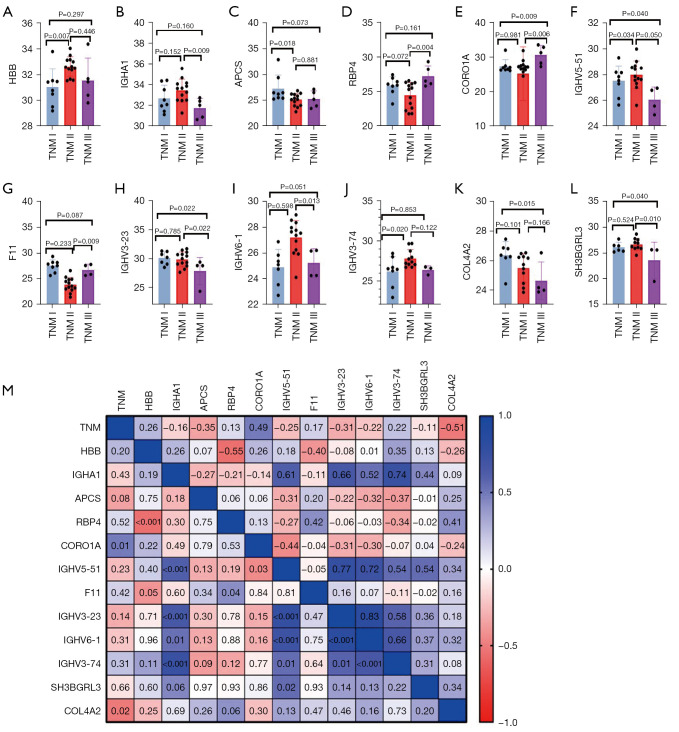
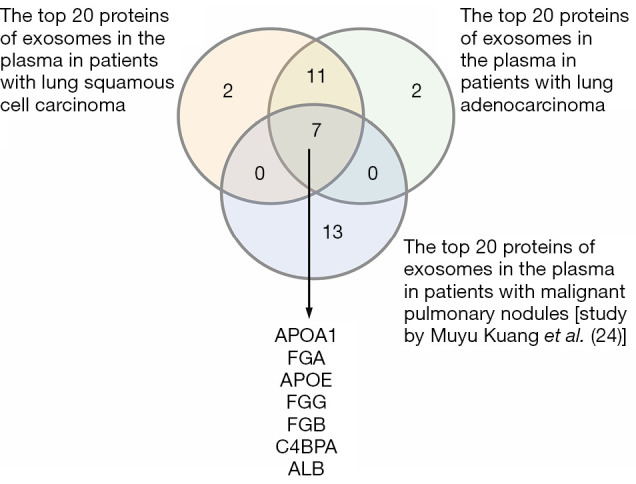
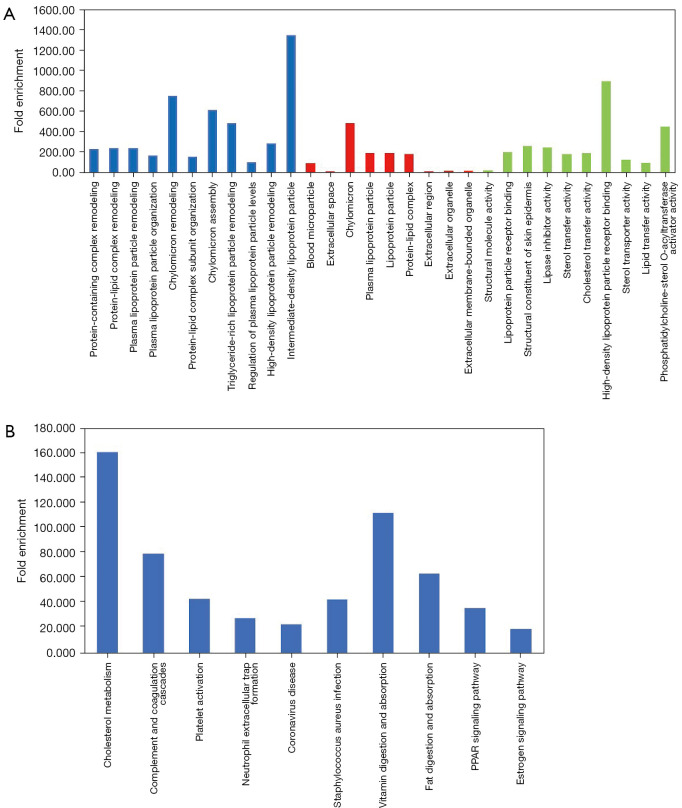
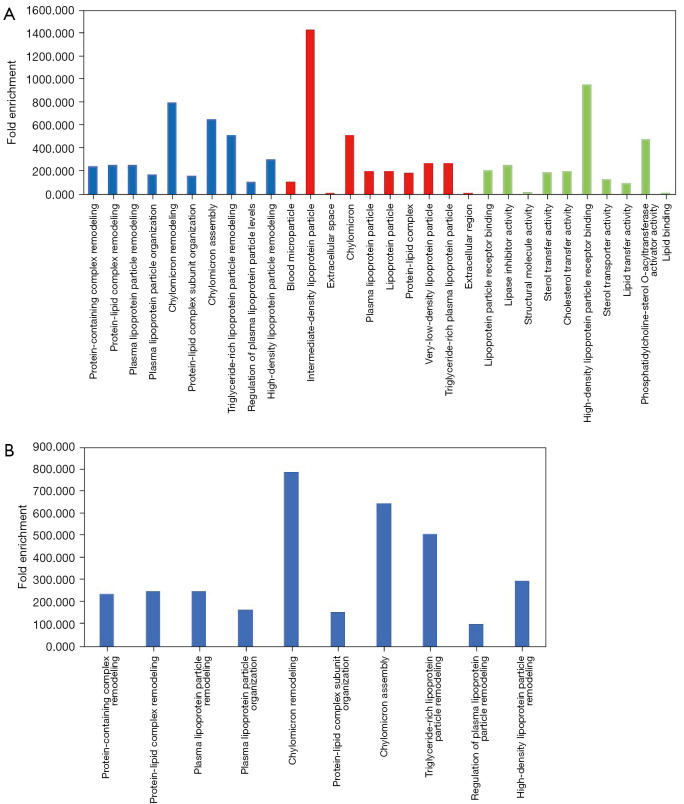
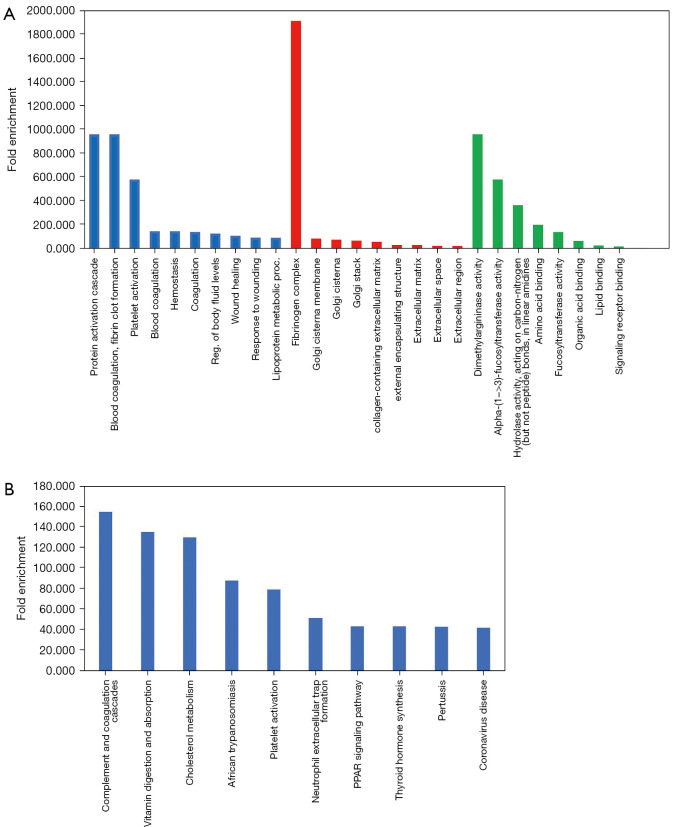
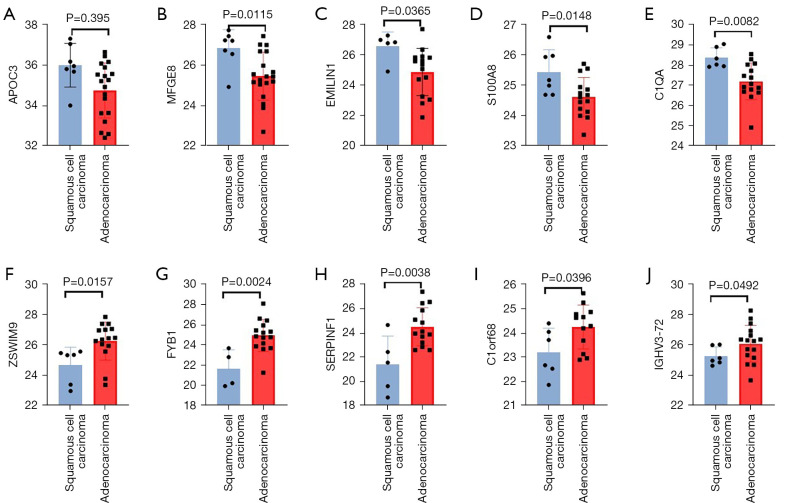
The expression levels of ZSWIM9, FYB1, SERPINF1, C1orf68, MASP2, and IGHV3-72 were higher in patients with lung adenocarcinoma compared to patients with lung squamous cell carcinoma. MFGE8 was associated with the occurrence of squamous cell carcinoma. CORO1A was positively correlated with the TNM stage of the patients, and COL4A2 was negatively correlated with TNM stage. GO and KEGG analyses revealed that cholesterol metabolism was important in NSCLC development.
Lung adenocarcinoma may be distinguished from squamous cell carcinoma by the molecular profile of exosomes in the plasma samples. And, proteomics analysis suggested that cholesterol metabolism may play an important role of cancer progress in NSCLC.
目前,非小细胞肺癌(NSCLC)患者的预后仍不尽人意。本研究评估了NSCLC的组织学与NSCLC患者血浆中外泌体蛋白表达之间的关系,并进一步研究了外泌体谱对肿瘤、淋巴结、转移(TNM)分期的影响。
收集26例NSCLC患者术前的血浆样本。从血浆中提取外泌体,采用液相色谱-质谱联用(LC/MS)技术评估外泌体中蛋白质的表达。使用Cytoscape 3.8.2软件进行基因本体论(GO)和京都基因与基因组百科全书(KEGG)富集分析。采用多因素逻辑回归和受试者工作特征(ROC)曲线来识别能够有效区分肺腺癌和肺鳞癌的蛋白质。使用Spearman等级相关性计算蛋白质表达与TNM分期之间的关系。
与肺鳞癌患者相比,肺腺癌患者中ZSWIM9、FYB1、SERPINF1、C1orf68、MASP2和IGHV3-72的表达水平更高。MFGE8与鳞癌的发生有关。CORO1A与患者的TNM分期呈正相关,而COL4A2与TNM分期呈负相关。GO和KEGG分析表明,胆固醇代谢在NSCLC的发展中起重要作用。
血浆样本中外泌体的分子谱可区分肺腺癌和肺鳞癌。而且,蛋白质组学分析表明,胆固醇代谢可能在NSCLC的癌症进展中起重要作用。