Department of Biological Science, Sookmyung Women's University, Seoul 14310, Korea.
These authors contributed equally to this work.
Mol Cells. 2020 Mar 31;43(3):236-250. doi: 10.14348/molcells.2020.2193.
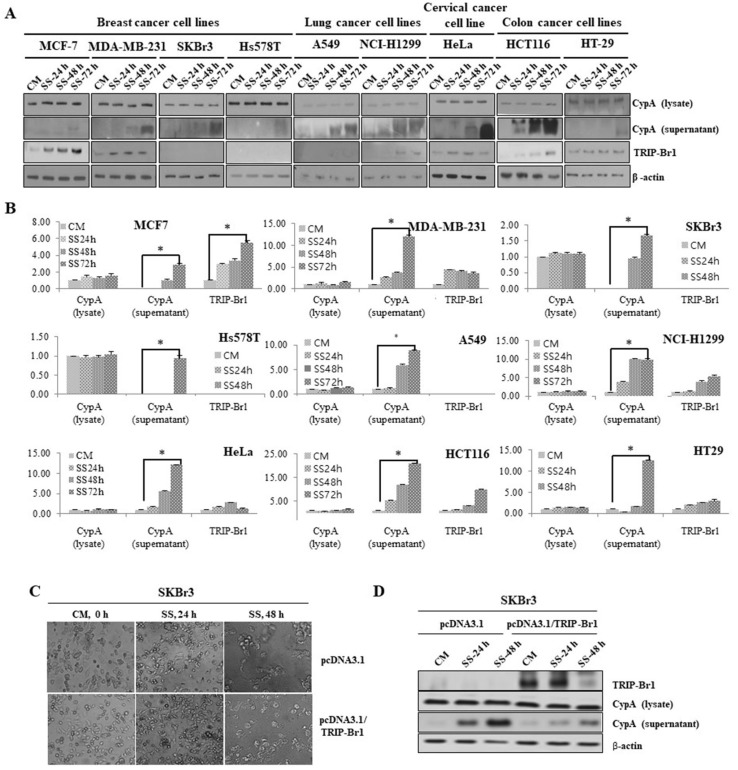
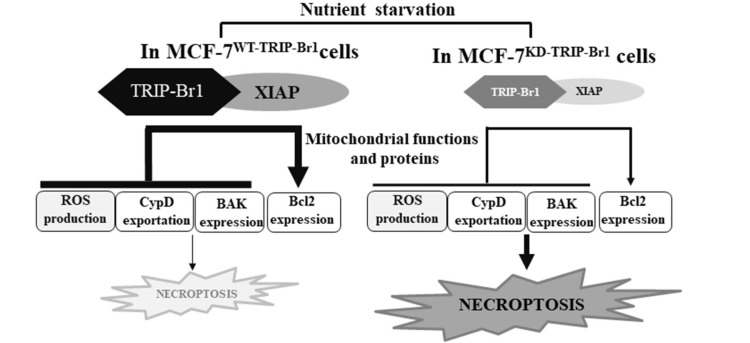
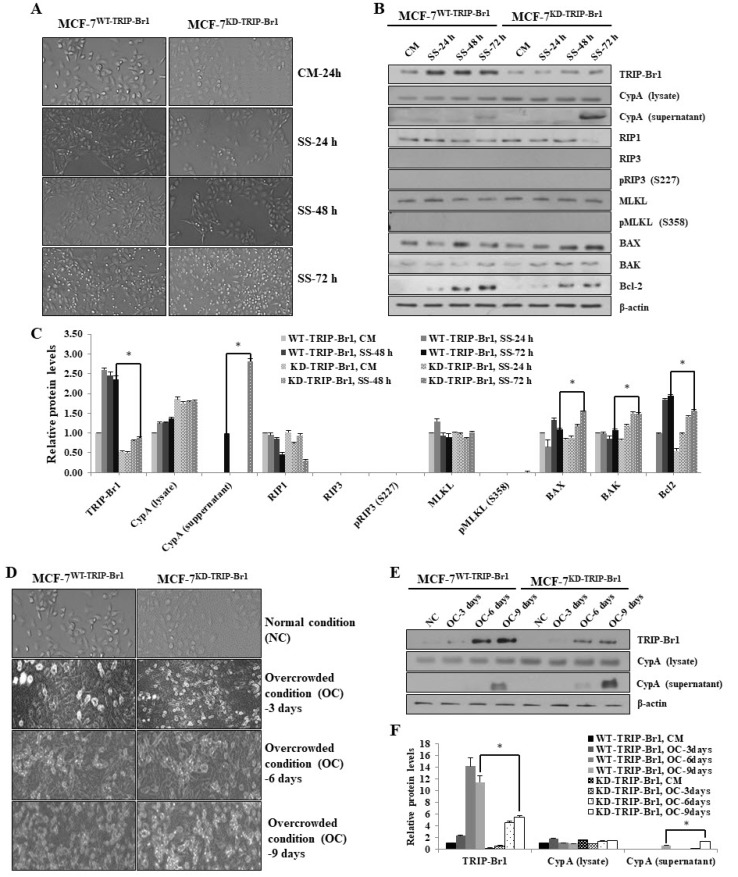
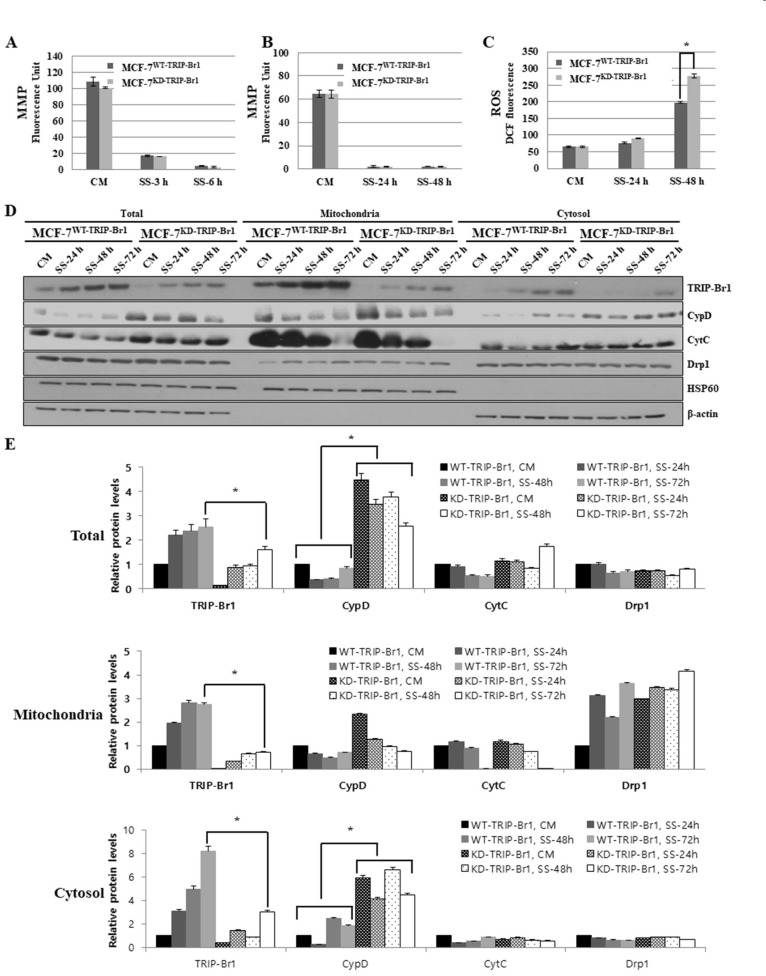
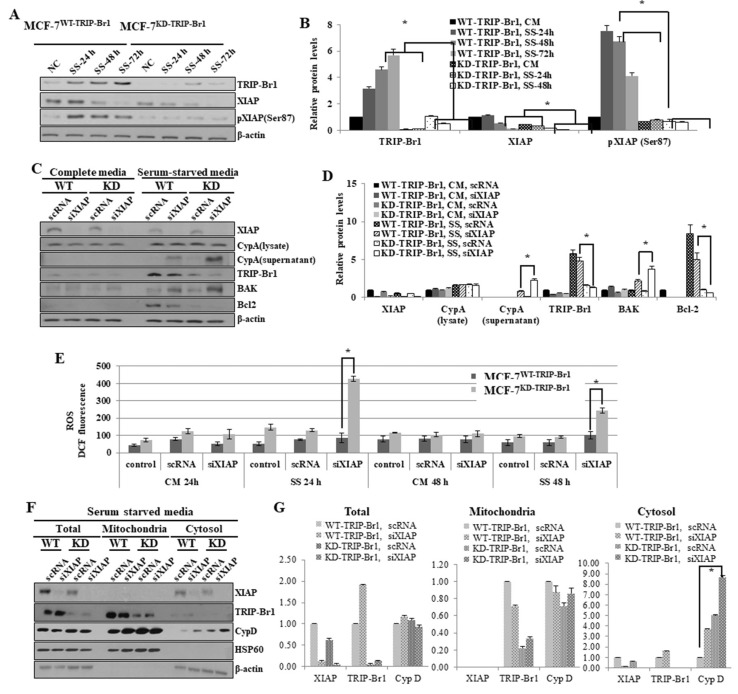
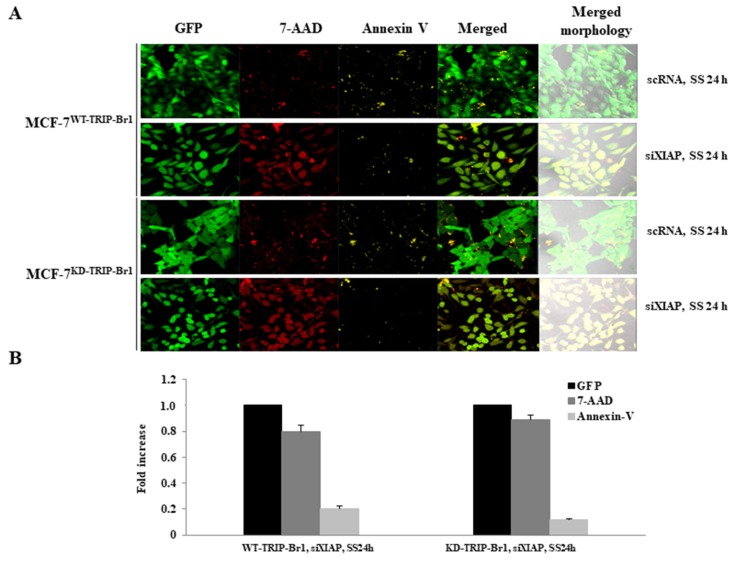
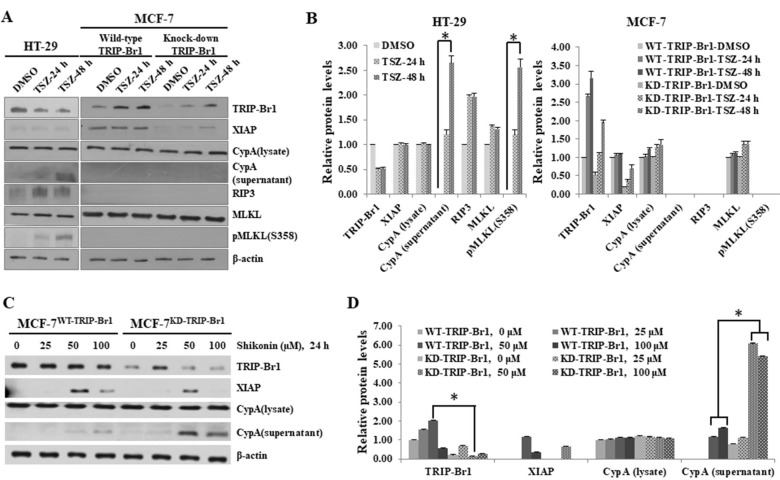
Currently, many available anti-cancer therapies are targeting apoptosis. However, many cancer cells have acquired resistance to apoptosis. To overcome this problem, simultaneous induction of other types of programmed cell death in addition to apoptosis of cancer cells might be an attractive strategy. For this purpose, we initially investigated the inhibitory role of TRIP-Br1/XIAP in necroptosis, a regulated form of necrosis, under nutrient/serum starvation. Our data showed that necroptosis was significantly induced in all tested 9 different types of cancer cell lines in response to prolonged serum starvation. Among them, necroptosis was induced at a relatively lower level in MCF-7 breast cancer line that was highly resistant to apoptosis than that in other cancer cell lines. Interestingly, TRIP-Br1 oncogenic protein level was found to be very high in this cell line. Upregulated TRIP-Br1 suppressed necroptosis by repressing reactive oxygen species generation. Such suppression of necroptosis was greatly enhanced by XIAP, a potent inhibitor of apoptosis. Our data also showed that TRIP-Br1 increased XIAP phosphorylation at serine87, an active form of XIAP. Our mitochondrial fractionation data revealed that TRIPBr1 protein level was greatly increased in the mitochondria upon serum starvation. It suppressed the export of CypD, a vital regulator in mitochondria-mediated necroptosis, from mitochondria to cytosol. TRIP-Br1 also suppressed shikoninmediated necroptosis, but not TNF-α-mediated necroptosis, implying possible presence of another signaling pathway in necroptosis. Taken together, our results suggest that TRIPBr1/XIAP can function as onco-proteins by suppressing necroptosis of cancer cells under nutrient/serum starvation.
目前,许多可用的抗癌疗法都针对细胞凋亡。然而,许多癌细胞已经对凋亡产生了耐药性。为了解决这个问题,除了诱导癌细胞凋亡之外,同时诱导其他类型的程序性细胞死亡可能是一种有吸引力的策略。为此,我们最初研究了在营养/血清饥饿条件下,TRIP-Br1/XIAP 在细胞程序性坏死(一种受调控的细胞坏死形式)中的抑制作用。我们的数据表明,在所有测试的 9 种不同类型的癌细胞系中,长时间的血清饥饿都会显著诱导细胞程序性坏死。其中,在 MCF-7 乳腺癌细胞系中,细胞程序性坏死的诱导水平相对较低,而该细胞系对凋亡的抵抗力比其他癌细胞系要强。有趣的是,在该细胞系中发现 TRIP-Br1 致癌蛋白水平非常高。上调的 TRIP-Br1 通过抑制活性氧的产生来抑制细胞程序性坏死。凋亡的强效抑制剂 XIAP 大大增强了这种对细胞程序性坏死的抑制作用。我们的数据还表明,TRIP-Br1 增加了 XIAP 丝氨酸 87 位的磷酸化,这是 XIAP 的一种活性形式。我们的线粒体分离数据显示,在血清饥饿时,TRIP-Br1 蛋白水平在线粒体中大大增加。它抑制了 CypD 的输出,CypD 是线粒体介导的细胞程序性坏死的重要调节因子,从线粒体到细胞质。TRIP-Br1 还抑制了紫草素诱导的细胞程序性坏死,但不抑制 TNF-α 诱导的细胞程序性坏死,这意味着细胞程序性坏死中可能存在另一种信号通路。总之,我们的研究结果表明,TRIP-Br1/XIAP 可以作为癌蛋白,在营养/血清饥饿条件下抑制癌细胞的程序性坏死。