Department of Pathology, University of Iowa, Iowa City, IA 52242.
Department of Neurology and Neurotherapeutics, UT Southwestern Medical Center, Dallas, TX 75390.
Proc Natl Acad Sci U S A. 2020 Mar 3;117(9):4983-4993. doi: 10.1073/pnas.1913292117. Epub 2020 Feb 12.
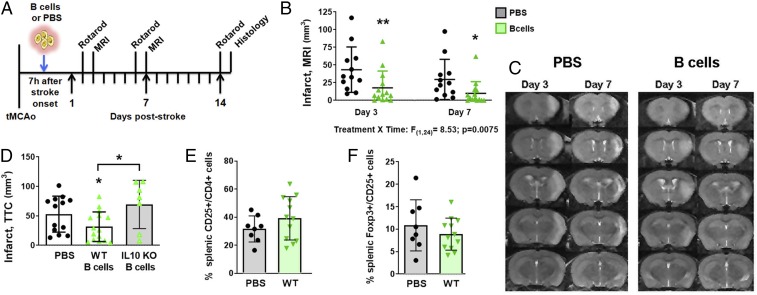
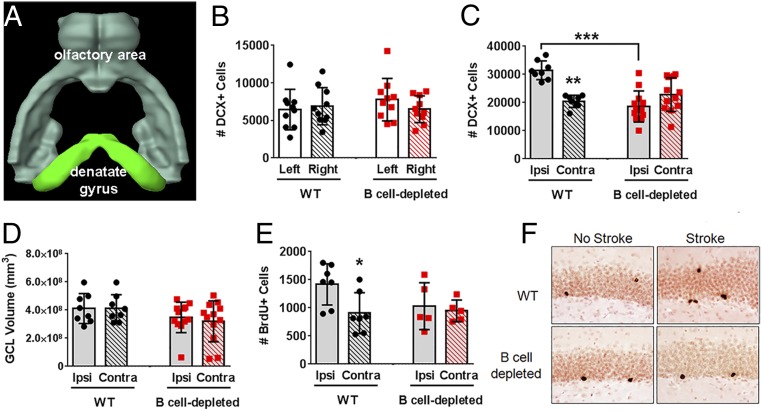
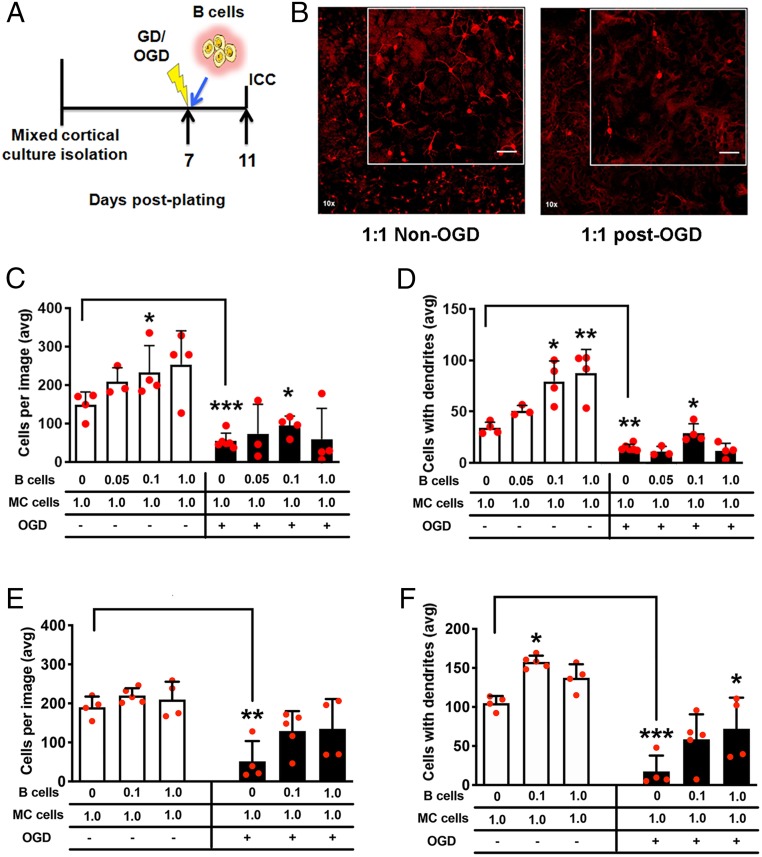
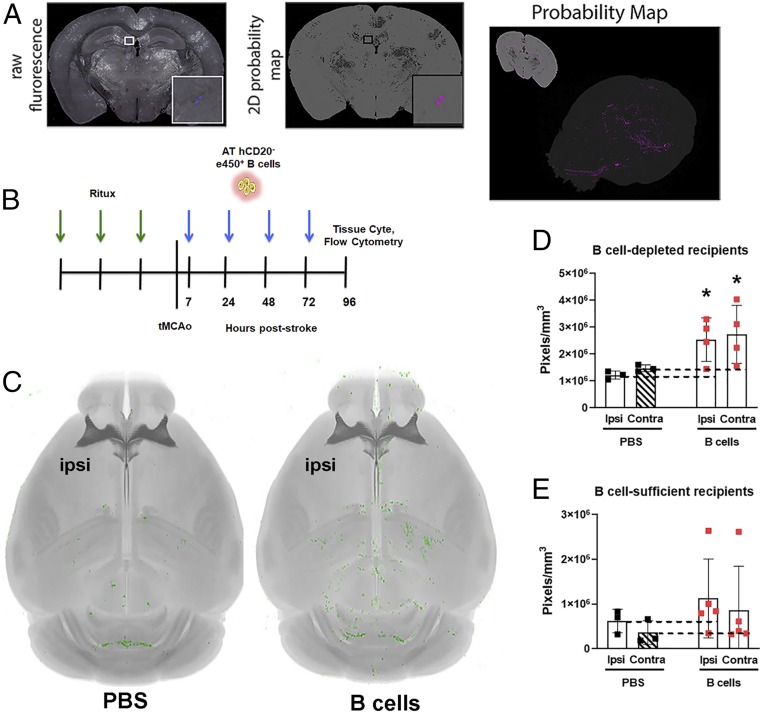
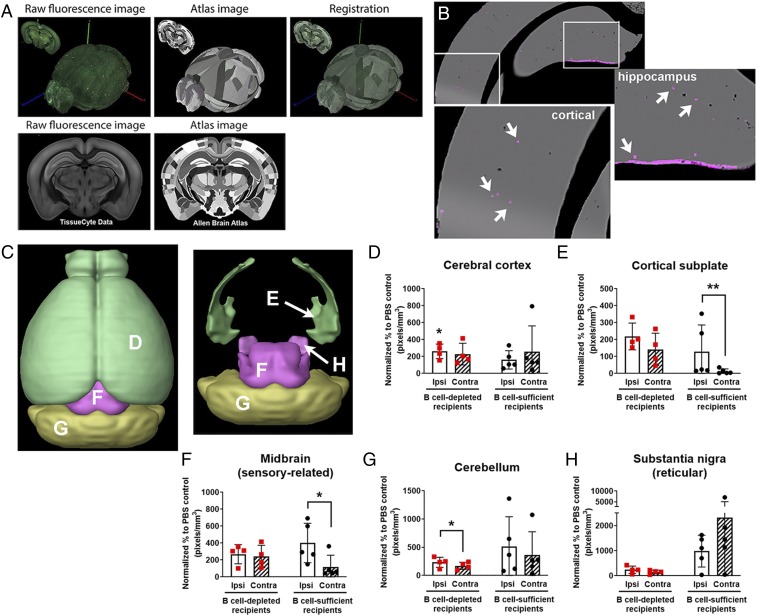
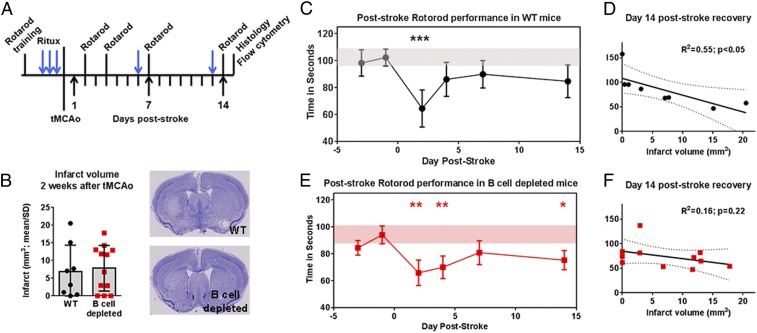
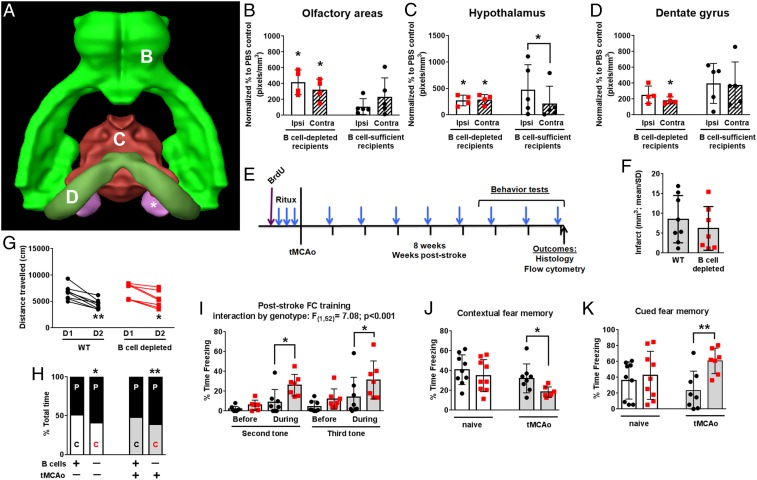
Lymphocytes infiltrate the stroke core and penumbra and often exacerbate cellular injury. B cells, however, are lymphocytes that do not contribute to acute pathology but can support recovery. B cell adoptive transfer to mice reduced infarct volumes 3 and 7 d after transient middle cerebral artery occlusion (tMCAo), independent of changing immune populations in recipient mice. Testing a direct neurotrophic effect, B cells cocultured with mixed cortical cells protected neurons and maintained dendritic arborization after oxygen-glucose deprivation. Whole-brain volumetric serial two-photon tomography (STPT) and a custom-developed image analysis pipeline visualized and quantified poststroke B cell diapedesis throughout the brain, including remote areas supporting functional recovery. Stroke induced significant bilateral B cell diapedesis into remote brain regions regulating motor and cognitive functions and neurogenesis (e.g., dentate gyrus, hypothalamus, olfactory areas, cerebellum) in the whole-brain datasets. To confirm a mechanistic role for B cells in functional recovery, rituximab was given to human CD20 (hCD20) transgenic mice to continuously deplete hCD20-expressing B cells following tMCAo. These mice experienced delayed motor recovery, impaired spatial memory, and increased anxiety through 8 wk poststroke compared to wild type (WT) littermates also receiving rituximab. B cell depletion reduced stroke-induced hippocampal neurogenesis and cell survival. Thus, B cell diapedesis occurred in areas remote to the infarct that mediated motor and cognitive recovery. Understanding the role of B cells in neuronal health and disease-based plasticity is critical for developing effective immune-based therapies for protection against diseases that involve recruitment of peripheral immune cells into the injured brain.
淋巴细胞浸润中风核心和半影区,并常常加重细胞损伤。然而,B 细胞是不会导致急性病理的淋巴细胞,但可以支持恢复。将 B 细胞过继转移到短暂性大脑中动脉闭塞(tMCAo)后的小鼠中,可减少梗死体积,与接受小鼠中免疫群体的变化无关。通过测试直接的神经营养作用,B 细胞与混合皮质细胞共培养可在氧葡萄糖剥夺后保护神经元并维持树突分支。全脑容积性连续双光子断层扫描(STPT)和定制的图像分析管道可视化并量化了中风后 B 细胞穿越血脑屏障的情况,包括支持功能恢复的远程区域。中风诱导了显著的双侧 B 细胞穿越血脑屏障,进入调节运动和认知功能以及神经发生的远程脑区(例如,海马齿状回、下丘脑、嗅觉区、小脑),在全脑数据集。为了确认 B 细胞在功能恢复中的机制作用,在 tMCAo 后,用利妥昔单抗(rituximab)连续耗尽人 CD20(hCD20)转基因小鼠中的 hCD20 表达 B 细胞。与接受 rituximab 的野生型(WT)同窝小鼠相比,这些小鼠在中风后 8 周经历了运动恢复延迟、空间记忆受损和焦虑增加。B 细胞耗竭减少了中风引起的海马神经发生和细胞存活。因此,B 细胞穿越血脑屏障发生在远离梗死的区域,这些区域介导了运动和认知恢复。了解 B 细胞在神经元健康和基于疾病的可塑性中的作用对于开发有效的免疫治疗方法以防止涉及外周免疫细胞招募到受损大脑的疾病至关重要。