Division of Genetics, Department of Pediatrics, Institute for Genomic Medicine, Program in Immunology, University of California San Diego, 9500 Gilman Drive MC 0762, La Jolla, CA, 92093, USA.
Department of Biology, Bioinformatics Program, University of California San Diego, 9500 Gilman Drive MC 0762, La Jolla, CA, 92093, USA.
Mol Psychiatry. 2021 Apr;26(4):1194-1207. doi: 10.1038/s41380-020-0676-x. Epub 2020 Feb 12.
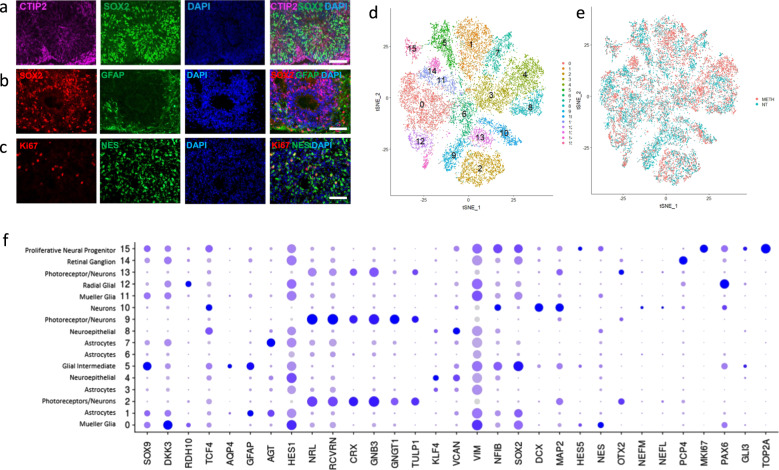
Methamphetamine (METH) is a potent stimulant that induces a euphoric state but also causes cognitive impairment, neurotoxicity and neurodevelopmental deficits. Yet, the molecular mechanisms by which METH causes neurodevelopmental defects have remained elusive. Here we utilized human cerebral organoids and single-cell RNA sequencing (scRNA-seq) to study the effects of prenatal METH exposure on fetal brain development. We analyzed 20,758 cells from eight untreated and six METH-treated cerebral organoids and found that the organoids developed from embryonic stem cells contained a diverse array of glial and neuronal cell types. We further identified transcriptionally distinct populations of astrocytes and oligodendrocytes within cerebral organoids. Treatment of organoids with METH-induced marked changes in transcription in multiple cell types, including astrocytes and neural progenitor cells. METH also elicited novel astrocyte-specific gene expression networks regulating responses to cytokines, and inflammasome. Moreover, upregulation of immediate early genes, complement factors, apoptosis, and immune response genes suggests a neuroinflammatory program induced by METH regulating neural stem cell proliferation, differentiation, and cell death. Finally, we observed marked METH-induced changes in neuroinflammatory and cytokine gene expression at the RNA and protein levels. Our data suggest that human cerebral organoids represent a model system to study drug-induced neuroinflammation at single-cell resolution.
甲基苯丙胺(METH)是一种强效兴奋剂,能引起欣快感,但也会导致认知障碍、神经毒性和神经发育缺陷。然而,METH 导致神经发育缺陷的分子机制仍然难以捉摸。在这里,我们利用人类大脑类器官和单细胞 RNA 测序(scRNA-seq)来研究产前 METH 暴露对胎儿大脑发育的影响。我们分析了 8 个未处理和 6 个 METH 处理的大脑类器官中的 20758 个细胞,发现这些由胚胎干细胞发育而来的类器官含有多种神经胶质和神经元细胞类型。我们进一步在大脑类器官中鉴定了转录上不同的星形胶质细胞和少突胶质细胞群体。METH 处理类器官后,多种细胞类型的转录发生明显变化,包括星形胶质细胞和神经祖细胞。METH 还引发了新的星形胶质细胞特异性基因表达网络,调节对细胞因子和炎症小体的反应。此外,即刻早期基因、补体因子、细胞凋亡和免疫反应基因的上调表明,METH 诱导的神经炎症程序调节神经干细胞的增殖、分化和细胞死亡。最后,我们观察到 RNA 和蛋白质水平上神经炎症和细胞因子基因表达的显著 METH 诱导变化。我们的数据表明,人类大脑类器官代表了一种研究药物诱导的神经炎症的单细胞分辨率模型系统。