Li Yuan-Yuan, Guo Shun-Xing, Lee Yung-I
College of Plant Protection/Beijing Key Laboratory of Seed Disease Testing and Control, China Agricultural University, Beijing, 100193, People's Republic of China.
Institute of Medicinal Plant Development, Chinese Academy of Medical Sciences & Peking Union Medical College, Beijing, 100193, People's Republic of China.
Bot Stud. 2020 Feb 12;61(1):4. doi: 10.1186/s40529-019-0280-z.
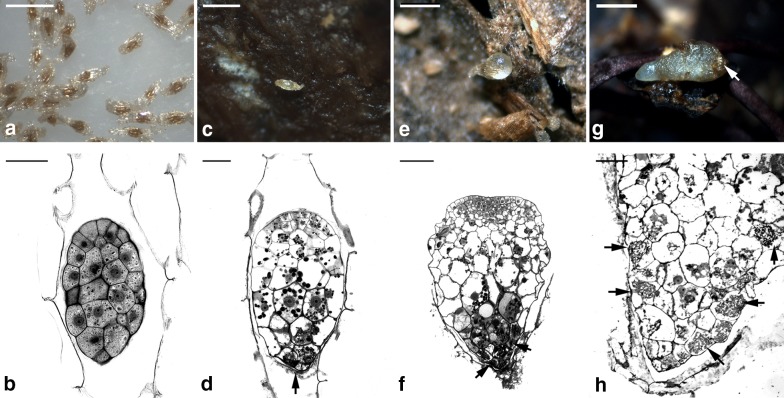
Gastrodia elata is a fully mycoheterotrophic orchid and has long been used in traditional Chinese medicine. The life cycle of G. elata requires an association with two different fungi-Mycena for seed germination and Armillaria for tuber growth. The association with Armillaria is representative of the phytophagous type of orchid mycorrhiza: the intracellular hyphae are lysed without forming condensed pelotons. However, whether the association with Mycena during seed germination belongs to the same type of orchid mycorrhiza is unknown.
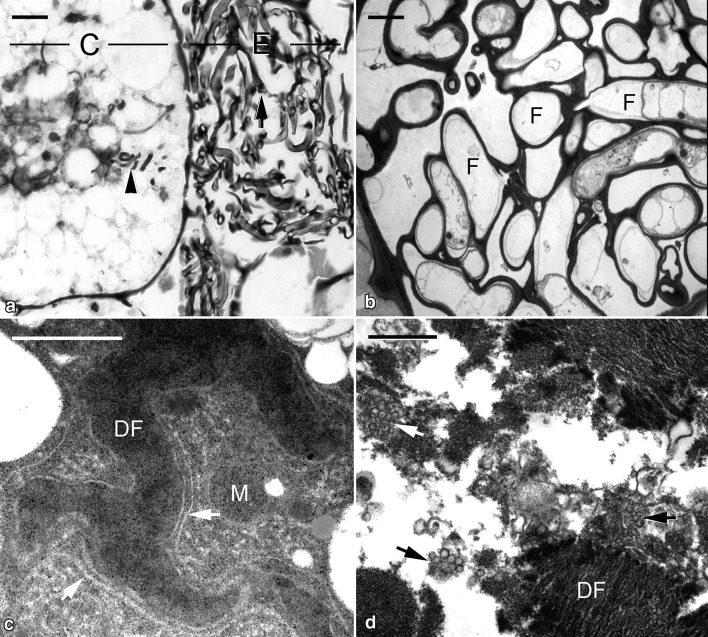
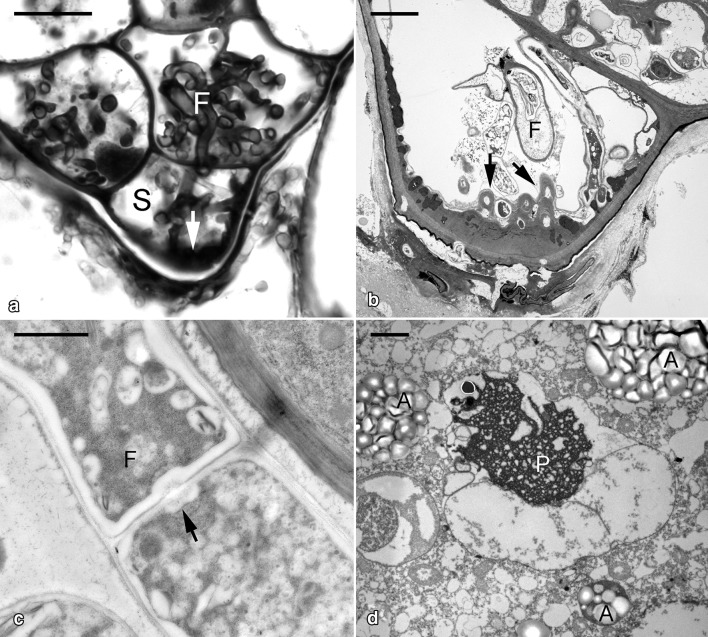
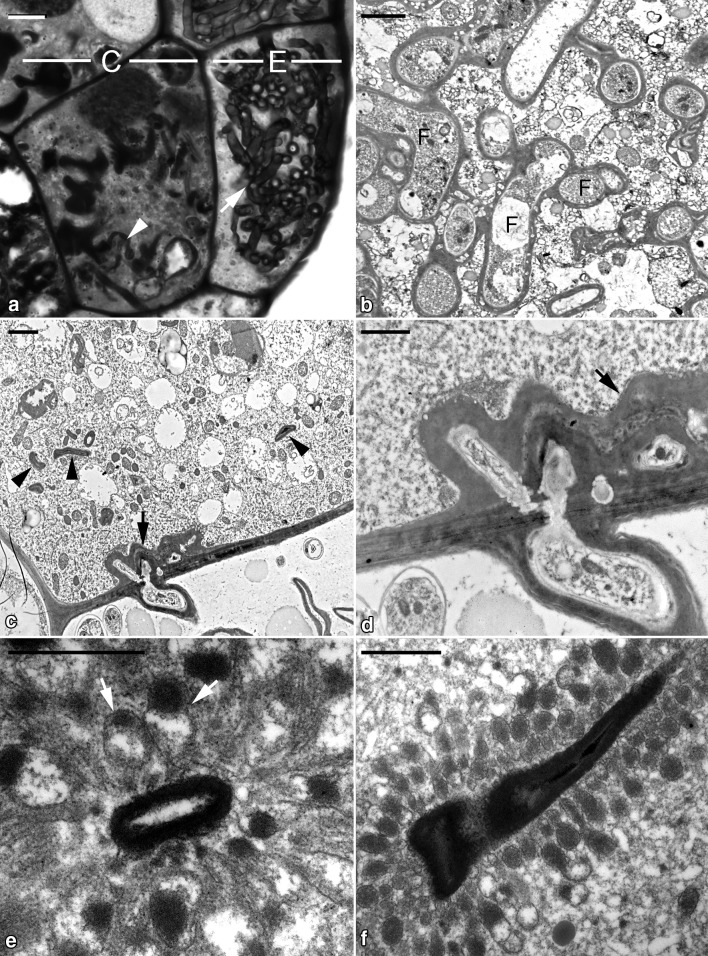
Histological and ultrastructural studies revealed several notable features in different developmental stages. First, a thickened cell wall with papillae-like structures appeared during fungal penetration in the suspensor end cell, epidermal cells and cortical cells of germinating embryos. In addition, the formation of two distinctive cell types in the colonized region of a protocorm (i.e., the passage canal cell filled with actively growing fungal hyphae) can be observed in the epidermal cell, and the distinctive digestion cell with a dense cytoplasm appears in the cortex. Finally, within the digestion cell, numerous electron-dense tubules form a radial system and attach to degrading fungal hyphae. The fungal hyphae appear to be digested through endocytosis.
The present study provides important structural evidence for the phytophagous type of orchid mycorrhiza in the symbiotic germination of G. elata with Mycena. This case demonstrates a particular nutrient transfer network between G. elata and its litter-decaying fungal partner.
天麻是一种完全菌异养型兰花,长期以来一直用于传统中药。天麻的生命周期需要与两种不同的真菌相关联——种子萌发阶段与小菇属真菌相关,块茎生长阶段与蜜环菌相关。与蜜环菌的关联代表了食菌型兰花菌根:细胞内菌丝被溶解,未形成密集的菌丝团。然而,种子萌发期间与小菇属真菌的关联是否属于同一类型的兰花菌根尚不清楚。
组织学和超微结构研究揭示了不同发育阶段的几个显著特征。首先,在萌发胚的胚柄末端细胞、表皮细胞和皮层细胞的真菌侵入过程中,出现了带有乳头状结构的加厚细胞壁。此外,在原球茎的定殖区域(即充满活跃生长真菌菌丝的通道细胞)的表皮细胞中可观察到两种独特细胞类型的形成,皮层中出现了细胞质致密的独特消化细胞。最后,在消化细胞内,大量电子致密小管形成一个放射状系统并附着于正在降解的真菌菌丝。真菌菌丝似乎通过内吞作用被消化。
本研究为天麻与小菇属真菌共生萌发过程中食菌型兰花菌根提供了重要的结构证据。该案例展示了天麻与其腐叶真菌伙伴之间特定的养分转移网络。