Rossi Ciro César, Pereira Monalessa Fábia, Giambiagi-deMarval Marcia
Universidade Federal do Rio de Janeiro, Instituto de Microbiologia Paulo de Góes, Laboratório de Microbiologia Molecular, Rio de Janeiro, RJ, Brazil.
Universidade Federal do Espírito Santo, Departamento de Patologia, Vitória, ES, Brazil.
Genet Mol Biol. 2020 Feb 10;43(1 suppl 2):e20190065. doi: 10.1590/1678-4685-GMB-2019-0065. eCollection 2020.
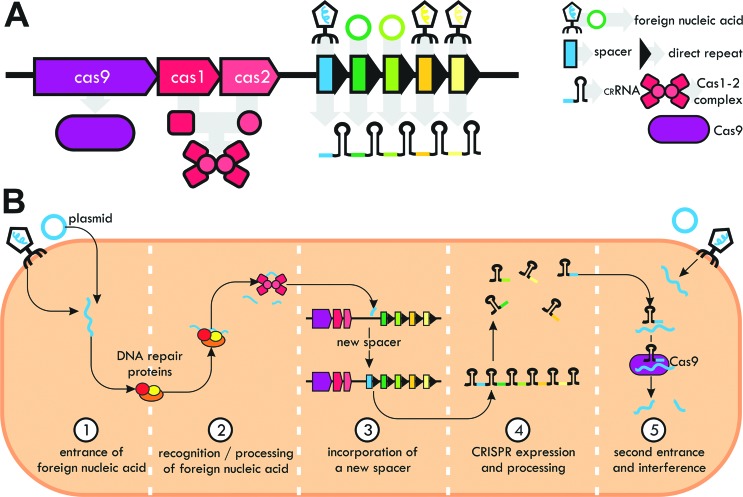
The increasing threat of antimicrobial resistance has shed light on the interconnection between humans, animals, the environment, and their roles in the exchange and spreading of resistance genes. In this review, we present evidences that show that Staphylococcus species, usually referred to as harmless or opportunistic pathogens, represent a threat to human and animal health for acting as reservoirs of antimicrobial resistance genes. The capacity of genetic exchange between isolates of different sources and species of the Staphylococcus genus is discussed with emphasis on mobile genetic elements, the contribution of biofilm formation, and evidences obtained either experimentally or through genome analyses. We also discuss the involvement of CRISPR-Cas systems in the limitation of horizontal gene transfer and its suitability as a molecular clock to describe the history of genetic exchange between staphylococci.
抗菌药物耐药性日益增加的威胁揭示了人类、动物、环境之间的相互联系以及它们在耐药基因交换和传播中的作用。在本综述中,我们展示了证据,表明葡萄球菌属物种通常被认为是无害或机会性病原体,但作为抗菌药物耐药基因的储存库,对人类和动物健康构成威胁。本文讨论了葡萄球菌属不同来源和物种分离株之间的基因交换能力,重点关注移动遗传元件、生物膜形成的作用以及通过实验或基因组分析获得的证据。我们还讨论了CRISPR-Cas系统在限制水平基因转移中的作用及其作为分子钟来描述葡萄球菌之间基因交换历史的适用性。