Department of Biology, Western Oregon University, Monmouth, OR, United States of America.
Department of Environmental Studies, California State University, Sacramento, CA, United States of America.
PLoS One. 2020 Feb 13;15(2):e0224638. doi: 10.1371/journal.pone.0224638. eCollection 2020.
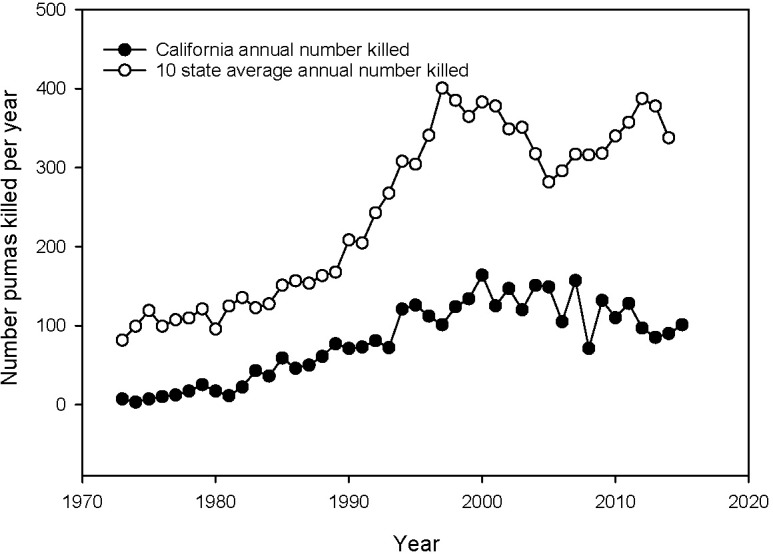
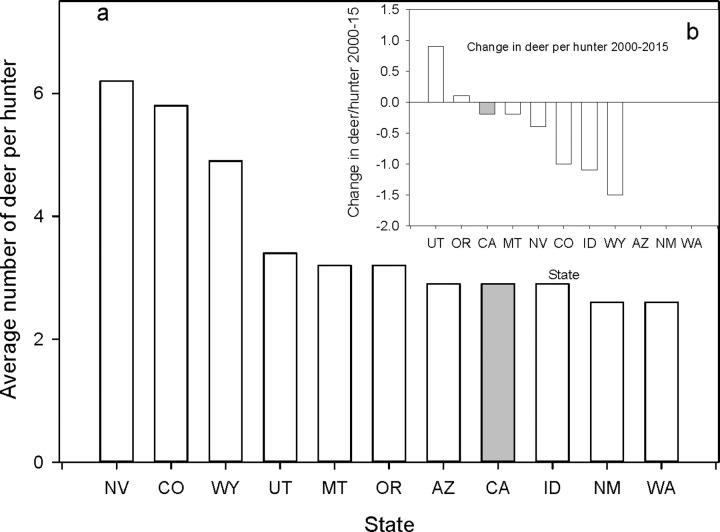
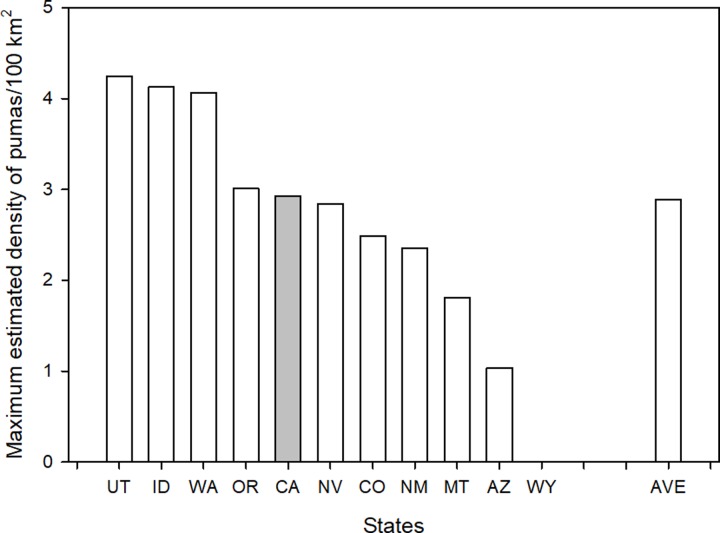
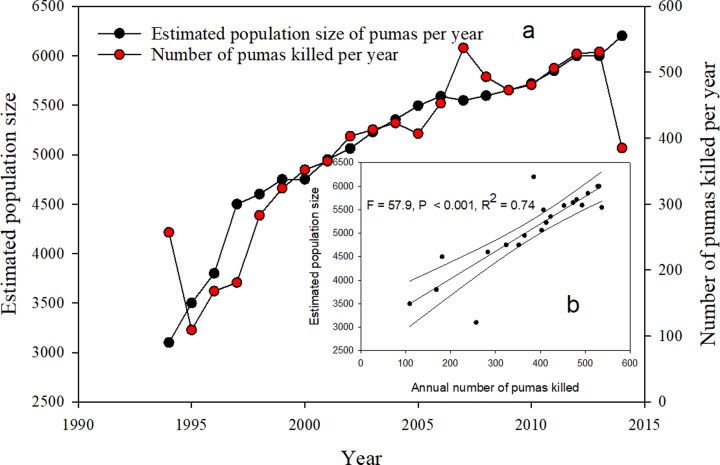
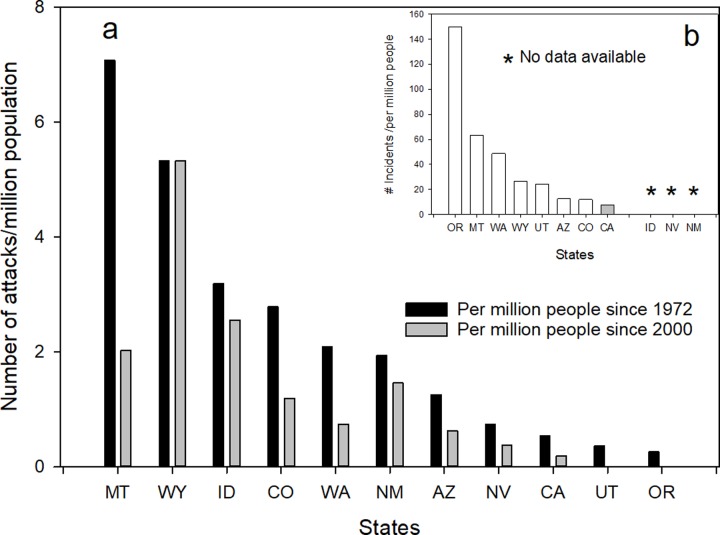
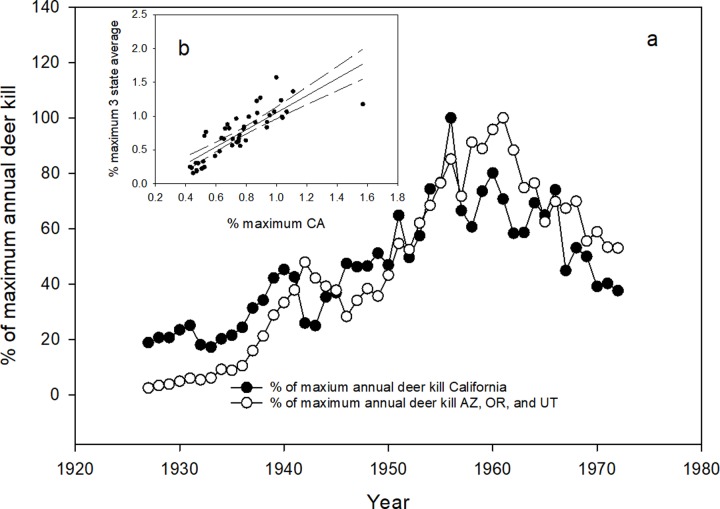
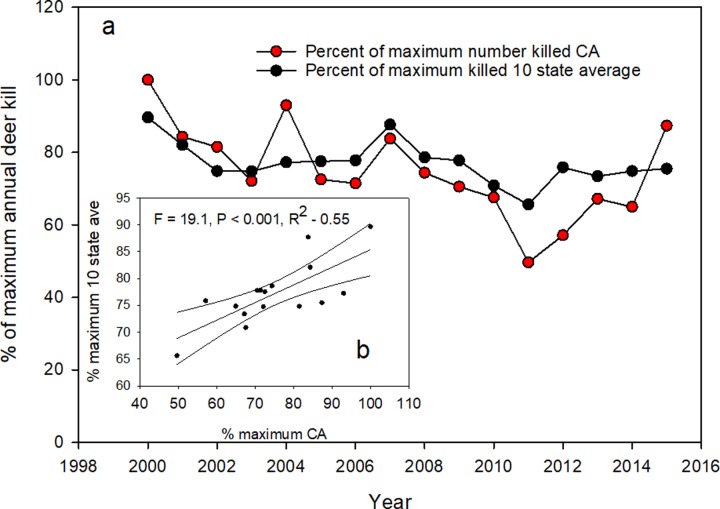
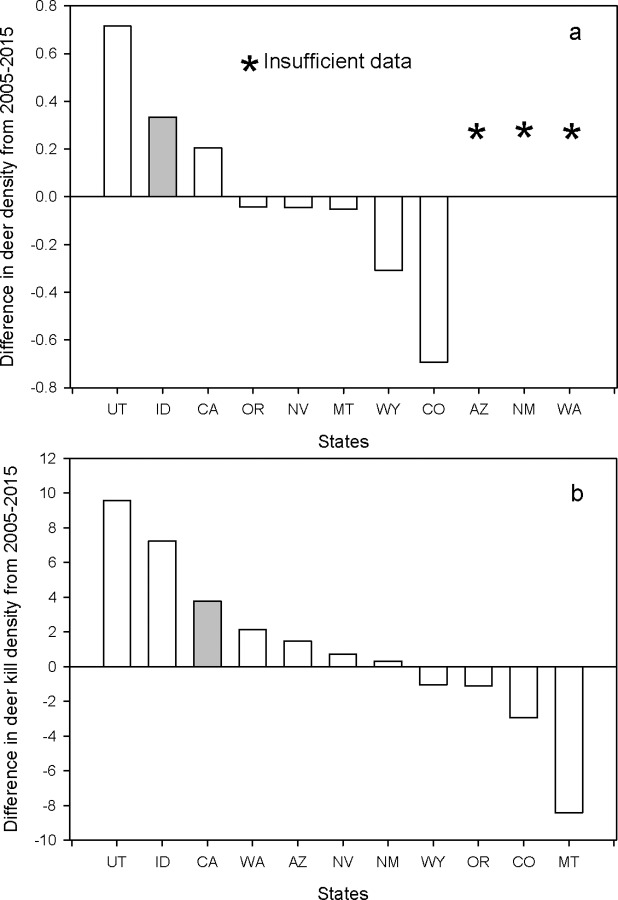
Puma (Puma concolor) management in the western United States is highly contentious, particularly with regard to the use of sport hunting as a management tool. Since the 1970s, puma in ten western states have been managed by state fish and game agencies through the use of a sport hunt. The rationale presented by wildlife managers is that sport hunting, in addition to providing recreational hunting opportunities, also reduces threats to human safety and livestock safety, and increases populations of the puma's ungulate prey, namely deer (Odocoileus sp.) and elk (Cervus elepus). We evaluated these claims using the state of California as a control, which has prohibited sport hunting since 1972, and employing data obtained from state and federal agencies with authority and control over puma management. Specifically, we tested four hypotheses: 1) sport hunting will suppress puma populations, 2) sport hunting will reduce the number of problematic puma-human encounters; 3) sport hunting will reduce puma predation on domestic livestock, and 4) sport hunting will reduce the impact of puma predation on wild ungulate numbers, resulting in increased hunting opportunities for the sport hunt of ungulates. Our results indicated, respectively, that relative to the 10 states where puma are hunted, California had 1) similar puma densities, 2) the 3rd lowest per capita problematic puma-human encounters, 3) similar per capita loss of cattle (P = 0.13) and a significantly lower (t = 5.7, P < 0.001) per capita loss of sheep, and 4) similar average deer densities while changes in annual deer populations correlated with changes in other states (F = 95.4, P < 0.001, R2 = 0.68). In sum, our analysis of the records obtained from state and federal wildlife agencies found no evidence that sport hunting of pumas has produced the management outcomes sought by wildlife managers aside from providing a sport hunting opportunity. Consequently, and particularly because other research suggests that sport hunting actually exacerbate conflicts between pumas and humans, we recommend that state agencies re-assess the use of sport hunting as a management tool for pumas.
美洲狮(Puma concolor)在美国西部的管理极具争议性,尤其是在将运动狩猎作为管理工具的问题上。自 20 世纪 70 年代以来,西部十个州的美洲狮一直由州立渔业和狩猎机构通过运动狩猎进行管理。野生动物管理人员提出的基本原理是,运动狩猎除了提供娱乐性狩猎机会外,还减少了对人类安全和牲畜安全的威胁,并增加了美洲狮的有蹄类猎物(即鹿(Odocoileus sp.)和麋鹿(Cervus elepus)的数量。我们以加利福尼亚州为对照来评估这些说法,该州自 1972 年以来禁止运动狩猎,并利用州和联邦机构获得的有关美洲狮管理的权威和控制数据进行评估。具体来说,我们测试了四个假设:1)运动狩猎将抑制美洲狮的数量,2)运动狩猎将减少有问题的美洲狮与人类相遇的次数,3)运动狩猎将减少美洲狮对家畜的捕食,4)运动狩猎将减少美洲狮对野生有蹄类动物数量的影响,从而增加对有蹄类动物的运动狩猎机会。我们的结果表明,相对于 10 个进行狩猎的州,加利福尼亚州 1)具有相似的美洲狮密度,2)每千人中发生的有问题的美洲狮与人类相遇事件是第 3 低的,3)每千人中牛的损失相似(P = 0.13),绵羊的损失明显较低(t = 5.7,P < 0.001),4)平均鹿的密度相似,而鹿的年种群变化与其他州的变化相关(F = 95.4,P < 0.001,R2 = 0.68)。总之,我们对州和联邦野生动物机构记录的分析没有发现证据表明,除了提供运动狩猎机会外,对美洲狮的运动狩猎对野生动物管理人员所寻求的管理结果产生了影响。因此,特别是因为其他研究表明,运动狩猎实际上加剧了美洲狮和人类之间的冲突,我们建议州机构重新评估运动狩猎作为管理工具的使用。