Department of Biological Safety, German Federal Institute for Risk Assessment, 12277 Berlin, Germany.
Department of Microbial, Biochemical and Food Biotechnology, University of the Free State, Bloemfontein 9301, South Africa.
Viruses. 2020 Feb 11;12(2):201. doi: 10.3390/v12020201.
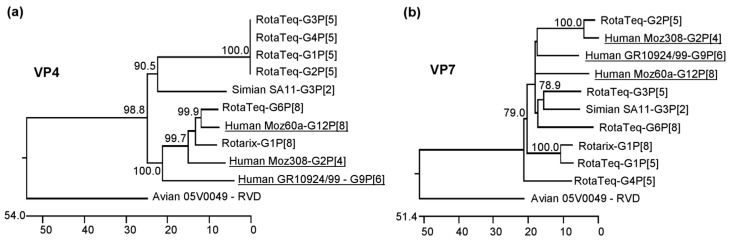
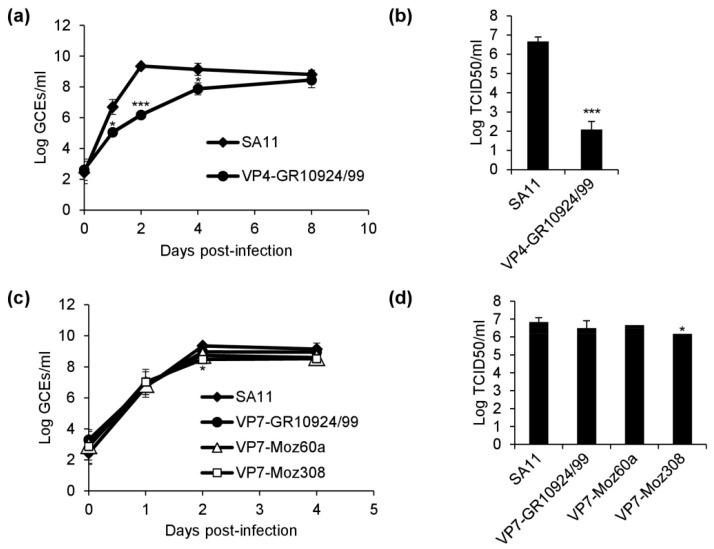
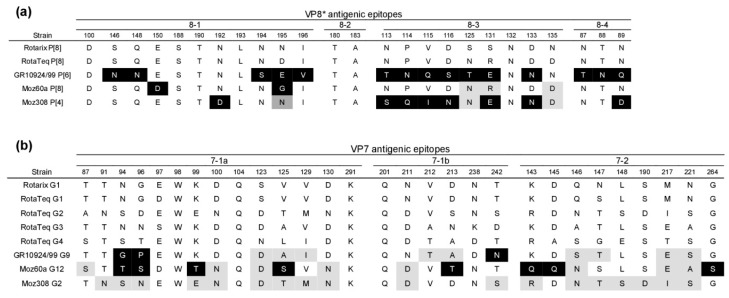
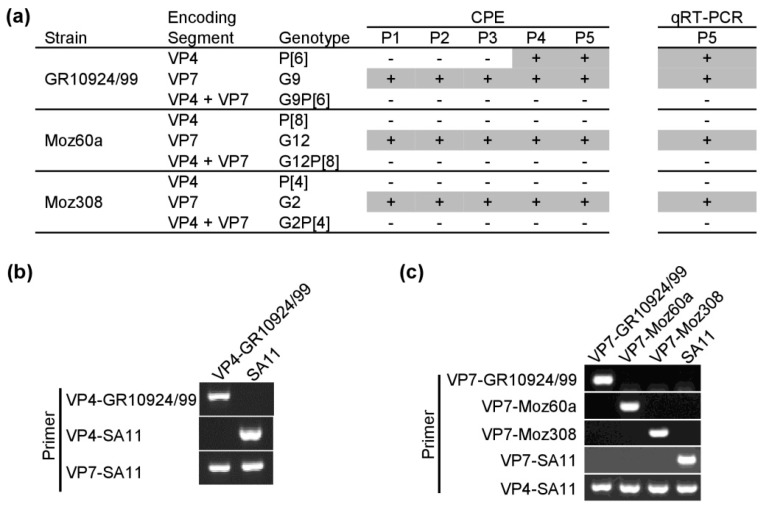
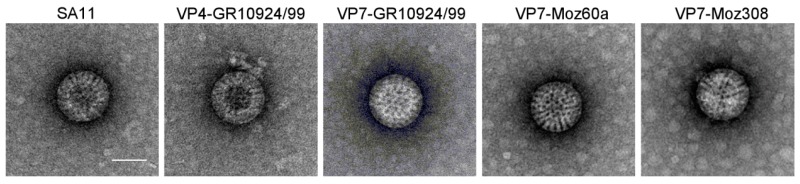
Human rotavirus A (RVA) causes acute gastroenteritis in infants and young children. The broad use of two vaccines, which are based on RVA strains from Europe and North America, significantly reduced rotavirus disease burden worldwide. However, a lower vaccine effectiveness is recorded in some regions of the world, such as sub-Saharan Africa, where diverse RVA strains are circulating. Here, a plasmid-based reverse genetics system was used to generate simian RVA reassortants with VP4 and VP7 proteins derived from African human RVA strains not previously adapted to cell culture. We were able to rescue 1/3 VP4 mono-reassortants, 3/3 VP7 mono-reassortants, but no VP4/VP7 double reassortant. Electron microscopy showed typical triple-layered virus particles for the rescued reassortants. All reassortants stably replicated in MA-104 cells; however, the VP4 reassortant showed significantly slower growth compared to the simian RVA or the VP7 reassortants. The results indicate that, at least in cell culture, human VP7 has a high reassortment potential, while reassortment of human VP4 from unadapted human RVA strains with simian RVA seems to be limited. The characterized reassortants may be useful for future studies investigating replication and reassortment requirements of rotaviruses as well as for the development of next generation rotavirus vaccines.
人轮状病毒 A(RVA)会导致婴幼儿急性肠胃炎。两种疫苗的广泛使用,这两种疫苗基于欧洲和北美的 RVA 株,大大降低了全世界轮状病毒疾病的负担。然而,在世界上一些地区,如撒哈拉以南非洲,记录到的疫苗有效性较低,那里有多种 RVA 株在传播。在这里,使用基于质粒的反向遗传学系统来产生源自以前未适应细胞培养的非洲人 RVA 株的 VP4 和 VP7 蛋白的类人 RVA 重组体。我们能够挽救 1/3 的 VP4 单重组体、3/3 的 VP7 单重组体,但没有 VP4/VP7 双重组体。电子显微镜显示了挽救的重组体的典型三层病毒颗粒。所有重组体在 MA-104 细胞中稳定复制;然而,与类人 RVA 或 VP7 重组体相比,VP4 重组体的生长速度明显较慢。结果表明,至少在细胞培养中,人 VP7 具有很高的重组潜力,而来自未适应的人 RVA 株的人 VP4 与类人 RVA 的重组似乎受到限制。所鉴定的重组体可用于未来研究轮状病毒的复制和重组要求以及开发下一代轮状病毒疫苗。