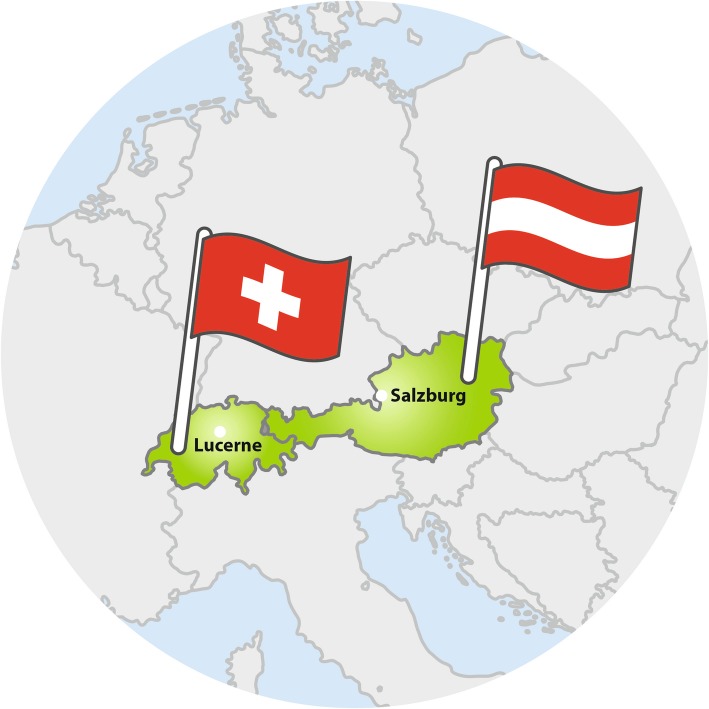
Department of Radiology, Paracelsus Medical University, Salzburg, Austria.
Department of Chemistry and Applied Biosciences, Institute of Pharmaceutical Sciences, ETH Zurich, Vladimir-Prelog-Weg 1-5 / 10, 8093, Zurich, Switzerland.
Cancer Imaging. 2020 Feb 13;20(1):18. doi: 10.1186/s40644-020-0292-7.
The aim of the study is to investigate how well patients remember the radiologist's name after a radiological examination, and whether giving the patient a business card improves the patient's perception of the radiologist's professionalism and esteem.
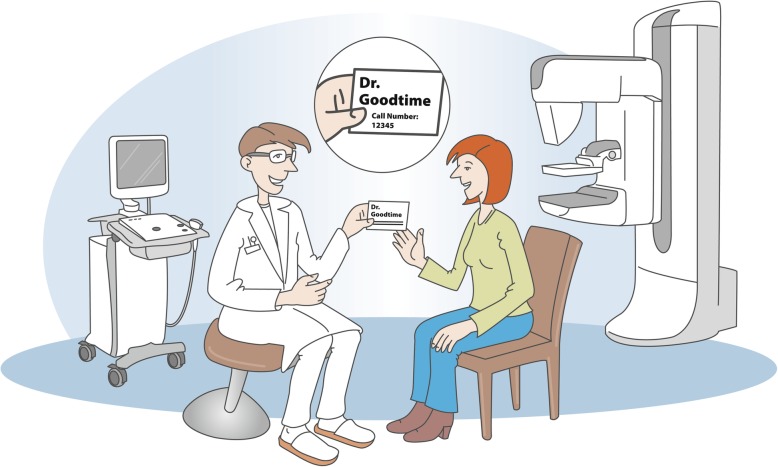
In this prospective and randomized two-centre study, a total of 141 patients with BI-RADS 1 and 2 scores were included. After screening examination comprising mammography and ultrasound by a radiologist, 71 patients received a business card (group 1), while 70 received no business card (group 2). Following the examination, patients were questioned about their experiences.
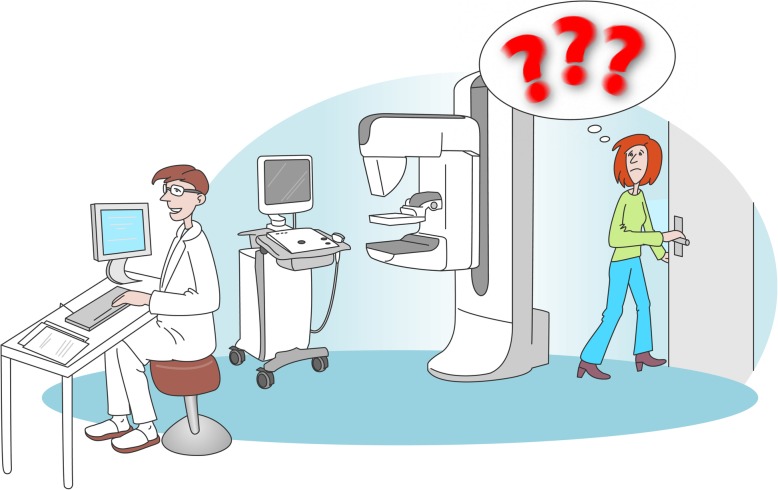
The patients in group 1 could remember the name of the radiologist in 85% of cases. The patients in group 2, in contrast, could only remember the name in 7% of cases (p < 0.001). 90% of the patients in group 1 believed it was very important that they are able to contact the radiologist at a later time, whereas only 76% of patients in group 2 felt that this was a very important service (p < 0.025). A total of 87% of the patients in group 1 indicated that they would contact the radiologist if they had any questions whereas 73% of the patients in group 2 would like to contact the radiologist but were not able to do so, because they could not remember the name (p < 0.001). All questions were analysed with a Cochran-Mantel-Haenszel (CMH) test that took study centre as stratification into account. In some cases, two categories were collapsed to avoid zero cell counts.
Using business cards significantly increased the recall of the radiologist's name and could be an important tool in improving the relationships between patients and radiologists and enhancing service professionalism.
We have a general approval from our ethics committee. The patients have given their consent to this study.
本研究旨在调查患者在接受放射科检查后对放射科医生姓名的记忆程度,以及向患者发放名片是否能提高患者对放射科医生专业水平和尊重程度的认知。
本前瞻性、随机的双中心研究共纳入了 141 例 BI-RADS 1 类和 2 类评分的患者。在由放射科医生进行的筛查检查(包括乳房 X 线摄影和超声检查)后,71 名患者(组 1)收到了名片,而 70 名患者(组 2)未收到名片。检查后,对患者进行了相关询问以了解其体验。
组 1 中的患者能记住放射科医生姓名的比例为 85%,而组 2 中的患者只能记住放射科医生姓名的比例为 7%(p<0.001)。组 1 中有 90%的患者认为能够在以后与放射科医生取得联系非常重要,而组 2 中只有 76%的患者认为这是一项非常重要的服务(p<0.025)。组 1 中有 87%的患者表示如果有任何问题他们会联系放射科医生,而组 2 中有 73%的患者表示他们希望联系放射科医生,但由于无法记住姓名而无法联系(p<0.001)。所有问题均采用 Cochran-Mantel-Haenszel(CMH)检验进行分析,并考虑了研究中心的分层因素。在某些情况下,为避免零单元格计数,将两个类别合并。
使用名片可显著提高放射科医生姓名的记忆程度,这可能是改善医患关系和增强服务专业性的重要工具。
我们的伦理委员会已对此项研究进行了一般性批准。患者已对此项研究表示同意。